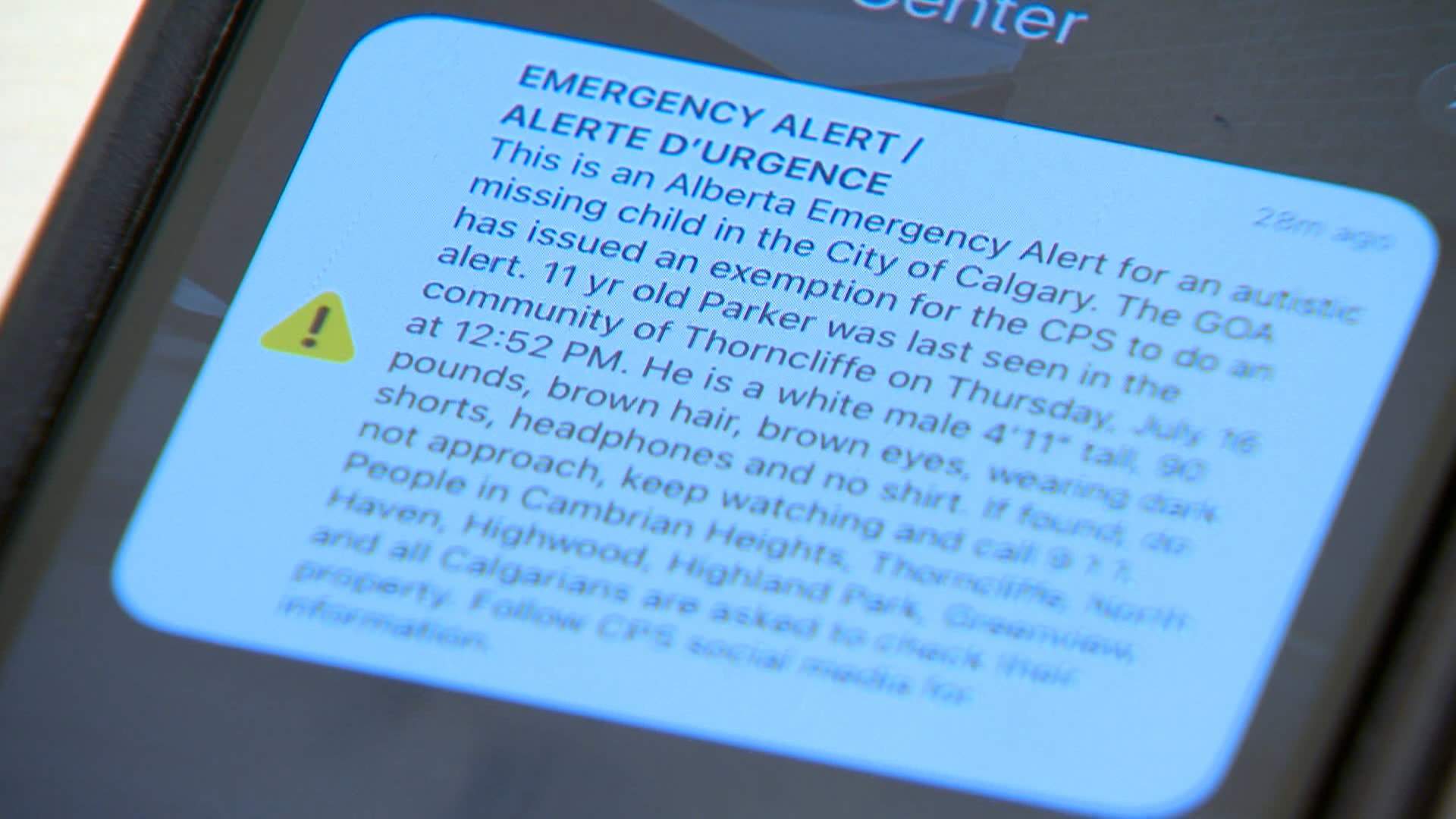
When an 11-year-old non-verbal autistic boy named Parker vanished from his Calgary day home on a Thursday afternoon, every second mattered. He was shirtless, wearing noise-cancelling headphones, and completely incapable of calling for help. Yet, phones across Alberta stayed silent for over 48 hours.
Why? Because under current Canadian protocols, Parker hadn't been kidnapped.
By the time an Alberta Emergency Alert finally blasted through local cell towers on Saturday afternoon, over 300 police officers, 120 search members, and dozens of volunteers were already scouring Calgary streets. The delay wasn't caused by police inaction or bureaucratic laziness. It was caused by a rigid, decades-old framework that treats a wandering, vulnerable child completely differently from an abducted one.
This glaring policy gap has sparked fierce outrage across the country. It exposes a systemic flaw in emergency communications that puts neurodivergent, disabled, and vulnerable missing children at extreme risk.
The Flawed Logic Behind the Amber Alert Criteria
The original Amber Alert system was created with a specific purpose. Named after Amber Hagerman, a nine-year-old girl abducted and murdered in Texas in 1996, the system was designed to mobilize the public during child abductions.
To prevent alert fatigue and ensure citizens don't ignore emergency broadcasts, law enforcement agencies across North America established strict rules. In Alberta, an Amber Alert requires four specific conditions:
- Police must confirm a child under 18 has been abducted.
- Police must believe the child is in imminent danger of serious harm or death.
- There must be enough descriptive information about the child, the abductor, or the vehicle.
- Police must believe the alert will directly assist in locating the child.
If an investigation lacks evidence of foul play or kidnapping, police cannot legally press the button.
That is exactly what happened in Calgary. Police quickly found articles of Parker's clothing near Northmount Drive, indicating he was likely wandering on his own. Because there was no suspect and no getaway vehicle, the legal criteria for an Amber Alert were completely absent.
To issue Saturday's notification, the Calgary Police Service had to request a special provincial exemption from the Government of Alberta. That workaround gave authorities permission to bypass the traditional abduction requirement. But getting special exceptions takes time—time a missing child in crisis does not have.
The Reality of Wandering and Neurodivergent Children
For parents of neurodivergent children, the distinction between being abducted and being lost is virtually meaningless. The danger is identical.
Autistic children are prone to wandering or "elopement"—a behavior where an individual leaves a safe area, often drawn by water, bright lights, or specific sensory interests, or running away from sensory overload. Research from the American Academy of Pediatrics reveals that nearly half of children with autism spectrum disorder attempt to wander from safe surroundings after age four.
When a non-verbal child wanders, traditional search methods break down rapidly:
- They don't respond when searchers shout their name.
- They often hide in tight spaces like sheds, garages, or bushes when frightened.
- They may not recognize physical dangers such as busy traffic, cold overnight temperatures, or bodies of water.
- They actively avoid approaching strangers, meaning a well-meaning bystander who tries to help might cause them to flee.
When a child cannot yell for help or navigate home, time is the enemy. Waiting two days to broadcast a broadcast-style emergency notification to the immediate surrounding community dramatically shrinks the window for a safe recovery.
Painful History and Repeated Failures
Parker’s case isn't an isolated incident. It reopens painful wounds for families across Canada who have faced the exact same bureaucratic wall.
Consider the tragedy of six-year-old Darius MacDougall. In September 2025, Darius disappeared while camping with his family near Island Lake campground, roughly 250 kilometers south of Calgary. He was non-verbal and on the autism spectrum. For 11 days, hundreds of search and rescue personnel scoured rugged terrain.
Despite desperate pleas from his family, no emergency broadcast was ever authorized because there was no evidence of an abduction. Darius was never found.
Darius’s grandmother, Tina Heron, voiced the exact frustration that thousands of parents feel today. She noted that if an alert had gone out immediately to motorists travelling the nearby highway, public eyes on the ground could have changed everything.
When the system refuses to trigger because a child walked away instead of being dragged away, the system is failing the very people it was built to protect.
The Myth of Alert Fatigue
The primary argument against expanding Amber Alerts is alert fatigue. Emergency management officials frequently worry that if phone alerts go off too often, the public will tune them out, turn off emergency notifications on their devices, or treat real threats like background noise.
That concern isn't entirely baseless. Public pushback against late-night emergency tones has been well-documented over the years. But treating every emergency alert as an all-or-nothing, province-wide broadcast is a design flaw, not an unchangeable law of physics.
Modern cellular technology allows for precise, localized broadcasting through Geotargeted Wireless Emergency Alerts. If a child disappears in a specific neighborhood like Calgary's Thorncliffe or Cambrian Heights, cell towers in a 5-to-10-kilometer radius can send targeted notifications to nearby residents without disturbing an entire province hundreds of miles away.
The public doesn't get fatigue from relevant, localized information. People get frustrated when their phones blare at 3:00 a.m. for an event happening eight hours away. Fix the targeting, and the argument against expanding alerts vanishes.
How Canada Can Fix Emergency Alerts Right Now
We don't need to rewrite the entire Amber Alert framework or dilute its specific focus on abductions. Instead, provincial and federal authorities need to modernize their emergency toolkits to cover vulnerable missing persons.
Here is what needs to change immediately:
Create a Silver Alert or Vulnerable Missing Persons Category
Several jurisdictions in the United States operate Silver Alert or Ashanti Alert frameworks specifically designed for missing seniors, individuals with cognitive disabilities, or vulnerable youth who wander. Canada needs a dedicated national or provincial equivalent that triggers automated phone notifications without requiring proof of a crime.
Implement Tiered Geofenced Notifications
Instead of relying strictly on full-scale Amber Alerts, emergency services should utilize localized, silent-push phone alerts. A targeted alert sent to residents within a specific postal code area asking them to check backyards, sheds, and park spaces would generate immediate community support without causing province-wide disruption.
Lower the Bureaucratic Threshold for Exemptions
If police forces are forced to jump through bureaucratic hoops and seek ministerial or provincial approval for exemptions during an active missing person search, precious hours are wasted. Local police chiefs should have direct authority to issue localized emergency notifications when a missing individual is medically or developmentally vulnerable.
Streamline Integration with Search and Rescue Operations
Emergency notifications should immediately link to standardized digital instructions for the public. For instance, when searching for a neurodivergent child, alerts must explicitly instruct citizens not to yell or approach, but rather to observe from a distance and contact 911 instantly with a precise location.
Steps to Take If a Vulnerable Child Goes Missing
If you care for or live near a child or adult with sensory, cognitive, or developmental vulnerabilities, waiting for official policy change isn't enough. Here are concrete steps to prepare and protect your family:
- Pre-Register with Missing Person Registries: File information with local police services or organizations like the Missing Children's Society of Canada. Many municipal police forces offer vulnerable person registries that keep medical details, sensory triggers, and photo records on file for instant access.
- Secure High-Risk Escape Points: Install door and window sensors, high locks, or digital keypads on home exit doors.
- Use Wearable GPS Trackers: Equip children who tend to wander with water-resistant GPS tracking devices, smart tags, or wearable bands hidden inside clothing or shoes.
- Build a Neighborhood Action Plan: Introduce your child to immediate neighbors. Let them know if your child is non-verbal, what sensory triggers to avoid, and where your child tends to hide if frightened.
- If a Disappearance Happens, Call 911 Immediately: State clearly right away that the missing individual is vulnerable, neurodivergent, or non-verbal. Explicitly request that police activate localized emergency alert procedures or seek provincial exemptions without delay.