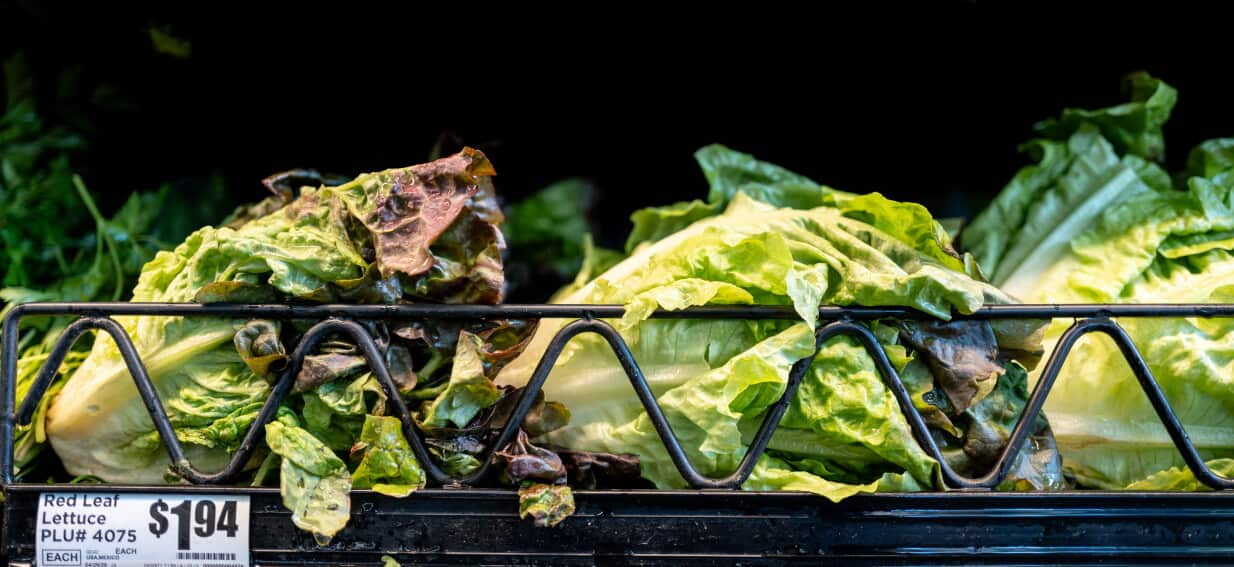
You think you’re making a healthy choice when you grab a salad or order extra lettuce on your taco. Right now in America, that choice might land you in the bathroom for a month with a case of explosive diarrhea that antibiotics can barely touch.
A massive foodborne parasite outbreak is ripping through at least 34 states, racking up over 7,000 confirmed and suspected cases. It’s the worst year for this specific illness in US history. The culprit is a microscopic parasite called Cyclospora cayetanensis. Public health officials are frantically tracing supply chains, and major fast food chains like Taco Bell are pulling ingredients from their shelves in a panic.
If you’re waiting for an official federal recall before you change your eating habits, you’re making a mistake. The food safety infrastructure is lagging weeks behind the actual spread of the parasite. Here is exactly what is happening, why your pre-washed bagged salad is a hidden hazard, and how to protect your gut while the government tries to sort out the mess.
The Unforgiving Reality of Cyclospora
This isn’t your typical 24-hour stomach bug. Cyclospora causes an intestinal illness called cyclosporiasis. When you swallow the parasite’s microscopic eggs, known as oocysts, they open up and settle into the lining of your small intestine.
The symptoms don’t hit you immediately. It takes anywhere from a few days to two full weeks for the infection to activate. Once it does, the primary symptom is severe, watery, and relentlessly frequent bowel movements.
Along with the diarrhea, victims deal with:
- Constant bloating and gas
- Extreme fatigue that leaves you bedridden
- Severe nausea and loss of appetite
- Significant, unintended weight loss
Without treatment, this agonizing cycle can drag on for weeks or even months. It can seem to fade away, only to return with a vengeance a few days later. While it’s rarely fatal, the sheer fluid loss has already sent close to a hundred people to the hospital across the country.
Why Tracing the Outbreak is a Nightmare
Health departments are struggling to pinpoint the exact farm or distributor responsible for this chaos. The two-week incubation period creates a massive memory gap. Think about what you ate for lunch exactly 14 days ago. You probably can’t remember.
By the time someone gets sick, goes to the doctor, provides a stool sample, and gets a positive result, the contaminated lettuce they ate is long gone from store shelves. The evidence has literally been consumed or thrown away.
Testing the food itself is equally brutal. Food safety scientists can't just look at a piece of lettuce under a standard microscope and spot the parasite easily. They have to wash massive batches of greens and use specialized, expensive laboratory techniques to test the water runoff for parasite DNA.
Compounding the problem, every state handles its data differently. Some states bundle confirmed and suspected cases together into one scary number. Others refuse to report anything to the Centers for Disease Control and Prevention until their internal investigations are entirely wrapped up. This administrative gridlock makes it nearly impossible to track the parasite’s path in real time.
The Problem with Your Bagged Salad
We’ve been trained to trust words like "triple-washed" on plastic salad tubs and bags. In the case of Cyclospora, those labels give a false sense of security.
Michigan’s health department has taken the lead in investigating this surge. They’ve interviewed over a thousand sick residents. The common thread linking almost all of them is lettuce and mixed salad greens.
Natasha Bagdasarian, Michigan’s chief medical executive, has issued a stark warning that turns standard grocery store advice on its head. Rewashing bagged lettuce at home doesn’t do anything to remove Cyclospora.
The parasite's oocysts are incredibly sticky. They secrete a substance that allows them to adhere tightly to the rough, microscopic ridges of leafy greens. No amount of rinsing under your kitchen tap will dislodge them once they are stuck.
When massive commercial processing plants chop up thousands of heads of lettuce and wash them in shared water vats, they don't always clean the veggies. Instead, if a single batch of lettuce from one farm is contaminated, the washing process can accidentally distribute the parasite across every single bag processed that day.
The Taco Bell Connection
The panic hit the mainstream when Taco Bell found itself in the crosshairs of federal investigators. The Washington Post revealed that state and federal agencies are actively looking into whether the fast-food giant served contaminated produce.
Walk into select Taco Bell locations across southeast Michigan or near Detroit, and you might see signs explaining that they can’t serve lettuce, cilantro, onions, pico de gallo, or guacamole. The chain claims this is a voluntary, temporary, precautionary measure.
Taco Bell’s corporate office was quick to clarify that public health officials haven't officially confirmed a direct link to their restaurants. They're playing defense. No official recall has been stamped with their name by the Food and Drug Administration. But the fact that they completely scrubbed their menu of fresh toppings across an entire region tells you everything you need to know about the level of risk they are facing.
The chain isn't the sole source of the parasite. People who haven't stepped foot inside a fast food restaurant in months are getting sick from groceries they bought at local supermarkets.
The Epicenters of the Infection
While the parasite has been detected all over the map, a few specific regions are getting absolutely hammered.
Michigan is the undisputed epicenter of this disaster. The state has recorded over 3,300 total cases. It is the single largest outbreak of cyclosporiasis in Michigan's history.
Ohio is trailing closely behind, reporting more than 1,100 cases, heavily concentrated in the northwest portion of the state. New York City has logged over 400 cases, and Illinois has confirmed more than 200.
The situation in Illinois highlights how complicated this outbreak is. More than half of the sick individuals there reported traveling outside the United States recently, meaning they likely caught a completely different strain of the parasite abroad. Meanwhile, the thousands of cases in Michigan and Ohio are purely domestic, tied directly to our commercial food supply.
The Broken Food Safety Net
How did a rare parasite manage to sicken 7,000 Americans before anyone noticed? The answer lies in the quiet dismantling of our public health infrastructure.
During recent administrative reshuffling, federal health agencies took massive funding and staffing hits. Around 2,400 positions were cut from the CDC, another 3,500 from the FDA, and 1,200 from the National Institutes of Health.
These weren't just desk jobs. The layoffs eliminated seasoned food safety experts and forced the CDC to drastically scale back FoodNet. FoodNet is the crucial surveillance network that actively contacts medical laboratories to catch foodborne illness trends before they explode.
Without that proactive safety net, the system became entirely reactive. We had to wait for thousands of people to show up at clinics with the exact same severe symptoms before the alarm bells finally started ringing.
What You Should Do Right Now
If you want to avoid spending your summer stuck in a bathroom, you need to change how you handle produce immediately.
Ditch the bagged salads and pre-cut greens. Stop buying the convenient plastic clam-shells of spinach, romaine, or mixed greens. Instead, buy whole heads of lettuce.
When you get a whole head of lettuce home, pull off and completely discard the outer three or four layers of leaves. The outermost leaves have the highest exposure to contaminated water and soil during growth and shipping.
After removing the outer layers, separate the inner leaves and scrub them vigorously under cold running water. Rinsing isn't enough; you need physical friction to help dislodge those sticky oocysts from the surface of the plant.
Even better, start cooking your vegetables. The Cyclospora parasite cannot survive high heat. Heating your produce to an internal temperature of at least 158°F (70°C) completely destroys the parasite and renders the food safe. Swap raw salads for grilled romaine, sauteed greens, or roasted vegetables until health agencies announce that the outbreak is officially over.
Skip the raw toppings at fast food and fast-casual restaurants. Even if a restaurant claims its supply chain is safe, line cooks handling hundreds of orders an hour don't have the time to meticulously scrub individual leaves of lettuce or sprigs of cilantro.
If you already feel sick with persistent, watery diarrhea, do not waste time with over-the-counter anti-diarrheal medications like Imodium. They can trap the parasite in your digestive tract and make your symptoms worse.
Go straight to a doctor and explicitly demand a Cyclospora stool test. Standard clinic stool cultures only look for common bacteria like Salmonella or E. coli; they will miss this parasite entirely unless the lab technician uses a specific stain or PCR test. If you test positive, your doctor will need to prescribe a targeted course of sulfa-based antibiotics, usually Bactrim, to fully clear the infection from your body.



:focal(0x0:3000x2000)/static.texastribune.org/media/files/96a07abdb0ba6e548c83e1b4881cdd43/Mike Johnson REUTERS TT 01.jpg)