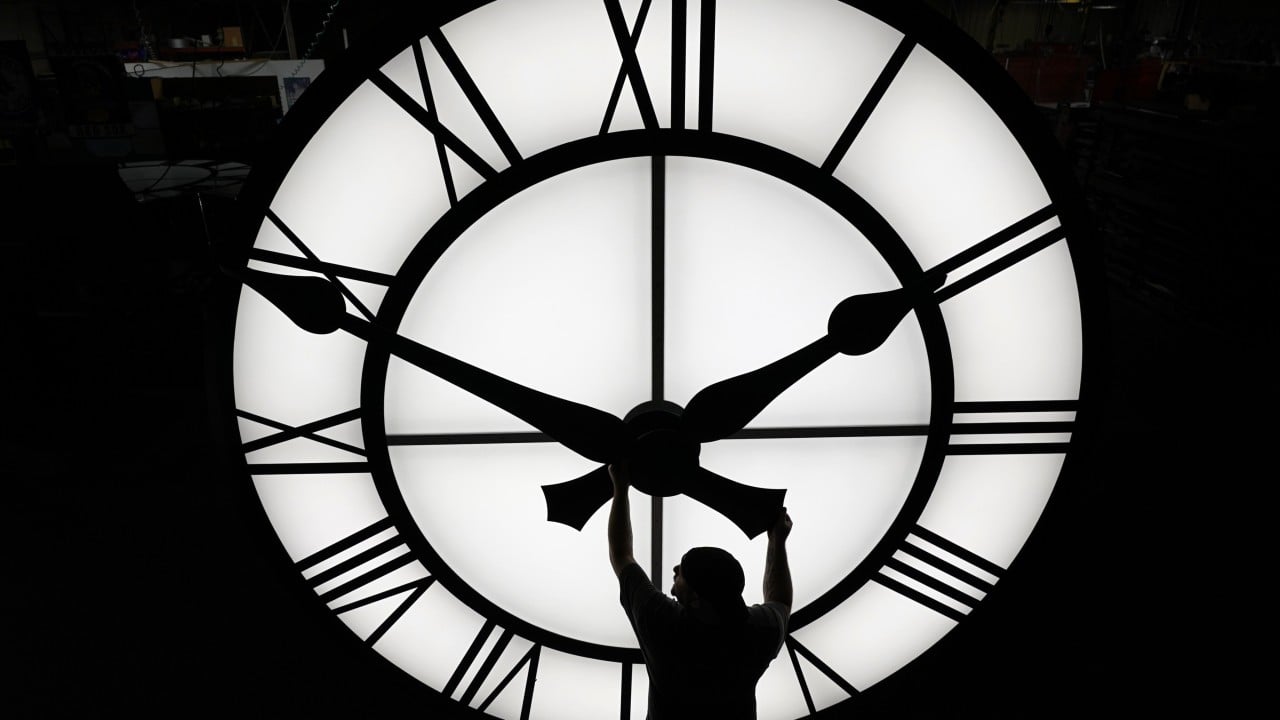
We have all been there on that miserable Sunday in March. You wake up, look at the clock, and realize an hour of your life simply vanished. Your body feels like it flew across three time zones, even though you never left your bedroom. For decades, Americans have complained about this twice-a-year ritual of resetting our clocks. We complain when we "spring forward" and lose sleep, and we complain when we "fall back" and watch the sun set before we even finish our workday.
The U.S. House of Representatives decided to do something about it. In a lopsided 308-117 vote, lawmakers passed the Sunshine Protection Act, a bill aimed at making daylight saving time permanent across the nation. Sponsored by Representative Vern Buchanan of Florida, the bill represents a massive bipartisan push to finally "ditch the switch".
But before you throw away your calendar of clock-changing dates, you need to understand that this issue is not as simple as just getting more sunshine in the evening. There is a reason we have been stuck in this loop for fifty years, and the history of this debate reveals why fixing it is so incredibly complicated.
Why We Hate the Clock Change So Much
Most people do not care about the physics of the earth's rotation. They care about how they feel. And right now, most Americans feel exhausted by the current system. A poll conducted by the Associated Press-NORC Center for Public Opinion Research found that a mere 12 percent of Americans actually favor keeping the current system of changing clocks twice a year. The rest of the country is either actively opposed to it or just wants a decision made so they can stop adjusting their microwave clocks.
The practice of shifting our clocks started as a wartime energy-saving measure. Congress first put it in place in 1918 during World War I, and brought it back during World War II. The logic was simple. If you push daylight further into the evening, people will use less artificial light at night, saving electricity. The current schedule we use today—springing forward on the second Sunday of March and falling back on the first Sunday of November—was established under President George W. Bush.
But the energy savings have proven to be minimal at best in the modern era. We do not just light our homes with incandescent bulbs anymore. We run air conditioners, computers, and massive server farms. Shifting the clocks does not really change our energy footprint. What it does do is mess with our biological clocks.
The Sunshine Protection Act Explained Simply
The bill that passed the House is straightforward. If it becomes law, the United States will permanently stay in daylight saving time.
Under the legislation, we would go through our normal shift in March and then stay there forever. No more falling back in November. This means later sunrises in the winter, but also later sunsets. Instead of the sun setting at 4:45 p.m. in Washington, D.C., during late December, it would set at 5:45 p.m.
To keep things fair, the bill includes an opt-out clause. States that want to stay on permanent standard time can do so, provided they make that choice before the federal law officially kicks in. Hawaii, most of Arizona, and several U.S. territories already stay on year-round standard time and do not change their clocks. They would be exempt from the law and could continue doing exactly what they are doing now.
Nineteen states have already passed local trigger laws or resolutions to adopt permanent daylight saving time. States like Florida, California, Oregon, and Washington have been waiting on Congress for years. Under current federal law, states can opt to stay on permanent standard time, but they are legally prohibited from choosing permanent daylight saving time on their own. The House vote is the first major step toward clearing that legal hurdle.
The Ghost of 1974 That Haunts This Debate
If permanent daylight saving time sounds like a perfect solution, that is because you probably do not remember 1973.
In the winter of 1973, the United States was facing a severe energy crisis due to the Arab oil embargo. In an attempt to conserve fuel, Congress and President Richard Nixon enacted a trial period of year-round daylight saving time, which began in January 1974.
At first, the public loved the idea. Polls showed huge support for the change before it took effect. But once winter actually arrived, reality set in.
In the middle of January, sunrises in cities like Washington, D.C., did not happen until almost 8:30 a.m. In places further west in their time zones, like Detroit or Indianapolis, the sun did not rise until past 9:00 a.m. Parents were forced to send their children to school in pitch-black darkness. Reports of children being hit by cars on their morning commutes began to dominate the news.
Public support collapsed almost instantly. The experiment became so deeply unpopular that Congress was forced to step in and repeal the permanent daylight saving law in October 1974, less than a year after it started.
Representative Mary Gay Scanlon of Pennsylvania pointed this history out during a committee hearing, reminding her colleagues that the country tried this once before and it failed miserably. The lesson of 1974 is that while everyone loves late summer sunsets, almost nobody likes pitch-dark winter mornings.
The Real Science Behind Our Screwed Up Sleep
The debate over our clocks is not just a political argument. It is a biological one. While politicians focus on the convenience of evening daylight, sleep scientists and medical organizations are sounding the alarm.
The American Academy of Sleep Medicine, along with various other health organizations, has repeatedly warned against permanent daylight saving time. Their position is clear. They want to end the clock changes, but they believe we should adopt permanent standard time, not permanent daylight saving time.
Your body relies on the sun to regulate its internal clock, also known as your circadian rhythm. Morning sunlight is essential for waking you up and keeping your body aligned with the natural day-night cycle. When you put the country on permanent daylight saving time, you delay morning light.
Doctors argue that this delay leads to chronic sleep debt. When the sun rises later, you still have to get up at the same time for school or work, but your body does not get the biological signal to wake up. Over time, this misalignment can lead to physical and mental health issues, including increased risks of cardiovascular disease, metabolic issues, and mood disorders.
There is also a geographical divide to consider. If you live on the eastern edge of a time zone (like Boston), your sunrise times are naturally earlier, so permanent daylight saving time is easier to handle. But if you live on the western edge of a time zone (like Grand Rapids, Michigan), winter sunrises under the new bill would not happen until mid-morning. It is a massive geographical difference that a single federal law cannot easily resolve.
Who Actually Wins If We Ditch the Switch
While health professionals worry about sleep schedules, business owners see a major financial opportunity.
The biggest advocates for permanent daylight saving time are retail stores, golf course operators, and the tourism industry. When the sun stays out later in the evening, people do not go straight home after work. They stop by stores, grab dinner at outdoor restaurants, and play a quick round of golf.
The golf industry has historically been one of the most vocal supporters of the Sunshine Protection Act. An extra hour of evening light during the spring and fall translates directly into millions of dollars in green fees and equipment sales.
On the flip side, the industries that suffer are those that rely on early morning activity. Farmers, who often start their work before dawn, have long opposed permanent daylight saving time because it forces them to work in the dark for a larger portion of the morning. School districts also raise concerns about safety, pointing out that bus routes will operate in the dark during the winter months, increasing the risk of accidents.
What Happens Next on Capitol Hill
Passing the House is a major milestone, but the Sunshine Protection Act is not law yet. The bill now moves to the Senate, where its future is highly unpredictable.
The Senate actually passed a similar version of this bill by unanimous consent in 2022, but that effort died when the House refused to take it up. Now the roles are reversed. The House has delivered a resounding 308-117 vote, putting the pressure back on Senate leadership to bring the bill to the floor.
President Donald Trump has expressed strong support for the change, stating on social media that he wants to get the bill to his desk to secure a win for popularity and common-sense reform.
If you want to prepare for what might be coming, here are the steps you can take:
- Check your state laws: Find out if your state has already passed a trigger law to adopt permanent daylight saving time. If the federal bill passes, your state might automatically transition without any further local votes.
- Prepare your sleep routine: If the bill passes, expect darker winter mornings. Investing in a high-quality wake-up light that simulates sunrise can help keep your circadian rhythm on track when natural morning light is delayed.
- Stay updated on the Senate schedule: Keep an eye on Senate Majority Leader John Thune and whether he decides to call a vote on the bill. The bipartisan momentum is real, but the geographical split among senators could still slow things down.


.jpg)
