The war in Ukraine isn't just about territorial gains along the Donbas trenches anymore. If you've been watching the headlines, you know the conflict frequently spills over its geographical boundaries, but the events of July 19, 2026, just pushed the geopolitical needle into dangerous new territory.
Within a span of a few hours, a Turkish-owned grain vessel was blown apart in the Black Sea, and Vladimir Putin rolled out the red carpet in Moscow for North Korea's top diplomat.
These aren't random, isolated news blips. They are interconnected symptoms of a war that is aggressively globalizing. If you think a commercial shipping strike or a diplomatic handshake doesn't affect global stability, you're missing the bigger picture. Here is exactly what went down and why it matters to you.
Blood on the Black Sea
The most immediate and tragic escalation occurred on the water. A Turkish-owned cargo ship, the Golden Leo, was fired upon as it moved through the Black Sea carrying a vital cargo of grain. According to Ukrainian officials, Russian forces launched three cruise missiles directly at the vessel.
The results were catastrophic. Six crew members were killed. Emergency maritime teams managed to pull eight survivors from the water, rushing them to hospitals in Odesa.
"The attack constitutes an act of terrorism against peaceful navigation and a gross violation of international humanitarian law." — Ukrainian Navy Statement
What makes this strike incredibly volatile is the target's owner. Turkey is a NATO member. While Ankara has walked a delicate diplomatic tightrope throughout the war—acting as a mediator and hosting peace talks—Russia just blew up a piece of its commercial fleet. Just days before the strike, Turkish Foreign Minister Hakan Fidan visited Kyiv explicitly warning against the expansion of the war into the Black Sea. Moscow chose to ignore that warning entirely.
The Air War Reaches a Boiling Point
The maritime attack didn't happen in a vacuum. It was part of a massively coordinated Russian offensive across Ukraine. Overnight, Russia rained two dozen ballistic missiles down on the capital city of Kyiv, leaving one dead and 16 wounded. Simultaneously, heavy strikes pounded Kharkiv, Zaporizhzhia, Dnipropetrovsk, and Odesa, killing seven more civilians.
Moscow maintains its usual stance, claiming it only targets military logistics hubs and port infrastructure. But when cruise missiles sink civilian grain ships and blast residential buildings, that defense crumbles.
Ukraine isn't taking these hits lying down. A retaliatory Ukrainian strike hit the Russian border region of Kursk, killing one person. The air war has become a bloody, high-stakes game of attrition that is squeezing civilians on both sides.
Putin and Pyongyang Solidify a Dark Alliance
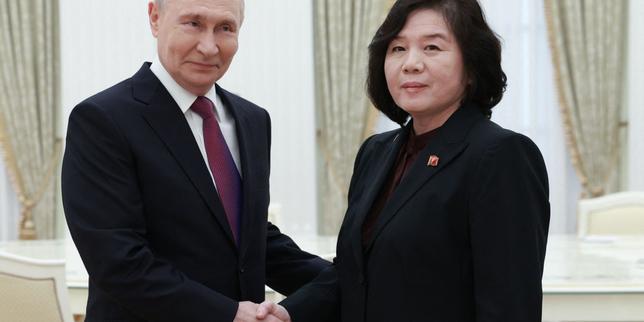
While missiles flew, the diplomatic theater in Moscow was busy reshaping global security. Vladimir Putin held a high-profile meeting with North Korean Foreign Minister Choe Son Hui.
This wasn't a standard diplomatic meet-and-greet. Putin used the platform to explicitly thank Pyongyang for its heavy involvement and support in what Russia calls its "special military operation".
"I would like once again to express my gratitude for the support provided to the special military operation we are conducting. We will never forget the heroic deeds of North Korean soldiers." — Vladimir Putin
Let's be completely honest about what this means. North Korea isn't just sending artillery shells anymore; they are deeply embedded in the logistics and manpower of Russia's war machine. In exchange, Moscow is likely feeding technology and economic lifelines back to an isolated, nuclear-armed Pyongyang. It's a terrifying transaction that should make Western defense analysts lose sleep.
What This Means for Global Stability
If you're trying to figure out what happens next, look at the supply chains and NATO's boundaries. The strike on the Golden Leo threatens to dismantle the fragile trade corridors that keep global food prices stable. If commercial shipping companies decide the Black Sea is a suicide mission, grain exports drop, and your grocery bills go up.
Furthermore, Turkey is being backed into a corner. They don't want a direct confrontation with Russia, but they can't ignore the deaths of sailors on a Turkish-owned vessel. Watch for Ankara to tighten control over the Bosphorus Strait or heavily escalate their diplomatic pushback against Moscow.
Your Next Steps to Stay Informed
The geopolitical map is shifting faster than the daily news cycle can keep up with. To truly understand where this conflict is heading, stop focusing solely on front-line map updates and start tracking these two macro-indicators:
- Monitor Black Sea Shipping Insurance Rates: When insurance maritime premiums spike, it means global shipping lines are abandoning the route. This is the fastest indicator of a looming global food supply shock.
- Watch the NATO-Turkey Dialogue: Pay close attention to how Turkey leverages its NATO status in the coming days. Any joint statements or shifting naval postures in the Black Sea will signal how seriously the West intends to protect commercial shipping routes from Russian aggression.