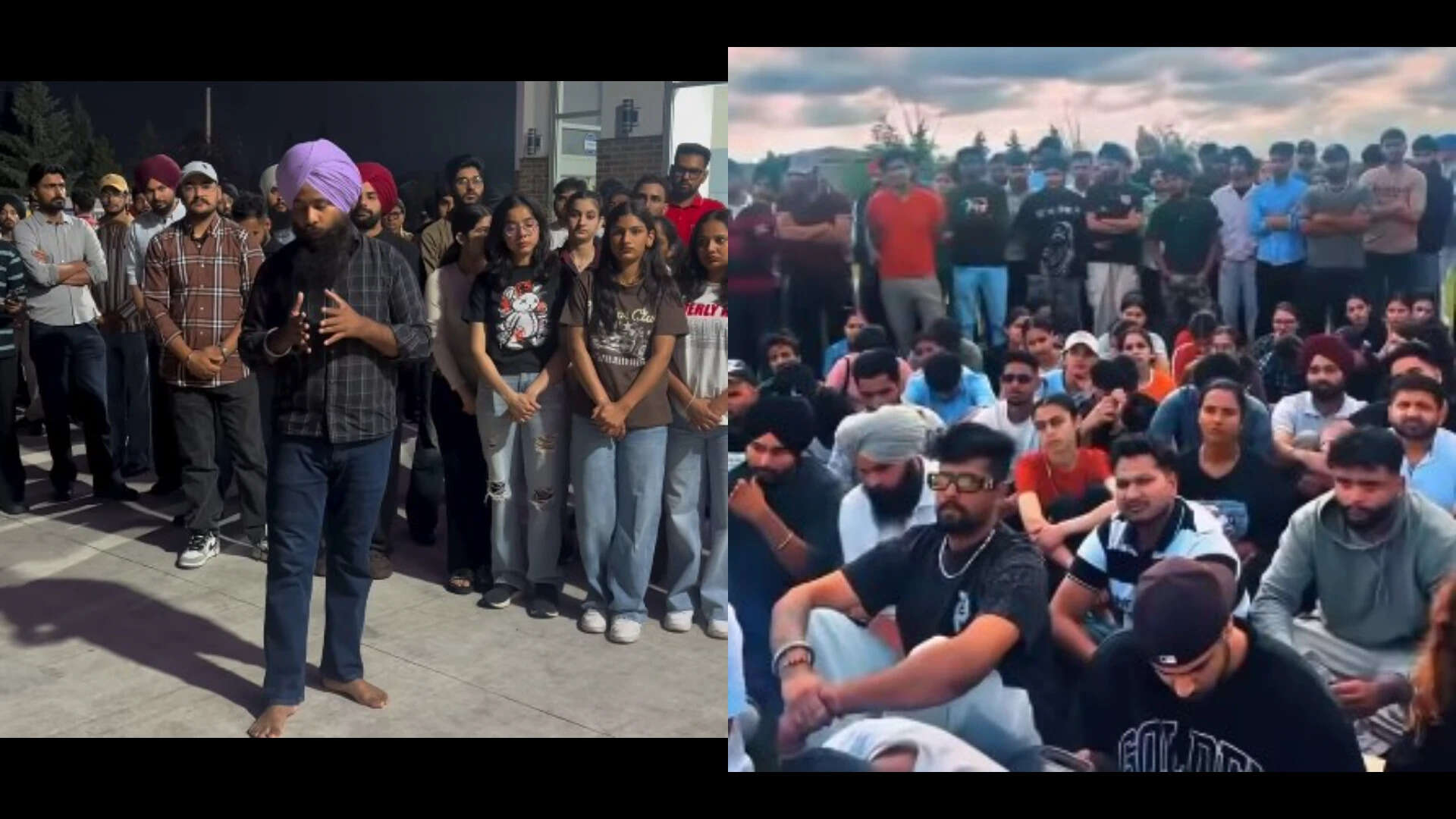
Imagine spending over $30,000 in tuition, packing up your life, and moving across the world, only to finish your program and be handed a refusal letter instead of a work permit. That is the exact nightmare facing hundreds of international students in Alberta right now. Portage College recently broke its silence on the growing wave of Post-Graduation Work Permit refusals hitting its international graduates, primarily from India. Their core advice? Go consult an immigration lawyer.
That answer isn't just disappointing. It's a classic corporate wash of hands.
The situation unfolded after graduates from Portage College non-credit programs, including business management diplomas, began receiving sudden work permit rejections from Immigration, Refugees and Citizenship Canada. Most of these students arrived in Canada between 2023 and 2024. They paid international fees that were three times higher than domestic tuition. They completed their coursework, followed the rules, and expected to transition smoothly into the Canadian workforce. Instead, IRCC dropped the hammer, citing immigration regulation clauses like R200(1)(c)(ii) and R205(c)(ii), claiming these non-credit programs do not qualify for work authorization.
The college's official statement made one thing clear. They take zero responsibility for immigration outcomes. Portage College stated that IRCC holds sole authority over visa decisions and that the institution never guaranteed a post-grad work permit. But telling students who just spent their family savings to go pay $500 an hour for legal representation feels like adding insult to injury.
The Fine Print Trap That Caught Hundreds of Students
How did so many students end up enrolled in programs that don't qualify for work permits? The answer lies in a toxic mix of shifting federal policies, misleading marketing, and vague program descriptions.
For years, Canadian public institutions heavily recruited international students to fill budget gaps. Programs were pitched as clear pathways to post-study work rights and eventual permanent residency. Students checked designated learning institution lists, saw the college listed, and assumed every diploma offered on the website was safe.
They were wrong.
IRCC distinguishes between credit-bearing programs and non-credit continuing education courses. While public colleges can host designated learning status, individual non-credit programs inside those colleges often fall outside post-graduation work permit eligibility.
When students enrolled in 2023, guidance on the official immigration portal was far less clear than it is today. In many cases, colleges issued acceptance letters and status confirmation documents that students reasonably assumed validated their work permit path. In fact, Portage College had previously sent letters to students assuring them that maintaining good academic standing would keep them eligible to apply through IRCC.
Now, the college points to the word "apply." Being eligible to apply is technically not the same as being eligible to receive the permit. It's a semantic distinction that costs students their future.
Retrospective Rule Changes and Portal Glitches
The frustration on the ground isn't just about non-credit distinctions. It's about how IRCC executes rule changes.
Over the past two years, federal immigration authorities quietly updated online guidance, introduced field-of-study restrictions, and tightened language verification requirements. Students who applied under old assumptions are now being judged against updated standards.
Consider the recent chaos surrounding language test submissions. When IRCC introduced mandatory language test scores for post-grad work permits, the online application portal didn't even have a designated slot to upload the test results. Thousands of applicants had to guess where to attach their documents, often shoving them into an optional "client information" upload slot or missing it entirely.
The result? Mass rejections.
Some applicants were given procedural fairness letters asking for missing proof, while others were rejected outright after waiting six to nine months. By the time the refusal letter arrived in their inbox, their 180-day post-graduation application window had already closed. They were left with expired temporary status, no work authorization, and no simple way to reapply.
Students facing rejections at Portage College are pointing out this exact unfairness. They didn't lie on their applications. They didn't cheat. They completed the exact curriculum given to them by an accredited Canadian institution, only to have the goalposts moved after the game was already over.
Why Telling Students to Get Lawyers Doesn't Solve the Crisis
Telling fresh graduates to hire a lawyer sounds responsible on paper. In practice, it's a huge burden.
Most international graduates have exhausted their finances by the time they complete a two-year diploma. Living expenses in Canadian cities have skyrocketed over the past three years. Off-campus work hours were recently capped again by the federal government. On top of that, these students just paid tens of thousands of dollars in tuition.
Expecting someone in that position to retain a licensed Canadian immigration lawyer or a Regulated Canadian Immigration Consultant is unrealistic for many.
Lawyers can certainly file reconsiderations or take cases to the Federal Court of Canada for judicial review. But judicial review costs thousands of dollars and takes months. It doesn't grant automatic work authorization while the case is pending. For a student whose legal status is ticking away, sitting in limbo without the right to work is financially devastating.
Furthermore, immigration consultants themselves are divided on the best path forward. Some advise filing a discretionary reconsideration request directly to the processing officer. Others argue that once the 180-day window expires, re-application without legal intervention is impossible. The lack of uniform guidance leaves confused students at the mercy of differing opinions while time runs out.
How Canada Shifting Immigration Stance Hurts Everyone
This crisis is a direct symptom of Canada broader immigration recalibration.
Between 2024 and 2026, the federal government moved aggressively to shrink the volume of temporary residents, capping overall study permits and shutting down fast-track options like the Student Direct Stream. Refusal rates for study permits and work authorizations spiked dramatically, particularly for applicants from South Asia.
While the government aims to curb housing pressure and eliminate shady private career colleges, public institutions and genuine students are getting caught in the crossfire.
When public colleges market non-eligible programs to international applicants without crystal-clear warnings on every single page of the application portal, students suffer the consequences. When IRCC changes operational rules on its website without publishing formal transitional protections in the Canada Gazette, students suffer the consequences.
Canada reputation as a fair, welcoming destination for global talent takes a major hit every time a story like this breaks. Indian students, who form the largest demographic of international scholars in Canada, are watching closely. Many are already choosing alternative destinations like Europe or staying home, realizing that a Canadian diploma no longer guarantees a fair shot at post-study work.
Exact Steps to Take If Your PGWP Was Denied
If you are an international student facing a work permit refusal right now, sitting around waiting for your college to fix it will not protect your legal status. You need to act immediately.
Get Your Complete File Notes First
Do not guess why the officer refused your file. Order your Global Case Management System notes right away through an Access to Information and Privacy request. The refusal letter gives standard boilerplate language, but the officer's internal GCMS notes contain the exact reasoning behind the decision.
Check Your 180-Day Timeline
Calculate how many days have passed since your official final marks or completion letter were issued by your school. If you are still within the 180-day eligibility window and your original study permit is still valid, you may have the option to reapply with updated documentation or a corrected program framework.
Apply for Status Restoration If Needed
If your study permit expired and your work permit was refused, you usually have a 90-day grace period to apply for restoration of status as a temporary resident. If you pass that 90-day mark without taking action, you become out of status and face potential removal orders. Prioritize maintaining legal presence in Canada over everything else.
Request an Official Reconsideration
If the refusal was due to an officer error or a missing document that you actually submitted, an authorized representative can submit a formal reconsideration request to the specific IRCC processing office. Reconsiderations are discretionary, but they are significantly faster and cheaper than going to Federal Court.
Consult an Authorized Professional Wisely
If you seek legal help, make sure you hire a licensed Canadian immigration lawyer registered with a provincial law society or an RCIC in good standing with the College of Immigration and Citizenship Consultants. Avoid unauthorized "ghost agents" back home who promise guaranteed outcomes. No one can guarantee an IRCC approval.
The fallout at Portage College is not an isolated incident. It is a warning sign for every international student currently studying in Canada. Know your program details, check your eligibility clauses directly on the official IRCC portal, and never rely solely on an academic advisor's verbal promise when your legal status is on the line.