Beijing just sent a massive shockwave across the Pacific, and it didn't come from a land-based silo.
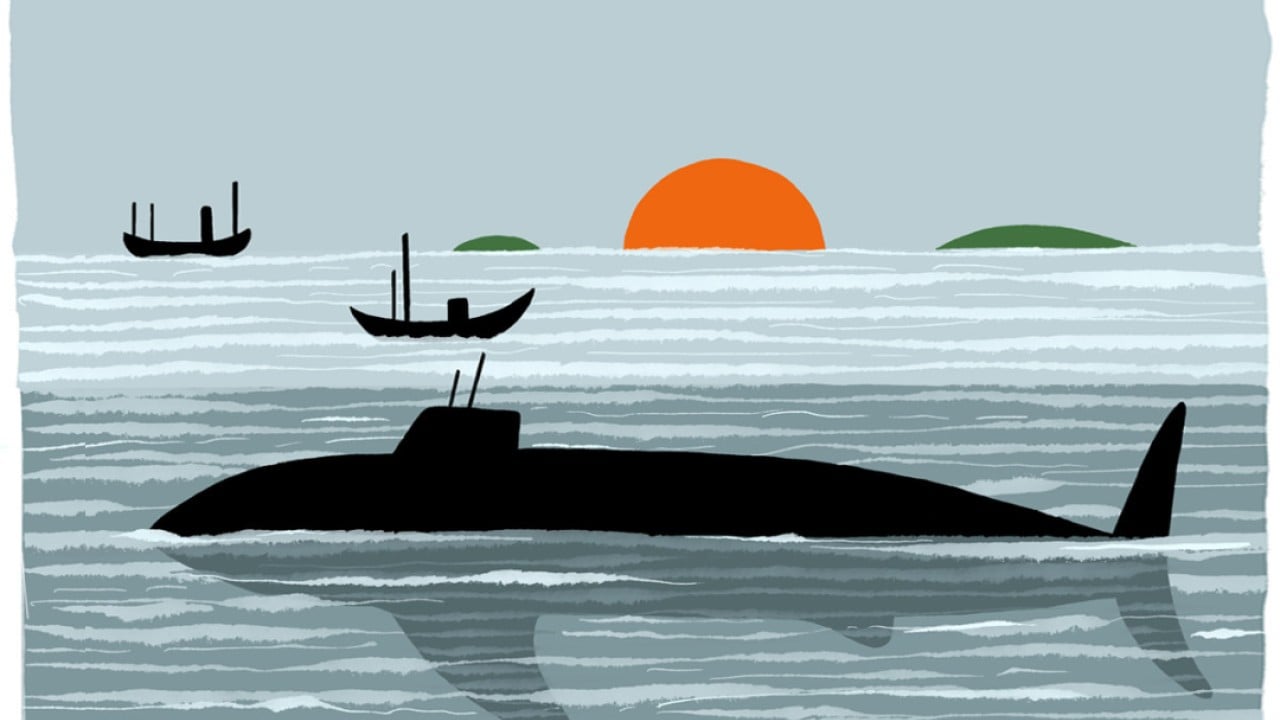
On July 6, 2026, a Chinese Type 094 nuclear-powered ballistic missile submarine surfaced just enough to punch a long-range intercontinental ballistic missile straight out of the water. The missile, packing a dummy warhead, roared across 7,300 kilometers of open sky, flying right over the Philippines before splashing down in the South Pacific Ocean.
Officially, Beijing called it a "routine arrangement" for annual training. They claimed it wasn't aimed at anyone.
Don't buy it. This wasn't routine. It was a massive strategic statement.
This marks China’s first-ever test of a submarine-launched ballistic missile (SLBM) into international waters. It follows a land-based ICBM test back in September 2024. By flexing its muscles from the ocean depths, Beijing is screaming to the world that its nuclear triad is fully operational, highly lethal, and capable of hitting the continental United States from its own coastal sanctuaries.
If you think this test brings stability through deterrence, you're misreading the room. The reality is much more dangerous.
The Illusion of a Safe Pacific
For decades, Pacific island nations assumed their geographic isolation and strict anti-nuclear treaties would keep them out of great-power crosshairs. That illusion is shattered.
The dummy warhead splashed down directly inside the South Pacific Nuclear Free Zone, an area protected under the Treaty of Rarotonga. By dropping a strategic weapon into this zone, China didn't just test a rocket; it completely ignored regional norms.
The political fallout was instant:
- Australia slammed the launch as a provocative act that actively destabilizes the region.
- New Zealand expressed grave concerns, stating the Pacific has no interest in becoming a ballistic playground.
- Japan voiced deep anxiety over the sheer lack of transparency.
The timing was incredibly calculated. The missile flew just as Australia and Fiji were signing their new "Ocean of Peace" mutual defense pact. Beijing claims the timing was a coincidence, but defense analysts know better. This was a blunt warning to regional players trying to build alliances to check Chinese expansion.
What the JL-3 Means for the Pentagon
Military experts are currently tearing apart satellite data to figure out if the missile was an older JL-2 or the highly advanced JL-3. Honestly, the exact model matters less than the geographic reality it proves.
If it's the JL-3, its range exceeds 9,000 kilometers. That means a Chinese submarine doesn't even need to risk sneaking past Japan or Taiwan into the deep Pacific. It can sit safely inside the protected waters of the Bohai Gulf or the South China Sea and easily hold Los Angeles, Seattle, or Chicago at risk.
[Bohai Gulf / South China Sea Sanctuary]
       │
       ▼ (JL-3 Missile Range: 9,000+ km)
       ├─────────────────────────────────────────► [Guam & Hawaii]
       └─────────────────────────────────────────► [Continental US]
This totally flips the script on American missile defense. For years, the US relied on detecting land-based launches from the Chinese mainland. A mobile, stealthy submarine fleet capable of launching from deep coastal bastions means Washington has to completely recalculate its response times.
It also complicates how the US can defend Taiwan. If Washington knows that intervening in a cross-strait conflict puts American cities directly in the crosshairs of undetectable submarines, the calculation for sending carriers becomes a lot more agonizing.
The Hidden Danger of the Early Warning Counter-Strike
The real threat to regional stability isn't just the hardware. It's the software and the doctrine behind it.
Beijing is actively shifting toward a "launch on warning" posture, known in Chinese military circles as yujing fanji (early warning counter-strike). This means China will launch its nuclear weapons the moment its satellites detect an incoming attack, rather than absorbing a blow first.
To pull this off safely, you need flawless communication, ironclad command structures, and perfect intelligence. China's submarine fleet historically hasn't had that. Controlling nuclear-armed submarines underwater is incredibly difficult. Captains cut off from Beijing must be trusted with the ultimate weapon. Given President Xi Jinping's recent massive purges of the PLA Rocket Force over corruption and loyalty issues, the central leadership is notoriously paranoid about delegating that kind of power.
When you mix an aggressive "launch on warning" doctrine with shaky underwater communications and an anxious political leadership, the risk of a catastrophic misunderstanding skyrockets. One false radar blip during a high-stakes standoff could trigger an irreversible escalation.
What Happens Next
This test proved that China is no longer content with a minimal nuclear deterrent. It wants peer status with the US and Russia, and it’s getting it fast.
Expect to see these concrete shifts in the coming months:
- A massive US push for detection tech. The Pentagon will likely pour funding into underwater acoustic sensor networks across the First Island Chain to track Chinese subs the second they leave port.
- An air-launched test is likely next. Now that China has tested its land-based leg (2024) and its sea-based leg (2026), watch for an air-launched ballistic missile test from a strategic bomber to complete the public validation of its triad.
- Diplomatic gridlock in ASEAN. Southeast Asian nations are stuck in the middle. They will try to stick to dialogue, but this test proves that hard power is outpacing local diplomacy.
The Pacific is getting louder, crowded, and significantly more dangerous. Beijing's successful launch may look like a triumph of engineering from the mainland, but for the rest of the region, it’s a terrifying glimpse into a highly volatile future.