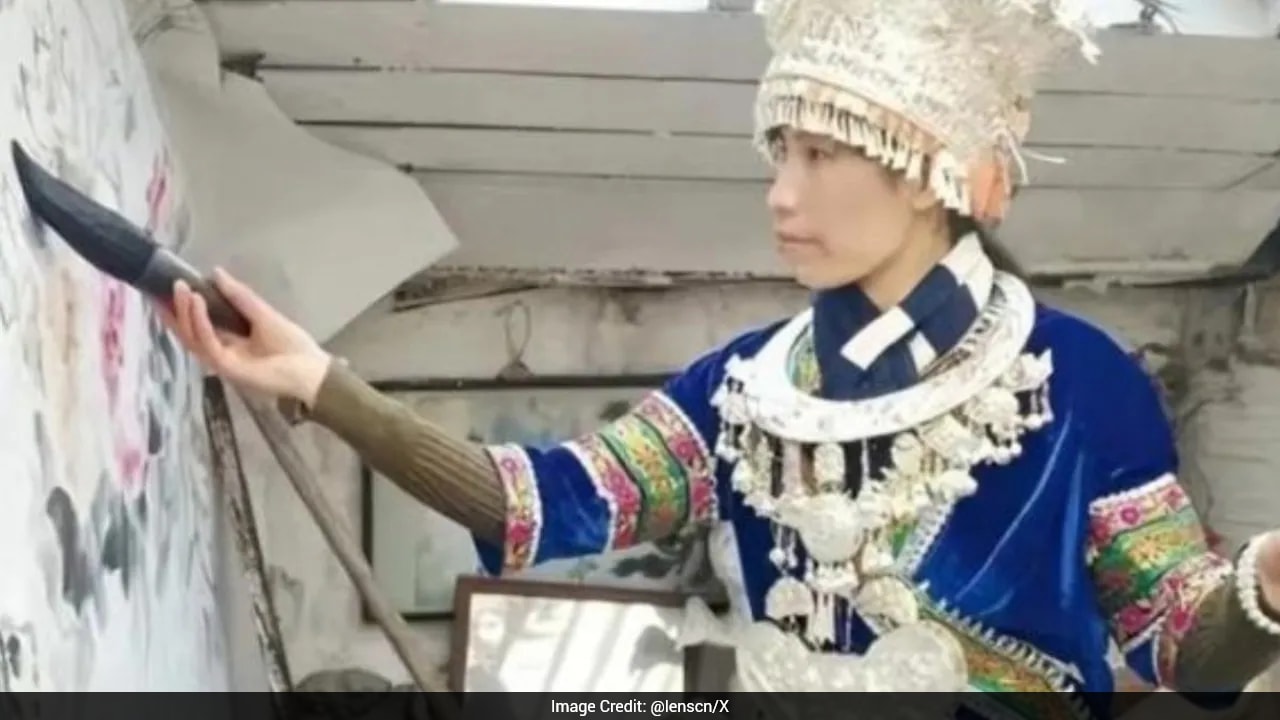
Imagine lying on a cold metal table inside a crematorium. You are unconscious, unable to speak or open your eyes, and the staff are prepping your body for the furnace. This isn't a scene from a horror film. It actually happened to an 18-year-old factory worker back in 1995. Her name is Chen Cuiju, and her survival is one of the most astonishing stories of human resilience you will ever read.
Today, her name carries weight in the art world, but her path to becoming a national first-class artist started at the literal edge of a furnace. This is the real story of how a Chinese woman nearly cremated after coma rebuilds life through painting, proving that your worst moments don't have to define your final chapter.
The Day Death Almost Won
Chen grew up in a poor, rural pocket of Guizhou province. Like millions of young people in the mid-1990s, she left her hometown for the industrial boomtown of Dongguan in Guangdong province. She found work in a local factory, but the grueling shifts and brutal conditions took an immediate toll. She became severely malnourished.
One afternoon, burning up with a severe fever, Chen walked alone near a riverbank. Her body gave out. She collapsed into a deep coma, hidden by the mud and brush.
Days passed before a passing boatman spotted her. She was covered in filth, lacked any identification documents, and her breathing was so faint that it escaped notice. Believing she was just another unclaimed body, local authorities transported her directly to a nearby funeral home.
Saved by a Moving Foot
Inside the crematorium, a worker surnamed He was preparing the "corpse" for the final process. Right before the heat was turned on, something caught his eye. A toe twitched. Then, a slight movement in her foot.
He didn't panic. He checked for a pulse, realized this young girl was still clinging to life, and immediately called the police. An ambulance rushed Chen to the hospital, where she spent more than three months in intensive care before finally opening her eyes.
Waking up was only half the battle. Surviving a near-cremation leaves a mark on your mind. When Chen returned home, she faced a wall of stigma. In rural communities at the time, people whispered that she brought bad luck because she had essentially crossed over from the dead. Her self-esteem shattered.
How a Chinese Woman Nearly Cremated After Coma Rebuilds Life Through Painting
True recovery didn't happen in a hospital bed. It happened in an art studio in Jinhua, Zhejiang province.
After her story hit national headlines, an art teacher named Chen Zhonglian sent her a letter. He didn't just offer sympathy. He offered her a roof, tuition, and a chance to learn a real trade so she could support herself independently. In 1996, Chen and her younger brother packed their bags and moved into his studio.
Painting became her therapy. Traditional Chinese painting requires intense focus, breath control, and patience. It forced her mind away from the trauma of the riverbank and the funeral home.
Chen Cuiju's Major Timeline:
1995 — Collapsed from malnutrition, nearly cremated, saved by worker He
1996 — Moved to Jinhua to study under artist Chen Zhonglian
1999 — Won her first major national art prize
2006 — Returned to Dongguan to present a thank-you painting to her savers
2026 — Story resurfaced globally as a symbol of ultimate resilience
Her teacher noticed she had an incredible eye for detail and a deep emotional reservoir. By 1999, just three years after picking up a brush, Chen won her first major painting award. She wasn't just surviving anymore. She was competing and winning.
The Meaning Behind the Peonies
You can tell a lot about a person by what they do when they find success. In June 2006, after earning recognition across the country, Chen traveled back to Dongguan. She went straight to the hospital and the funeral home to look for the people who saved her.
She didn't just bring words. She brought a custom painting she spent weeks perfecting. The artwork depicted vibrant, blooming peonies growing right next to broken, withered branches. It perfectly captured her philosophy. The withered branches represented her past, the breakdown of her body, and the moment she almost turned to ash. The peonies represented her current life, full of color and vitality.
Her work has since won dozens of domestic and international awards, earning her the title of national first-class artist. Her life even inspired a Cantonese opera titled Cai Ju Returns Home, designed to show struggling youths that no hole is too deep to climb out of.
Actionable Steps for Overcoming Major Life Trauma
Chen's journey offers real, practical lessons if you are trying to rebuild after a massive setback or personal crisis.
- Find a tactile outlet. Chen chose brush painting, but any high-focus skill works. It grounds your brain in the present moment.
- Ignore the crowd's labels. People called her bad luck, but she chose to focus on the opinion of her mentor instead.
- Acknowledge your past without living in it. Her peony painting proved she didn't forget her trauma, she just grew alongside it.
If you are facing a massive roadblock right now, find your equivalent of the paintbrush. Pick it up and start drawing your next move.