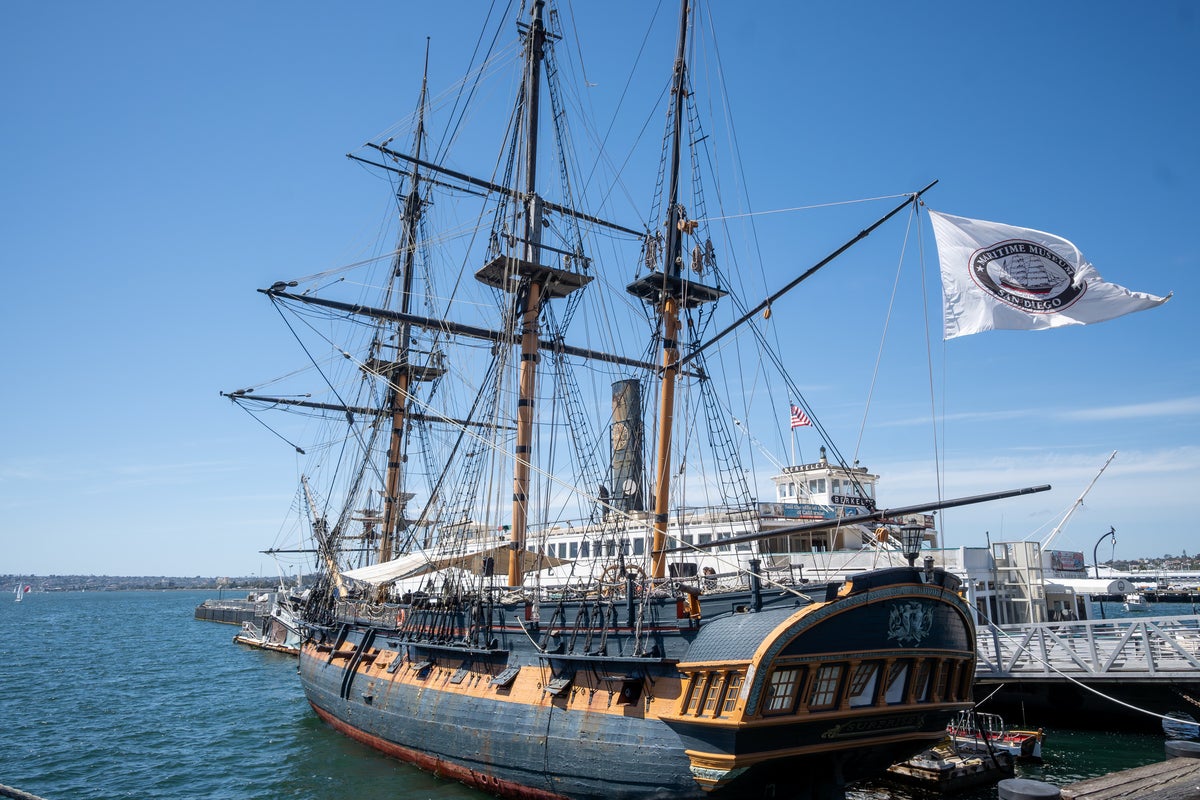
Wooden ships are beautiful, romantic, and absolutely brutal to keep alive.
If you've ever stepped aboard the HMS Surprise at the Maritime Museum of San Diego, you know the feeling. You walk the creaking decks, look up at the towering 130-foot rigging, and instantly feel transported into the Nelson-era Royal Navy. Or, more realistically, you feel like Jack Aubrey from Master and Commander: The Far Side of the World, ready to order a broadside.
But that magic is officially coming to an end.
The Maritime Museum of San Diego announced that the HMS Surprise replica will permanently close to the public on August 1, 2027. It's a quiet, heartbreaking end to a storied 60-year run that spanned real-world ocean training, Hollywood blockbusters, and decades as a museum centerpiece.
Here's the real story behind why this icon is sailing into retirement, what it actually takes to keep a wooden ship afloat, and what happens next.
The $25 Million Problem
When museums close exhibits, they often blame "shifting priorities" or launch massive fundraising campaigns to save them. Not this time. The Maritime Museum has made it clear: the decision is final, and they aren't even going to try to crowdfund a fix.
Why? Because the math is completely impossible.
A professional marine surveyor recently inspected the vessel and delivered a devastating diagnosis. Properly restoring the Surprise to the standard required for visitors and crew would cost more than $25 million.
To put that in perspective, the museum is currently planning a massive $60 million onshore expansion called the Gateway Project. Pouring nearly half that amount into a single, stationary wooden replica would completely bankrupt their ability to care for the rest of their historic fleet—including the 1863 barque Star of India, the oldest active sailing ship in the world.
The hard truth about wooden ships is that they start rotting the second they touch salt water. Every day is a battle against wood-boring worms, dry rot, and structural fatigue. For a non-profit museum, $25 million is simply a bridge too far.
From the HMS Rose to Hollywood Royalty
While she's famous today as the Surprise, this ship lived an entirely different life before Hollywood came calling.
HMS SURPRISE / ROSE TIMELINE
1970 ── Launched as HMS Rose in Lunenburg, Nova Scotia
1970s ─ Served as a dockside attraction in Newport, Rhode Island
1980s ─ Transitioned to a certified sail training vessel
2001 ── Purchased by 20th Century Fox for "Master and Commander"
2004 ── Acquired by the Maritime Museum of San Diego
2010 ── Portrayed the HMS Providence in "Pirates of the Caribbean"
2027 ── Scheduled permanent closure to the public
She was built in 1970 at the legendary Smith and Rhuland shipyard in Lunenburg, Nova Scotia—the same yard that built the famous Bluenose II. Originally christened the HMS Rose, she was designed as a meticulously detailed replica of an 18th-century, 24-gun British frigate.
For decades, the Rose sailed the East Coast as a beloved sail training vessel, teaching young sailors the dying art of square-rigged seamanship.
Then came 20th Century Fox.
In 2001, the studio bought the ship to star in Peter Weir's masterclass historical epic, Master and Commander: The Far Side of the World. They completely transformed her:
- They reshaped her stern to match Admiralty drawings.
- They stripped the deck structures and installed a double ship's wheel.
- They added authentic period fighting tops and a brand-new figurehead.
Renamed the HMS Surprise, she became a living, breathing character in one of the most accurate maritime movies ever made. She later donned a different set of sails to play the HMS Providence in Disney’s Pirates of the Caribbean: On Stranger Tides.
Why You Should Go See Her Before August 2027
If you've never stood on her deck, you're running out of time. The museum is keeping the ship open to visitors for one final year to let fans say their goodbyes.
Walking through her lower decks is a masterclass in historical immersion. You can feel how cramped life was for the 197 sailors who would have crammed into a real ship of her size. The attention to detail—from the pin rails to the galley stove—is something CGI just can't replicate.
What happens after August 1, 2027?
She won't be immediately scrapped. The museum is actively looking for "potential opportunities within the entertainment industry" or other buyers who might have the deep pockets required to give her a second life. She might end up back on a movie set, or docked as a private attraction elsewhere. But as a public, accessible piece of living history on the San Diego waterfront, her journey is coming to an end.
Don't wait. If you love maritime history, classic cinema, or just want to experience the sheer scale of a Nelson-era frigate, book a trip to San Diego before next August. Walk her decks, touch the rigging, and pay your respects to one of the finest replica ships ever built. She earned it.


.jpg)
