AI pricing has become a nightmare. For a long time, tech executives didn’t care what they spent on APIs. They just wanted the best model, regardless of cost.
Things changed. Fast. For an alternative perspective, read: this related article.
Today, boardrooms are looking at their AI software bills with absolute horror. In one legendary case, a corporate chief financial officer accidentally ran up half a billion dollars in Claude usage fees in a single month. It is a terrifying reality check. The flashy promise of automated intelligence has collided with the brutal math of running massive data centers.
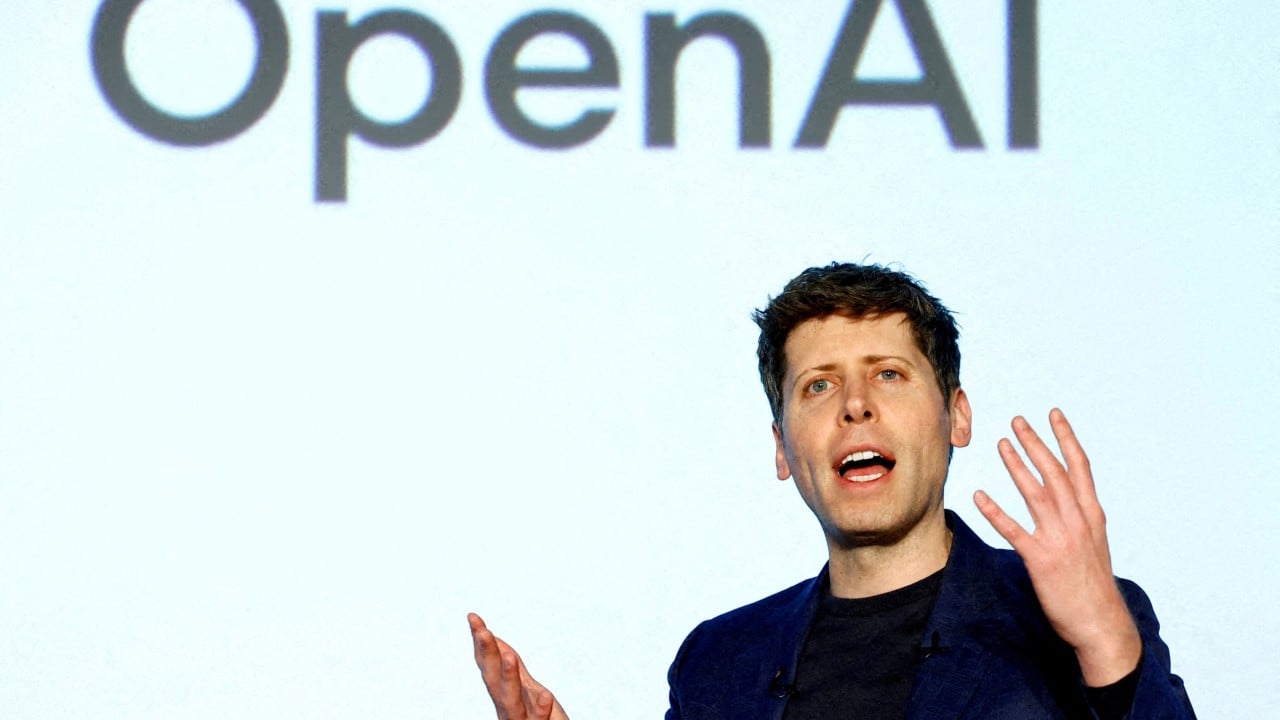
Now, OpenAI chief Sam Altman is planning a desperate defensive move: a massive price war. Further reporting on the subject has been published by ZDNet.
OpenAI is quietly preparing a massive 75 percent price cut for its flagship software. This is not a generous gift to developers. It is a direct tactical strike. Altman is trying to choke out rival Anthropic and stop the flood of ultra-cheap, highly efficient AI models coming out of China.
If you build with AI, manage a tech budget, or just want to know where the industry is going, you need to understand this shift. The era of performance at all costs is over. We have entered the era of the margin squeeze.
Why the OpenAI Price War is Starting Right Now
Let's look at the raw numbers. For the past year, OpenAI has acted like the undisputed king of the hill. But behind the scenes, their financial model is incredibly fragile. They are burning through billions of dollars on compute.
Altman himself admitted that pricing has suddenly transformed into a massive headache for customers. He noted that at the beginning of the year, nobody complained about spending. Now, it is the only thing clients want to talk about.
When your customers start rationing their API calls, you have a massive retention problem.
By slashing prices on flagship models by up to 75 percent, OpenAI wants to achieve two things.
First, they want to make it financially irresponsible for a developer to choose any other platform. If you can get top-tier reasoning for a fraction of the previous cost, you stay in the OpenAI ecosystem.
Second, they want to force Anthropic into a matching price cut. OpenAI has deeper pockets thanks to Microsoft. They can afford to bleed cash longer than almost anyone else. They want to see if Anthropic can survive a race to the bottom.
The Anthropic Threat is Way Bigger Than You Think
To understand why Altman is willing to tank his own profit margins, you have to understand how much ground OpenAI has lost to Anthropic.
Dario Amodei’s company has quietly eaten OpenAI’s corporate lunch. Anthropic’s annualised revenue rate has surged to an astonishing $47 billion. Six months ago, it was barely a fraction of that. In comparison, OpenAI’s projected revenue sits between $25 billion and $33 billion.
The underdog is suddenly out-earning the pioneer.
How did Anthropic pull this off? They built tools that software engineers actually use to do real work.
Their developer tool, Claude Code, has been an absolute goldmine. Within just a few months, Claude Code went from zero to a $2.5 billion annual run rate. While OpenAI spent years chasing consumer attention with ChatGPT, Anthropic focused heavily on developers and corporate API customers.
The strategy paid off. Private markets have valued Anthropic at around $965 billion, while OpenAI sits around $852 billion.
But this rapid growth came with a catch. Claude is incredibly expensive to run. As corporate software teams deploy Claude Code across thousands of engineers, the bills are getting ridiculous. If businesses start to panic about these soaring costs, Anthropic’s momentum could evaporate overnight.
Altman knows this. By dropping OpenAI's prices now, he is throwing a hand grenade into Anthropic's pricing structure. He is telling enterprises: "Why are you paying a premium for Claude when we can give you the same capability for a quarter of the price?"
The Chinese Low Cost Wave is Forcing Altman's Hand
If Anthropic was the only competitor, Altman might have played a slower game. But the pressure from the East is relentless. Chinese AI labs are releasing massive, high-performing models at prices that make US providers look absurdly expensive.
Look at what is happening in China's private sector.
DeepSeek, founded by Liang Wenfeng, has become a massive disruptor. Liang is now the world’s richest AI startup founder, with a net worth of $36 billion, after DeepSeek raised massive funding at a $50 billion valuation. They are looking at a $70 billion valuation in their latest funding talks.
US firms have tried to slow them down. Both OpenAI and Anthropic even complained to the US government, accusing DeepSeek and other Chinese firms of harvesting their models via API data scraping.
But you cannot stop the math. Chinese developers are not just building cheap models; they are finding ways to bypass Western chip bans entirely.
Take Meituan, the Chinese food-delivery giant. They recently open-sourced LongCat-2.0, a massive model with 1.6 trillion parameters and a 1-million-token context window.
The kicker? Meituan trained and runs LongCat-2.0 on 50,000 domestic Chinese chips. Zero Nvidia hardware. They are giving this frontier-class model away for free under an MIT license.
When massive open-source models can run completely outside the US hardware supply chain for a fraction of the cost, Altman’s premium pricing model looks incredibly outdated. If OpenAI does not drop its prices drastically, developers globally will migrate to these ultra-low-cost alternatives.
The Big Danger of Slashing AI Prices
Lower prices are great for you and me, but they are incredibly dangerous for the companies building these models.
Training frontier models like GPT-5.6 or Claude Opus requires an astronomical amount of cash. You need billions of dollars just to secure the electricity and buy the servers.
If OpenAI and Anthropic slash their prices by 75 percent, they are cutting their immediate revenue streams. Without that cash flowing in, how do they pay for the next generation of supercomputers?
This is a massive concern for their big backers. Tech giants like Microsoft, Amazon, and Oracle have spent hundreds of billions building out data centers specifically to rent them to these AI startups. If a brutal price war destroys the startups' profit margins, they won't be able to pay their cloud hosting bills. We are already seeing the cracks. Oracle's stock took a hit recently over fears that their massive data center investments might not pay off.
It is a game of chicken. Altman is betting that OpenAI's brand, its massive developer base, and its financial backing will allow it to survive the squeeze. If he is wrong, he might drag the entire AI infrastructure market down with him.
How to Protect Your AI Budget Right Now
You do not have to be a casualty of this corporate warfare. In fact, you can use it to your advantage. If you manage an engineering team or build applications using LLMs, here is exactly how you should navigate this price war.
Stop signing long-term contract commitments
Sales reps from major AI companies will try to lock you into annual spending commitments in exchange for discounts. Do not do it. Prices are falling fast. A discount that looks great today will look like a rip-off in six months. Keep your setups flexible and pay-as-you-go.
Implement model routing immediately
Do not route every single user query to a flagship model. Use tools like OpenRouter to dynamically switch between models. Use ultra-cheap open-source models for simple tasks like formatting, summarizing, or routing. Only send complex reasoning tasks to expensive models.
Put strict API limits on developer accounts
That $500 million Claude bill story happened because of a lack of oversight. Set up automated alerts. Cap daily spending at the API key level. If a script gets stuck in an infinite loop, you want it to fail after losing fifty dollars, not fifty thousand.
Look at domestic and open-source alternatives
If you are building applications that do not require strict US data residency, test out some of the incredibly cheap models coming out of Asia. Models like LongCat-2.0 or DeepSeek are proving that you do not need to pay a premium to get world-class performance.
The price war is here. The giants are bleeding cash to win your business. Sit back, keep your infrastructure flexible, and let them fight.
.jpg)