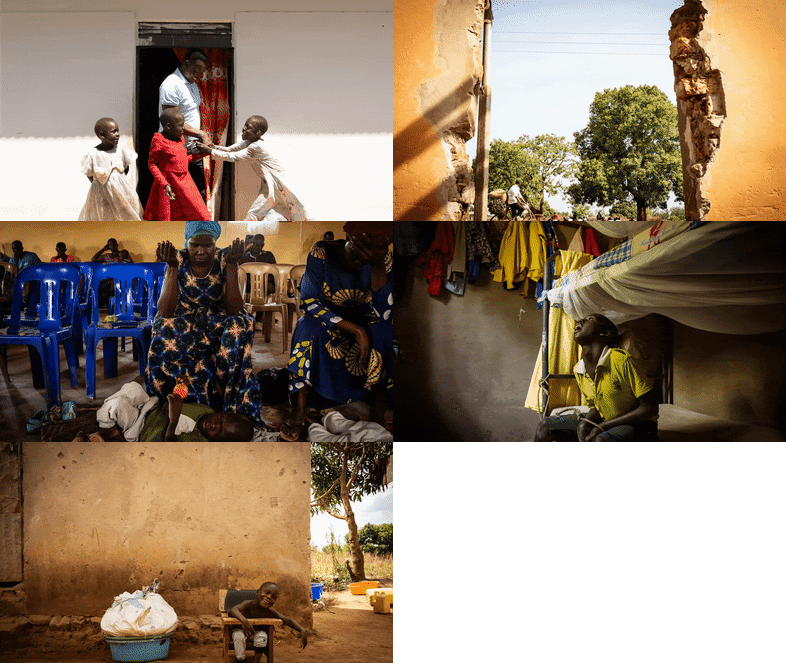
Walk into a village in eastern Uganda, and you might find a child tied by a cloth around their wrist, locked inside a windowless storehouse alongside chickens and sacks of cassava. It's a gut-wrenching sight. To a Western observer, it looks like pure cruelty. But if you look closer, you'll see a mother who walks miles through bush tracks just to sit outside that hut, paralyzed by the fear of what happens if her child wanders off.
This isn't an isolated horror story. It's the reality for thousands of children with disabilities across rural Uganda. In communities where specialized medical care is virtually nonexistent, severe neurological conditions are routinely misdiagnosed as spiritual curses. When a child fails to walk, speak, or behave predictably, families are told that evil spirits or ancestral anger are to blame. The result? Vulnerable children end up hidden away, bound in chains or ropes, or taken to traditional healers who promise to beat the devil out of them.
Why Families Resort to the Shadows
It's easy to blame the parents. But talking to families in districts like Soroti reveals a systemic failure that leaves them with no good choices.
When a disabled child is born, the social pressure hits the mother first. Fathers frequently abandon the family, accusing the mother of bringing a curse into the household or claiming the child belongs to another man. Left entirely alone, a single mother must cultivate crops to feed her other children. If she leaves a child with severe cognitive disabilities unattended, that child might wander into a cooking fire, fall into a well, or face severe physical abuse from neighbors who fear the "curse."
Locking a child in a room or tying them to a post becomes a desperate, flawed mechanism for physical survival. It's a choice made out of a lack of options, driven by a total absence of community support structures.
The Dangerous Allure of Traditional Healers
Uganda's formal healthcare infrastructure allocates a tiny fraction of its budget to mental health and neurodevelopmental disorders—historically around 2%, with the vast majority swallowed up by institutions in the capital, Kampala. In rural zones, the medical void is filled by an estimated three million traditional healers and witch doctors.
Desperate parents spend their life savings or trade their livestock for traditional remedies. These interventions don't involve modern therapy. Instead, children are subjected to dangerous practices:
- Herbal Stuffing: Forcing crushed roots and toxic leaves into a child's nose or mouth.
- Physical Restraints: Shackling children to floors or trees within traditional healing compounds for months.
- Ritual Sacrifices: Sacrificing livestock to appease the spirits supposedly causing the disability.
Human rights organizations like Validity.ngo have documented widespread systemic abuse within these unregulated traditional healing camps. Parents enter these arrangements hoping for a miracle cure, only to leave with a traumatized, physically weakened child and no money left to buy basic food.
The Grassroots Strategy Shifting the Narrative
The solution isn't going to come from top-down government mandates anytime soon. True change is happening at the grassroots level, led by local advocates, pastors, and community workers who understand the cultural fabric.
Local leaders like Pastor Fred Alimet in eastern Uganda are driving deep into villages to physically untie these children and confront the stigma head-on. But they don't just lecture the parents; they change how the entire community views disability.
Traditional View: Disability = Spiritual Curse = Isolation and Chains
Modern Grassroots View: Disability = Medical Condition = Education and Community Care
By educating neighbors, these advocates make communities safer for disabled children to exist in the open. When a village understands that a child's condition is medical rather than spiritual, the threat of violence drops. Mothers can finally untie their children without fearing they will be beaten by fearful neighbors.
Organizations like World Vision and local action teams are also creating community networks that act as early warning systems for child abuse and abandonment. They connect families with basic physical therapy, specialized chairs, and peer support groups, proving that these children can learn, smile, and thrive when given the proper tools.
What Needs to Happen Next
Overcoming centuries of deeply rooted spiritual stigma requires active, sustained intervention. If we want to permanently end the practice of locking vulnerable children away, the strategy must pivot.
- Fund Community-Based Rehabilitation: Stop funneling the meager mental health budget exclusively into centralized psychiatric hospitals. Money needs to go to mobile clinics that train parents in basic physical and speech therapy at home.
- Engage and Educate Traditional Healers: Instead of ignoring the millions of traditional practitioners, organizations must actively engage them to recognize neurological conditions and refer families to medical professionals.
- Provide Economic Safety Nets: A mother who doesn't have to choose between farming her plot to avoid starvation and watching her disabled child won't resort to tying them up. Small-scale agricultural grants and community childcare collectives save lives.
The battle for Uganda's vulnerable children isn't just about breaking physical chains. It's about dismantling the invisible walls of fear and isolation that keep them hidden in the dark.