Donald Trump wants Greenland, again.
If you feel like you are trapped in a geopolitical time loop, you aren't alone. At the NATO summit in Ankara, the US president resurrected one of his most bizarre foreign policy obsessions, declaring that the semiautonomous island should be controlled by Washington rather than Copenhagen.
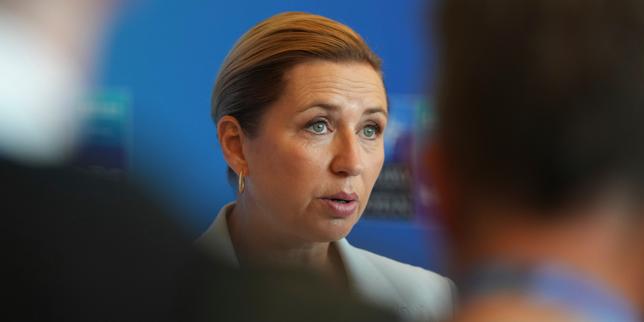
Danish Prime Minister Mette Frederiksen wasted no time shutting it down. Before walking into the main plenary session, she gave reporters a blunt reality check: Greenland is not for sale.
This isn't just a quirky diplomatic spat or Twitter-style drama anymore. It highlights a massive, ongoing shift in how global superpowers view the Arctic, and it puts the entire NATO alliance in an incredibly awkward position.
The Cold War Style Land Grab That Wont Die
Trump first floated the idea of buying Greenland back in 2019, treating the world's largest island like a piece of commercial real estate. Most people laughed it off back then as a passing whim. Earlier this year, the rhetoric escalated heavily, with threats of an actual takeover before an opaque framework agreement calmed things down in January.
But on Tuesday in Ankara, Trump brought it right back to the forefront. He didn't just suggest a purchase; he claimed the US should outright control it, chiding Denmark for not spending enough money to support the territory.
Frederiksen's response was sharp and immediate. She didn't mince words about national sovereignty.
"We hope that all, including all allies, will respect the Greenland people's right for self-determination," Frederiksen stated. She went a step further, explicitly reminding everyone that Denmark is a sovereign state and expects its territorial integrity to be respected.
The most striking moment came when a reporter asked if Denmark would actually use military force to defend the island. Frederiksen didn't hesitate. She invoked Article 5 of the NATO treaty—the collective defense clause. She made it clear that Denmark stands ready to protect every single inch of its territory.
Think about how wild that is for a second. A NATO member country just had to publicly rely on the alliance's mutual defense pact as a rhetorical shield against the president of the United States.
Why Washington Is Obsessed With the Arctic
It's easy to look at this and assume it's just classic Trump bravado. That would be a mistake. Underneath the brash language lies a brutal geopolitical reality that both Democrats and Republicans in Washington think about constantly.
Greenland sits in a vital strategic location. It anchors the GIUK gap (Greenland, Iceland, and the United Kingdom), which is the naval chokepoint controlling access between the Arctic, the North Atlantic, and Europe. If you control Greenland, you control who moves through the northern waters.
Then there's the resource boom. Climate change is melting the ice sheet at an alarming rate, opening up new shipping lanes and exposing massive deposits of rare earth minerals, oil, and natural gas. Washington looks at those resources and sees a goldmine. More importantly, they see something they don't want China or Russia getting their hands on.
China has tried to embed itself in Greenland for years by funding infrastructure projects like airports. The US actively blocked those moves, pressure-cooking a quiet security struggle over the island. Iceland's Prime Minister, Kristrún Frostadóttir, cut through the noise by stating plainly that Greenland belongs to its own people, calling for unity instead of internal squabbling.
The Sovereignty Myth Most People Fall For
The biggest misconception in this whole saga is the idea that Denmark can just sign a contract and hand Greenland over to the Americans. It doesn't work that way.
Greenland has been semiautonomous since 2009. Copenhagen handles its foreign policy, currency, and defense, but the local government in Nuuk controls its internal affairs and domestic resources. Crucially, Greenland’s self-government act contains a legal mechanism for total independence.
If Denmark ever tried to sell the island, Nuuk would simply trigger an independence vote. You can't sell a country that has the legal right to walk away from you. Frederiksen pointing out the right to self-determination wasn't just diplomatic fluff; it was a reminder of legal reality.
What Happens Next
NATO leaders came to Turkey wanting to talk about defense budgets, European military readiness, and geopolitical friction points like Iran. Instead, they are stuck managing a bizarre public rift between Washington and Copenhagen.
If you are tracking international relations or defense policy, keep your eyes on how NATO Secretary General Mark Rutte handles this behind closed doors. He has been trying to soothe Trump's frustrations over European defense spending by highlighting the massive financial updates European allies have made. But money clearly won't solve the US obsession with the Arctic.
Expect Denmark to quietly double down on its security presence in the North Atlantic while keeping its diplomatic channels open. For Nuuk, the play is simple: use this international spotlight to demand even more autonomy from Copenhagen while making sure the US pays heavily for the military bases it already operates on Greenlandic soil, like Pituffik Space Base. The theater in Ankara proves that the Arctic is no longer a frozen afterthought. It's the new front line.