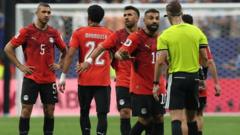
The absolute ecstasy of a Cairo coffee shop when a standard penalty gets swatted away by your goalkeeper is something you can't fake. For a few minutes in Atlanta, the entire football world stopped spinning. Egypt, a team that had never won a single World Cup match before this summer, was leading the reigning world champions 2-0. Lionel Messi had just missed from twelve yards. The script was written. The giants were dead.
Then, everything unraveled in a cruel four-minute window that will haunt Egyptian football for a generation.
Argentina won 3-2. They advanced to the quarter-finals. But if you think this was just another classic tournament comeback by a superior footballing superpower, you're looking at the wrong game. This wasn't a standard collapse. It wasn't a tactical breakdown or a sudden failure of nerve. Egypt didn't throw this game away. They had it taken from them under a cloud of highly debatable officiating decisions that left manager Hossam Hassan so disgusted he vowed to turn off the tournament completely.
The pain of this exit cuts incredibly deep because it ruins what should have been the most historic night in Arab football history.
The night the Pharaohs almost broke the world
Nobody expected Egypt to be in this position. Let's be honest about where this team stood a week ago. They entered the knockout rounds carrying a massive weight of historical failure. Despite dominating African football for decades with seven Africa Cup of Nations trophies, their World Cup record was non-existent. They had never reached a single knockout stage. They hadn't even won a group match until they beat New Zealand 3-1 in June.
Worse still, they were limping. Their final group game against Iran was a medical disaster. Mohamed Salah walked off with a hamstring strain. Nice defender Mohamed Abdelmonem left the field in tears. Ahmed Fattouh suffered a hamstring tear that ruled him out completely.
When they lined up against Argentina in the Round of 16, they were supposed to be sacrificial lambs.
Instead, Hossam Hassan put on a masterclass. He built a tight, disciplined defensive unit that refused to give Messi space. They struck early. Yasser Ibrahim found the net in the first half, sending a shockwave through Atlanta Stadium. Argentina looked completely lost, frustrated by Egypt's physical presence and rapid counter-attacks.
Then came the second-half chaos. Mostafa Ziko put the ball in the net to make it 2-0, only for French referee François Letexier to rule it out via VAR for a minor clip by Marwan Attia miles back in the buildup. It was a soft call, the kind of decision that rarely gets pulled back unless a giant is in trouble.
But Egypt didn't fold. Minutes later, Ziko struck again. A legitimate goal. 2-0.
When Argentina earned a penalty shortly after, the pressure was suffocating. Messi stepped up. He missed. The Egyptian keeper guessed right, diving to his side to deny the greatest player on earth. At that specific moment, millions of fans across Cairo, Giza, and even displaced families watching from shelters in Gaza believed the miracle was real.
Four minutes of pure footballing cruelty
You can't let your guard down against genius. Even on a night when he looked human, Messi found a spark. The comeback started with Cristian Romero pulling one back for Argentina. That happens. Good teams respond.
What followed was a blur. Just over four minutes after Romero's goal, Messi found himself with an inch of space. He doesn't miss twice. He buried his eighth goal of this tournament, tying the game at 2-2.
The momentum had shifted, but Egypt was still alive. They were fighting for extra time, throwing bodies into tackles, desperate to reset the game. They survived the onslaught until the dying moments of stoppage time.
That's when the real controversy erupted.
Deep in injury time, Enzo Fernández scored the winning goal for Argentina. But seconds before the ball hit the back of the net, Egyptian defender Fathy was visibly tugged by Alexis Mac Allister in the penalty box. It wasn't a subtle shirt pull. It was a clear hindrance. In the modern era of VAR, where goals are routinely scrutinized for minutes to find microscopic infractions, this was a blatant foul. Letexier waved play on. The VAR room stayed silent.
The final whistle didn't bring a sense of athletic closure. It brought pure, unadulterated fury.
Hassan takes aim at the system
If you want to understand the depth of Egypt's anger, you only need to look at Hossam Hassan's post-match press conference. He didn't offer standard platitudes. He didn't talk about learning from experience. He blew the doors off the building.
"It's all about money," Hassan told reporters, refusing to hide his rage. "They want Messi to stay in the tournament. In football, many things happen off the pitch because of interests. What happened was unfair. Egypt deserved to qualify. We were the better team."
Hassan went even further, stating he wouldn't watch another single minute of the 2026 World Cup. It's an explosive accusation, but it resonates deeply with neutral fans who watched the refereeing standard shift dramatically in the final half-hour.
Ziko backed up his manager, pointing out the stark double standard in how VAR was applied. When Egypt scored their disallowed goal, the officials searched the footage until they found a reason to wipe it off. When Argentina scored their winner on the back of a foul, the whistles disappeared.
It leaves a bitter taste in the mouth. Football loves a fairytale, but only when the fairytale involves its biggest global brands. A tournament without Argentina and Messi is a massive financial hit for organizers. A tournament with Egypt in the quarter-finals is a great sports story, but it doesn't sell the same number of television rights in South America or Europe.
The blueprint for the future of Egyptian football
It's going to take a long time for the heartbreak to clear. The images of Mohamed Salah looking completely devastated on the pitch will define this tournament for Egyptian fans. But once the anger fades, the reality of what this group achieved needs to be acknowledged.
Egypt proved they belong on this stage. They didn't just participate; they went toe-to-toe with the world champions and outplayed them for sixty minutes. They broke the historical curse that has held this nation back for nearly a century.
If Egyptian football wants to build on this moment instead of letting it turn into permanent cynicism, the federation needs to take immediate action.
First, keep Hossam Hassan in charge. For years, Egypt has cycled through expensive foreign managers who failed to understand the cultural and emotional weight of the national shirt. Hassan gets it. He's a domestic legend who injected a sense of belief and tactical steel into this squad. The players fought for him. The tactical plan against Argentina worked perfectly until external factors intervened.
Second, fix the reliance on a single superstar. When Salah got injured against Iran, the entire nation panicked. While the team showed incredible heart without him operating at one hundred percent, Egypt needs to develop a deeper pool of European-based talent. Players like Ziko showed they have the quality to perform under pressure. The domestic league needs to make it easier for young Egyptian talent to move to Europe early in their careers.
The 2026 World Cup run is over. It ended in a brutal, painful scenario that feels completely unjust. But the Pharaohs have finally shown the world what they can do. They aren't just an African powerhouse anymore. They're a team that can make the absolute best in the world sweat.
Next time, a bad refereeing decision won't be enough to stop them.