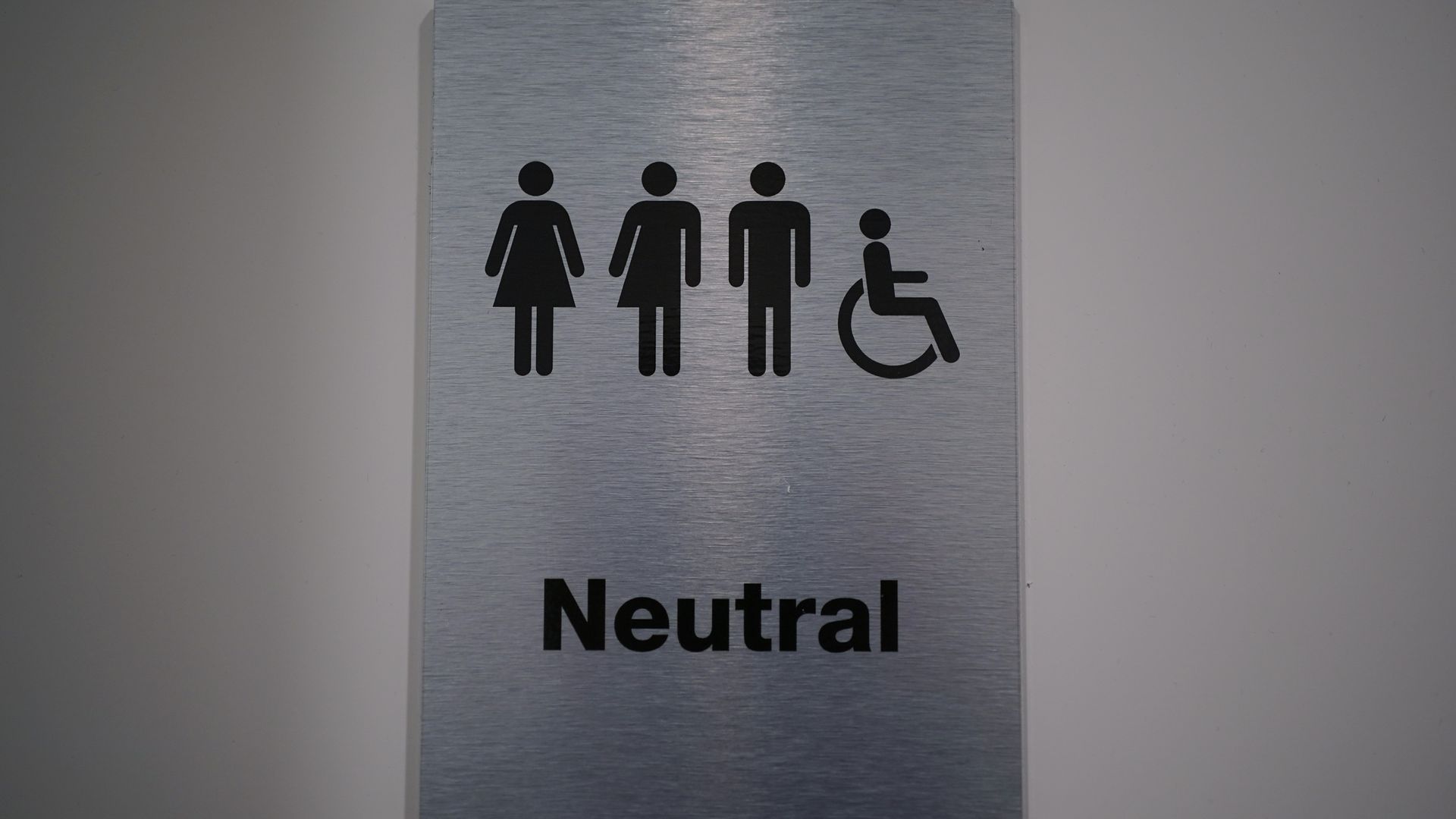
August 5 is the date everything changes for public bathrooms across Great Britain.
If you run a gym, a restaurant, a local sports club, or a community center, you need to pay attention. New statutory guidance is coming into force that legally binds how you manage single-sex toilets, changing rooms, and other private spaces.
Many people think this is just another political talking point that won't affect their day-to-day operations. They are wrong. It is going to cost businesses millions of pounds, force thousands of physical signs to be replaced, and spark a compliance headache for almost every public-facing venue in the country.
Here is exactly what is happening, why the rules are changing, and what you actually have to do to stay on the right side of the law.
The massive scale of the August 5 changes
Let's look at the sheer numbers behind this shift. This isn't a minor tweak to some obscure policy. According to official impact assessments, roughly 13,000 toilets and more than 5,000 changing rooms across Great Britain will have to be reviewed or revamped.
Upwards of 18,000 signs on doors will need to be replaced. Public sector bodies alone are facing upfront costs of over £20 million just for basic cleaning and management adjustments, with another £14 million required annually for physical building alterations. For private businesses, the collective bill is expected to run into hundreds of millions.
The Equality and Human Rights Commission (EHRC) updated this code of practice to match a massive legal shift. The new rules mean that if you advertise a space as single-sex, it must be restricted based on biological sex, not gender identity.
This means a person's birth sex determines which room they can enter. If you let trans-women into a space designated for biological women, the law now says you are no longer offering a valid single-sex service. In fact, doing so could expose you to sex discrimination claims from the very women the single-sex space was built to protect.
How the Supreme Court forced the government's hand
This whole situation didn't appear out of thin air. It is the direct result of a landmark Supreme Court decision in April 2025.
In the case brought by the campaign group For Women Scotland, the court ruled that the term "sex" in the Equality Act 2010 refers strictly to biological sex. Crucially, the judges decided that holding a Gender Recognition Certificate (GRC) does not alter a person's biological sex for the purposes of the Act.
Before this ruling, organizations were stuck in a legal gray area. They wanted to protect women's privacy but feared being sued for discrimination by transgender individuals. The old guidance was a decade out of date and offered zero practical help.
The updated statutory code, signed off by Equalities Minister Bridget Phillipson, finally aligns official guidance with that court ruling. It makes it clear that service providers can legally exclude transgender people from single-sex spaces, provided they do it in a way that is proportionate and meets a legitimate aim.
Who actually has to comply with the code
Don't assume your business is exempt. The new statutory code applies directly to service providers, those carrying out public functions, and associations.
This is a massive list of organizations, including:
- Restaurants, pubs, and cafes
- Gyms, leisure centers, and swimming pools
- Hairdressers, beauty salons, and spas
- Local sports clubs with 25 or more members
- Hospitals, GP surgeries, and care facilities
- Charities and community associations
It does not directly cover internal employment policies yet, which are managed under a separate employment code. However, employers are already looking at these changes closely. The legal precedent is set, and it is highly likely that workplace toilet guidelines will follow a similar path soon.
The massive catch that everyone is missing
Here is where things get incredibly complicated. While you can exclude trans people from single-sex spaces, you cannot simply lock them out of your venue entirely.
The code is very clear on this. If you offer a service that is essential for everyday life, like toilets or changing areas, you cannot leave a trans person with no facility to use. Doing so will instantly open you up to a gender reassignment discrimination lawsuit.
The government's solution is simple on paper but incredibly difficult in practice. They recommend providing a mix of single-sex facilities and individual, lockable gender-neutral cubicles.
If you have the space and the money to build a separate, self-contained unisex toilet with its own handbasin and lockable door, you are fine. But what if you run a tiny, historic pub with only two tiny bathrooms? What if you are a local sports club operating out of a rented pavilion with tight space?
Forcing small businesses to configure their properties under these rules is going to create absolute chaos. If you only have space for two single-occupancy toilets, and you make one "biological male" and one "biological female," you must still find a way to accommodate trans patrons without breaking the law.
Why trans rights groups and business owners are panicking
The blowback to this code has been fierce from both sides.
Transgender advocacy groups, such as the Good Law Project, have labeled the new guidance unworkable and discriminatory. They argue it segregates trans people from public life, forces them into humiliating situations, and increases the risk of harassment. They also warn that it will result in cisgender women who do not look stereotypically feminine being targeted and harassed in public toilets by self-appointed gender police.
On the other side, business owners are terrified of the legal minefield. If you enforce the rules too aggressively, you risk a lawsuit for gender reassignment discrimination. If you ignore the rules and allow self-identification in your female-only spaces, you risk being sued for sex discrimination by female customers who feel their privacy and safety have been compromised.
The guidance offers very little help on how to actually police these spaces. It notes that approaching someone to ask about their biological sex is a highly sensitive matter that depends entirely on individual circumstances. Essentially, the government has handed down a strict rule but left business owners to do the dirty work of enforcing it on the ground.
How to prepare your venue for the August 5 deadline
You cannot afford to wait and see how this plays out. If you operate any venue with public-facing facilities, you need a plan. Use these practical steps to protect your business and keep your customers safe.
Audit your physical layout immediately
Count your facilities. Do you have separate male and female multi-stall toilets? Do you have single-occupancy unisex toilets? Identify exactly what you have and whether you have the physical space to add a self-contained, gender-neutral facility with a washbasin.
Review your signage
If your toilets are multi-stall, the signs must be clear. Under the new guidance, you cannot rely on vague symbols or confusing terminology. Make sure your signs indicate whether a space is for biological males or biological females. If you have unisex single-occupancy cubicles, label them clearly as "Unisex" or "Gender-Neutral" so everyone knows they are open to all.
Write down your decision making process
Do not just change things on a whim. The code explicitly advises organizations to document the reasons why they decided to provide, or not provide, a specific type of facility. Write down a formal policy explaining your layout, referencing the physical constraints of your building and the needs of your customers. This document will be your shield if you ever face a legal challenge.
Train your front of house staff
Your staff are the ones who will have to deal with any tension or confusion on the floor. Train them on the exact wording of your policy. Make sure they understand that they cannot harass or aggressively challenge customers, but they must also know how to direct people to the appropriate alternative facilities calmly and professionally.
Focus on individual lockable cubicles
If you are planning any renovations, stop thinking in terms of traditional multi-stall bathrooms. The safest way to future-proof your business is to transition toward individual, fully enclosed, floor-to-ceiling lockable cubicles with their own sinks. This design completely bypasses the single-sex debate, ensures total privacy for everyone, and protects you from discrimination claims from all sides.
Get your policies in order, update your signage, and make sure your staff know exactly what to do before August 5 arrives.
For a deeper dive into the logistical realities of these physical modifications, this overview of building code bathroom debates outlines the practical design challenges that many venues are currently facing as they try to comply.