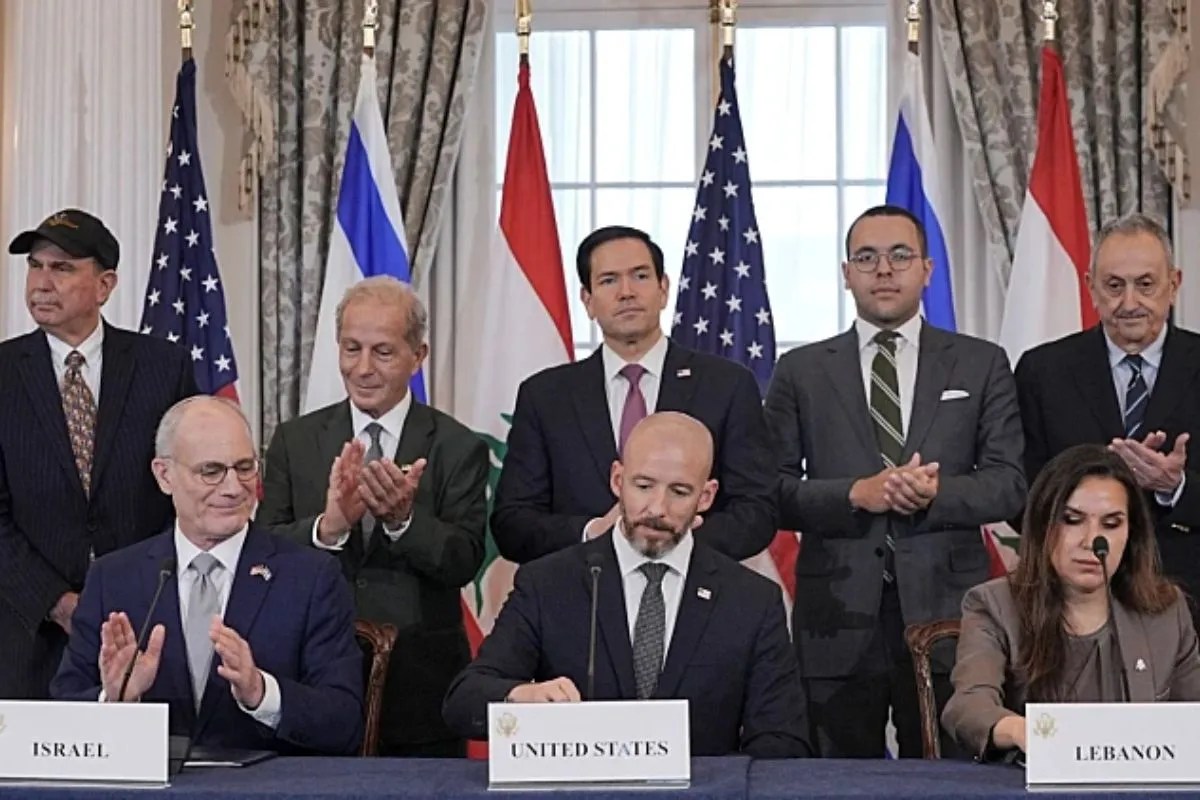
Don't buy the hype about immediate peace in the Middle East just yet. The latest headlines claiming a breakthrough regarding the Israeli troop withdrawal in Lebanon make it sound like the entire conflict is wrapping up neatly. During the recent US-mediated talks in Rome, diplomats hammered out details for Israel to pull back from two specific "pilot zones" in southern Lebanon. On paper, it looks like a massive step forward. In reality, it's a high-stakes gamble built on a foundation of sand.
The framework agreement, initially signed on June 26 under Washington's watchful eye, attempts to establish a gradual exit for Israeli forces. The catch? The plan hinges on conditions that look virtually impossible to meet on the ground. While the mainstream media celebrates the optics of the Rome meetings, a closer look at the actual mechanics of this deal reveals why it could fall apart before the first soldier even packs up.
The Reality of the Israeli Troop Withdrawal in Lebanon
You have to look at what these "pilot zones" actually represent to understand why this deal is so fragile. The framework agreement deliberately left these two initial areas unnamed in the public text to avoid immediate political blowback. The strategy is to test the waters. If Israel pulls back its military units from these experimental pockets, the Lebanese Armed Forces (LAF) are supposed to move in, take absolute security control, and ensure no armed militants return.
Israel's position is clear-cut. Tel Aviv is willing to execute a staged pullback, but only if they get ironclad guarantees that Hezbollah won't simply walk right back into the vacated trenches. They want the Lebanese Army to act as a definitive shield.
Lebanon, on the other hand, is playing a different game. The Lebanese presidency instructed its delegation in Rome to demand that the Israeli military immediately evacuate these two pilot zones before any broader diplomatic topics are even put on the table. They see the ongoing presence of Israeli troops as a direct violation of their national sovereignty. The problem is that what Israel views as a conditional test run, Lebanon views as an overdue obligation.
The Shell of Resolution 1701
To make sense of this setup, you have to look back at UN Resolution 1701, which originally aimed to keep the area south of the Litani River free of any armed personnel except the Lebanese army and UN peacekeepers. That resolution failed to stop the escalation that reignited the border region. Now, with the UN Security Council previously deciding to terminate the UNIFIL mandate by the end of December 2025, the international safety net is gone. The entire burden now falls squarely on the shoulders of the Lebanese state military, which is already stretched to its absolute limit.
Why the Lebanese Army is Trapped in the Middle
The success of this entire diplomatic experiment rests on the Lebanese Armed Forces. An American military delegation already landed in Beirut to discuss the practicalities of handing over these zones. But let's be blunt about the state of the Lebanese military. The country has been enduring a catastrophic economic collapse for years. Soldiers are underpaid, equipment maintenance is lagging, and the institutional capacity to wage a domestic campaign against a heavily armed militia is nonexistent.
Asking the Lebanese Army to keep Hezbollah out of southern Lebanon is like asking a local security guard to block a professional army. If the LAF moves into the pilot zones and looks the other way while militants rebuild their launch pads, Israel will resume airstrikes instantly. If the LAF tries to forcefully disarm local factions, it risks sparking a domestic civil conflict that Beirut cannot afford.
The Hezbollah Veto
You can't talk about a Lebanese peace deal without talking about the elephant in the room. Hezbollah wasn't a formal signatory to the framework agreement, yet they hold the ultimate veto power over whether it succeeds.
Hezbollah's Secretary-General, Naim Qassem, didn't hold back his criticism of the deal. He openly accused the Lebanese government of surrendering national sovereignty and trying to legitimize what he calls a prolonged Israeli occupation. The group has formally rejected the framework's requirement for the disarmament of non-state armed groups in these zones.
Consider the structural contradictions that make this deal an uphill battle:
- The Disarmament Clause: The Rome framework demands the complete removal of non-state weapons from the pilot zones. Hezbollah relies on these border networks for its strategic deterrence and has explicitly stated it will not dismantle its infrastructure.
- The Sovereignty Conflict: Lebanon demands an immediate, unconditional Israeli exit. Israel demands verified security guarantees before moving its main defensive lines back.
- The Enforcement Gap: UNIFIL's minimized role leaves a security vacuum. The Lebanese Army lacks the heavy weaponry and political backing to forcefully keep seasoned militant factions out of the border villages.
What Happens Next on the Ground
Diplomats love to celebrate the "positive atmosphere" of international summits, but the reality on the ground tells a messy story. Even while negotiators were sitting in comfortable rooms in Rome, the Israeli military continued to enforce its security zone in the south, carrying out targeted demolitions of border infrastructure to ensure no easy return for hostile forces.
The next step involves the formal classification of the boundaries of the two pilot zones. If the US military delegation can successfully coordinate a localized handover plan in Beirut, we might see a symbolic pullback of Israeli units from the first zone.
Keep your expectations low. If a single rocket flies out of a pilot zone after an Israeli withdrawal, the entire Rome framework will collapse within hours. Watch the movements of the Lebanese Army over the coming weeks. If they deploy to the border with serious numbers and international financial backing, the deal has a slight chance. If they hesitate, the pilot zones will remain nothing more than words on a diplomatic napkin.