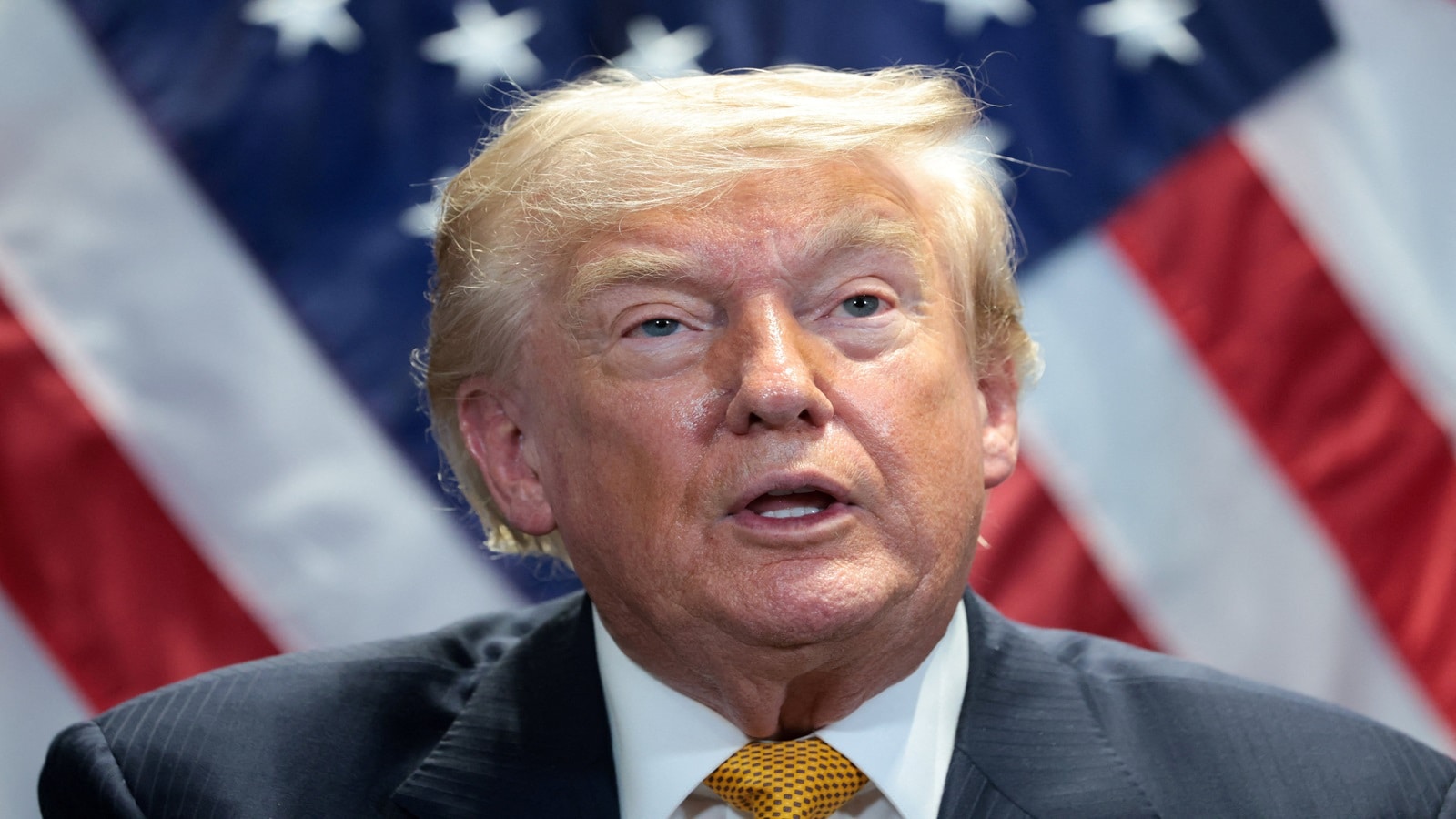
The political world is bracing for a high-stakes televised address this Thursday night. The White House confirmed that President Donald Trump will use the national spotlight to outline what his administration describes as critical voting machine vulnerabilities plaguing the American electoral system. This isn't just another standard speech. It marks a highly calculated escalation in a multi-year campaign to fundamentally reshape how votes are cast, counted, and regulated across the United States.
Mainstream coverage tends to focus entirely on the political theater of the moment. They look at the upcoming speech as a mere rehash of old grievances. That view misses the real story. The reality is far more complex, involving sudden firings at independent federal agencies, declassified intelligence reports, and a quiet struggle over constitutional authority.
You need to look beneath the surface to understand what's actually happening here. This address follows months of behind-the-scenes maneuvering to bypass traditional election watchdogs. If you want to understand where American election policy is heading for the upcoming midterms and beyond, you have to look at the specific chess pieces the administration has been moving over the last few weeks.
The True Blueprint Behind the Voting Machine Vulnerabilities Push
The core argument driving Thursday's address centers on a newly finalized probe by the Office of the Director of National Intelligence. For over a year, federal investigators have been dissecting election equipment. The specific catalyst for this sudden push is an investigation into voting machines that federal authorities seized in Puerto Rico.
A private contractor called Mojave Research handled the forensic analysis of those Puerto Rican machines. Their technical experts discovered distinct flaws. The machines ran on outdated software. Some configurations theoretically allowed for internet connectivity, leaving a theoretical opening for outside actors.
[Mojave Research Forensic Analysis]
       │
       ▼
[Discovered Flaws in Puerto Rico] ──► Outdated Software & Internet Risks
       │
       ▼
[White House Strategy] ──────────────► Declare National Emergency?
White House officials instantly seized on these findings. They argue these exact software gaps exist in thousands of polling places nationwide. They believe the threat of foreign cyber intrusion justifies sweeping federal intervention.
But here's the catch. The forensic analysis explicitly stated there was absolutely no evidence of actual hacking. No vote totals were altered. No outcomes changed. The intelligence community frames this as a proactive assessment of security gaps, not proof of a stolen election. Thursday night will reveal exactly how the president bridges that massive gap between a technical risk and an actual conspiracy.
Dismantling the Gatekeepers From the Top Down
You can't separate the upcoming speech from the bureaucratic earthquake that shook Washington just days ago. For decades, the Election Assistance Commission operated as a boring, bipartisan firewall. Congress built it to distribute election funds, manage federal registration forms, and certify electronic voting equipment. By design, it required a balance of power, meaning no political party could hold more than two of its four commissioner seats.
That balance is gone. President Trump abruptly fired the two Democratic commissioners, Thomas Hicks and Benjamin Hovland. He also accepted the resignation of a key Republican member. The administration was openly frustrated with the commission. White House insiders felt the agency moved far too slowly when it came to updating national security guidelines and pushing states to upgrade their software.
The administration also wanted the commission to implement strict proof-of-citizenship requirements on national voter registration forms. When independent officials pushed back, citing bureaucratic procedures and legal limits, the White House cleared the room.
A recent Supreme Court ruling handed the president the exact legal weapon needed for this move. The court gave the executive branch much broader leeway to fire members of independent boards. The White House didn't hesitate. They issued a blunt statement affirming that the president reserves the right to remove any official who isn't totally aligned with his election security agenda.
By gutting the commission's leadership, the administration effectively paralyzed its policy-making abilities. The remaining staff can still run daily operations, but they can't issue new rules without a quorum of commissioners. This paves the way for the White House to fill those seats with strict loyalists once the Senate confirms them.
The New Players Running the Intelligence Strategy
The sudden staff changes extend deep into the national intelligence apparatus. Tulsi Gabbard recently resigned from her post as the Director of National Intelligence. Before walking out the door, her office compiled a detailed report summarizing these voting machine risks and recommending various software updates. The White House chose to delay the public release of that specific report, opting instead to control the narrative timing through the upcoming national address.
To ensure total control over the declassification process, the president appointed Bill Pulte as the interim DNI. Pulte, who previously directed the federal mortgage regulator, received direct executive authorization to declassify sensitive files tied to past election investigations. Expect Thursday's speech to feature specific, newly unsealed documents curated by this brand-new leadership team.
The Shadow Task Force
Behind the scenes, a newly formed White House task force has been quietly digging through intelligence archives. This group wants to find evidence to support the administration's broader narrative. Journalist John Solomon is actively participating in this project.
Solomon has reportedly requested access to internal files from a 2021 intelligence assessment. The original 2021 assessment concluded that no foreign powers successfully altered any technical aspects of the 2020 vote. However, there was a dissenting minority view within the intelligence community during that review. The task force wants to unearth those specific dissenting files to challenge the long-standing official consensus.
A Legal Collision Course With the US Constitution
This entire strategy is heading toward a massive courtroom battle. The administration has spent over a year attempting to expand federal oversight of election administration. They've floating plans to eliminate mail-in ballots entirely and restrict the use of electronic voting machines across the board.
The president has even argued publicly that states are merely acting as agents for the federal government when they tabulate votes. He claims the executive branch has the ultimate authority to dictate how those votes are counted.
Constitutional lawyers across the political spectrum say that argument is flatly wrong. The U.S. Constitution explicitly states that individual state legislatures hold the primary power to set the times, places, and manner of holding elections. The federal government can pass overarching laws, but the president cannot simply command state election directors via executive fiat.
Internal administration memos reveal that officials have seriously debated declaring a national emergency. They believe an emergency declaration would give them the power to bypass both Congress and the individual states, forcing local governments to overhaul their voting systems immediately. If the president announces a national emergency on Thursday night, it will trigger immediate lawsuits from state governors and voting rights organizations.
What Local Governments and Election Officials Must Do Right Now
The political battle will play out on television networks, but the operational fallout will land squarely on local county clerks and election workers. If you manage local election infrastructure, you cannot afford to sit back and watch the show. You need to protect your system's integrity against both real technical bugs and political attacks.
Inventory and Patch Your Software Immediately
The administration is targeting systems running outdated operating systems or unpatched code. Work directly with your certified machine vendors to verify that your ballot-marking devices and optical scanners run the absolute latest firmware. Document these updates meticulously so you can prove your systems meet rigorous standards if partisan actors challenge them.
Audit Your Air Gaps
The easiest way to kill a conspiracy theory is with cold, hard technical proof. Ensure that your tabulation servers are completely air-gapped from the public internet. Run physical inspections of every machine港 ports. Ensure all wireless modems are disabled or removed entirely. Keep strict, dual-custody logs of who accesses these machines, and back up those access logs on physical paper records.
Expand Paper-Based Audit Trails
Paper is your best friend right now. The vast majority of American jurisdictions already rely on hand-marked paper ballots or voter-verified paper audit trails. Lean into this heavily. Ensure your storage facilities for paper ballots feature 24-hour video surveillance and strict physical lock-and-key access. When you run routine post-election audits, invite local representatives from both major political parties to witness the hand counts. Transparency is the only way to maintain public trust when national rhetoric seeks to destroy it.
The upcoming speech isn't just about relitigating old battles. It's about laying a concrete foundation to challenge future losses, tighten federal control, and rewrite the rules of American democracy right before the midterms arrive.