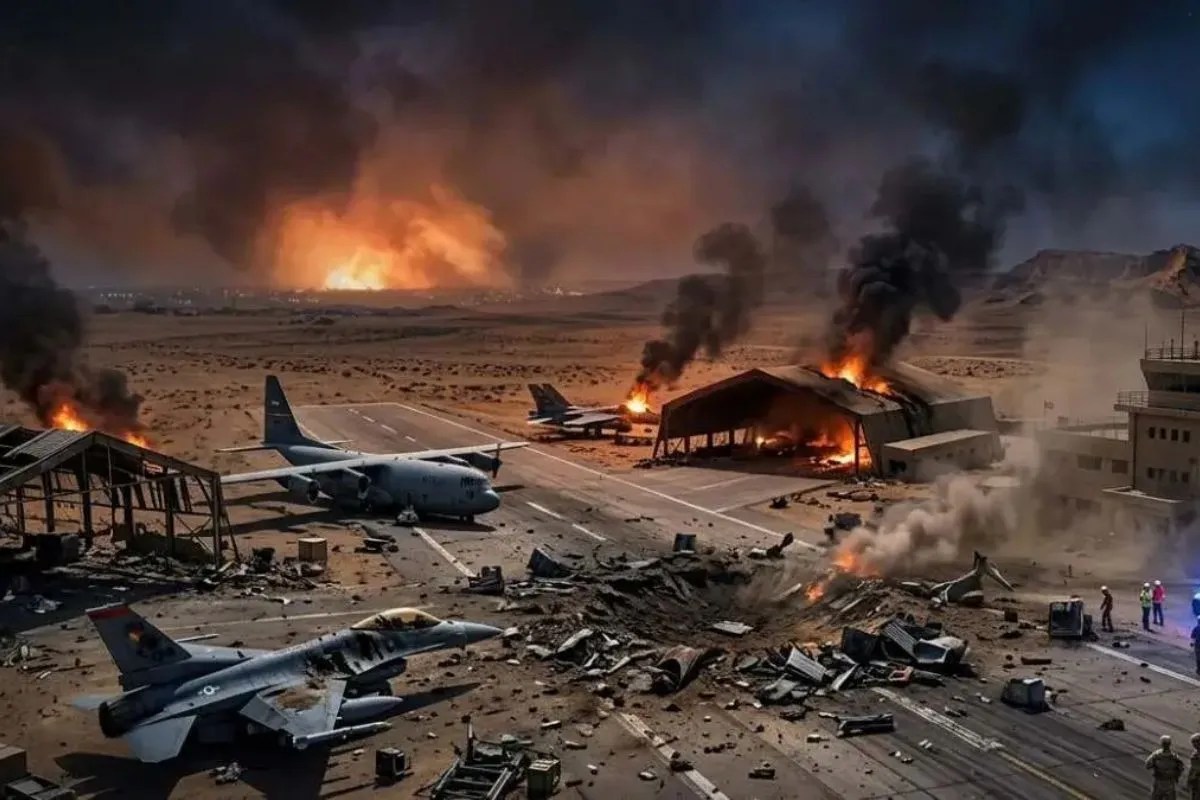
The tragic news out of Jordan hits hard. The Pentagon confirmed that 25-year-old 1st Lt. Tyler James Feehan of Ewa Beach, Hawaii, and 19-year-old Pvt. Isabella Gonzales of Carrollton, Texas, lost their lives following a barrage of Iranian ballistic missiles and attack drones. They weren't fighting on some distant frontline in Tehran. They were stationed at Muwaffaq Salti Air Base in Jordan, providing air defense support for Operation Inherent Resolve.
This loss brings a heavy reality into focus. American troops spread across regional garrisons aren't standing in safe rear positions anymore. Air defense units face round-the-clock bombardment in a conflict where the lines between frontlines and safe zones have completely dissolved.
Who Were Tyler James Feehan and Isabella Gonzales
Putting names and stories to military casualty statistics matters. These weren't anonymous soldiers on a spreadsheet.
Tyler James Feehan was a first lieutenant assigned to the 2nd Battalion, 55th Air Defense Artillery Regiment under the 32nd Army Air Missile Defense Command out of Fort Bragg, North Carolina. At 25, he carried huge responsibility on his shoulders, overseeing tactical air defense systems built to intercept incoming aerial threats. The Army announced his posthumous promotion to captain, alongside the Bronze Star, Purple Heart, and Combat Action Badge.
Isabella Gonzales was just 19 years old. A recent graduate from Hebron High School in Carrollton, Texas, she had enlisted straight out of school and joined the 1st Battalion, 57th Air Defense Artillery Regiment, 52nd Air Defense Artillery Brigade, part of the 10th Army Air Missile Defense Command based in Ansbach, Germany. Her former school district noted her extraordinary commitment to serve right after graduation—a decision that tragically ended on a foreign airbase thousands of miles from home.
The military confirmed Gonzales died Friday during the initial attack, while Feehan died the following day from injuries sustained during the strike. Four other service members were medically evacuated to local hospitals before being discharged, while others received treatment for minor injuries.
Why Muwaffaq Salti Air Base Became a Target
Muwaffaq Salti Air Base in Azraq, Jordan, sits hundreds of miles from Iran's physical borders. Yet it serves as a central hub for U.S. and coalition aircraft, drone logistics, and air defense coordination across the region.
When regional tensions erupted into open warfare earlier this spring, bases like Muwaffaq Salti turned into primary targets for incoming ballistic missiles and heavy attack drones. Iranian forces aren't just targeting forward assault positions. They're going directly after the air defense shields that protect American personnel and regional allies.
1st Lt. Feehan and Pvt. Gonzales were air defense artillery soldiers. Their job wasn't offensive combat—it was operating complex missile defense batteries designed to track, target, and knock down incoming threats before impact. The fact that an attack succeeded at their base underscores the brutal math of modern drone and missile warfare: attackers only need a few warheads to get through a complex defensive umbrella, while defenders have to intercept every single incoming strike with 100% precision.
The Human Cost Across the Region
This strike isn't an isolated incident. Total U.S. military casualties in the conflict have reached 17 service members, with deaths spread across multiple countries in the region:
- Six logistics soldiers killed in a drone attack on a port facility in Kuwait during the opening days of hostilities.
- A service member who died from injuries after a strike on Prince Sultan Air Base in Saudi Arabia.
- Six crew members lost when a KC-135 air refueling tanker went down over Iraq during support operations.
- A service member killed in northern Iraq during a controlled detonation of unexploded drone ordnance.
These losses highlight how dangerous daily operations are for military personnel stationed throughout the region, even when they're handling routine support, air defense, or logistics tasks.
Why Air Defense Troops Suffer the Brunt of Modern Missile Warfare
Air defense units like the ones Feehan and Gonzales belonged to are under relentless pressure. Modern missile salvos combine high-speed ballistic missiles with low-flying suicide drones. This tactic aims to overwhelm radar sensors and deplete interceptor magazines.
Air defense batteries must stay active continuously. Radar systems radiate energy that electronic warfare assets can detect, making missile defense sites prime targets for follow-up strikes. Soldiers working inside these batteries don't get the luxury of taking cover during an attack—they have to stay at their stations to track incoming targets and keep everyone else on the base safe.
That courage comes at an enormous personal price.
Practical Steps to Support Fallen Military Families
When tragedies like this happen, honoring the memory of those who served requires actionable support for surviving families and veterans.
- Support Gold Star Family Organizations: Non-profits like the Tragedy Assistance Program for Survivors (TAPS) provide free grief support, counseling, and peer networks for families of fallen service members.
- Engage Local Community Support: Local school districts, community funds, and veteran centers in cities like Carrollton, Texas, and Ewa Beach, Hawaii, organize memorial scholarships and family assistance funds.
- Stay Informed Through Official Channels: Avoid sharing unverified rumors about military incidents on social media. Rely on official Defense Department updates and credible news reporting out of respect for military families awaiting news.
The deaths of 1st Lt. Tyler James Feehan and Pvt. Isabella Gonzales remind us that every strategic decision in Washington carries a direct human cost on the ground.