For decades, federal food assistance on Indian reservations meant one thing: opening a box filled with highly processed, shelf-stable commodity items. White flour, white sugar, and canned meats shipped from distant government warehouses became the norm. This system didn't just undermine the health of Native communities; it systematically severed their connection to ancestral agricultural traditions.
Right now, a major battle is playing out in Washington over the multi-year Farm Bill. Tribal leaders, agricultural experts, and small-scale farmers are pushing Congress to change how federal dollars flow into Indian Country. It isn't just about charity or filling bellies. It's about data, health, economic survival, and cultural survival.
The core of this fight rests on a simple premise. Tribes want the authority to buy their own food from their own people. When the federal government controls the food supply chain, things break down. We saw it clearly during the massive USDA distribution warehouse disruptions, where shipments delayed for weeks left families stranded. Tribes participating in self-determination purchasing pilots didn't have that problem. They pivot immediately to local producers. They buy bison from a neighboring tribal ranch or wild rice from a local grower.
This model works, yet its future is on thin ice.
The Broken Logic of Federal Food Distribution
To understand why the current Farm Bill negotiations are so critical, you have to look at the Food Distribution Program on Indian Reservations (FDPIR). This program serves as a lifeline for low-income families living on or near reservations. For many rural communities lacking a local grocery store, FDPIR is the only option. Households can't use both SNAP and FDPIR simultaneously, meaning families must choose between standard food stamps and the reservation commodity program.
For generations, the USDA managed every single piece of the FDPIR supply chain. They chose the vendors, bought the bulk goods, packed the boxes, and shipped them out. The results were disastrous for public health. Diabetics received carbohydrate-heavy foods. Traditional diets vanished.
Change finally started with a small, underfunded pilot program in the 2018 Farm Bill. Known as the "638 self-determination" pilot, named after the Indian Self-Determination and Education Assistance Act, it allowed a handful of selected tribes to take the federal funds and buy foods themselves.
Instead of standard frozen chicken, the Oneida Nation and Menominee Indian Tribe of Wisconsin teamed up to procure local white fish, lake trout, and grass-fed bison. In Washington, the Lummi Nation bought fresh salmon directly from its tribal fisheries. The program proved that local sourcing keeps federal dollars circulating inside hard-hit tribal economies while getting nutrient-dense, fresh food to elders and children.
Yet, despite this success, the program hit a wall in the House of Representatives.
The Budget Score Standoff in Congress
The House passed its version of the farm bill, the Farm, Food and National Security Act, but it completely omitted the reauthorization or expansion of the FDPIR 638 pilot. Why would lawmakers cut a bipartisan program that works?
The issue comes down to a controversial calculation by the Congressional Budget Office (CBO). The CBO estimated that making this self-determination authority permanent across all tribes would cost more than $380 million over a ten-year period. Tribal advocates argue this math is fundamentally flawed. The CBO scored the expansion as an entirely new expense rather than a shift in existing funds. Tribes aren't asking for extra money to buy additional food; they want to spend the same money differently. They want to buy a pound of local bison instead of waiting for the USDA to ship a pound of industrial beef.
Representative Tom Cole and other tribal allies have challenged this budget offset issue, but the omission stands in the House text. Now, the battleground shifts to the Senate, where a draft committee text took shape. Tribal leaders are aggressively lobbying senators to restore the pilot program and make it permanent.
The High Stakes for Heritage Farms
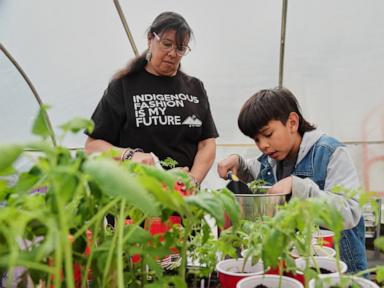
The policy battle isn't just happening in Washington committee rooms. It directly impacts people like Dawn and Cassius Spears at Ashawaug Farm in Rhode Island. On their small farm, they cultivate Narragansett heritage crops: white corn, succotash beans, and crookneck squash. These aren't just commercial products. They are living pieces of history.
During the pandemic, federal initiatives like the Local Food Purchase Assistance (LFPA) cooperative agreement program gave tribes direct financial power to buy from operations like Ashawaug Farm. The Spears family could sell their traditional crops to a tribal farm in nearby Connecticut, which then distributed the food to tribal members who desperately needed it.
It provided a reliable, predictable market for small-scale Indigenous farmers. It allowed low-income families to access foods that are otherwise too expensive or impossible to find in a standard supermarket box.
Then the policy shifted. The Agriculture Department ended both the LFPA and the Local Food for Schools programs, claiming the initiatives no longer aligned with agency goals. The sudden cutoff left small farmers vulnerable and tribes scrambling to fill the void.
When federal programs start and stop on a political whim, small farms suffer. You can't plan a crop cycle, purchase specialized equipment, or hire workers when your primary market might vanish next season. That's why advocacy groups like the National Sustainable Agriculture Coalition are demanding mandatory funding in the new Farm Bill. Without mandatory status, programs rely on annual congressional appropriations, which means they face the chopping block every single year.
Expanding Self-Determination Beyond the Pilot Stage
The ultimate goal for Indian Country goes far beyond saving a few small pilot projects. Tribal sovereignty means having the authority to manage community health without begging for temporary federal permissions.
If a tribe can successfully manage its own healthcare facilities and law enforcement through self-governance contracts, it can certainly manage its dinner tables. Advocates argue that 638 authority should expand to all tribes administering FDPIR, giving them total control over food selection, procurement, and distribution logistics.
Some tribes want to go even further by expanding this self-governance model to SNAP. About 24 percent of Native households rely on SNAP benefits. Right now, states administer SNAP, leaving tribal governments completely out of the loop. If tribes could administer SNAP, they could tailor outreach, streamline enrollment, and design nutritional education programs that actually reflect the realities of reservation life.
Real Steps to Support Food Sovereignty
If you want to see this system change, waiting around for Congress to pass a multi-trillion-dollar bill isn't your only option. Real traction happens when consumers, advocates, and local leaders take distinct steps to support the movement.
- Buy directly from Native producers: Check the Intertribal Agriculture Council's registry. Seek out authentic projects like Red Cliff Fish Company or Spirit Lake Native Farms. Buying their products directly provides the economic stability federal programs fail to guarantee.
- Pressure your senators on the Farm Bill: Contact your representatives and specifically mention the restoration of the FDPIR 638 self-determination authority and the inclusion of mandatory funding for local food purchase grants. Point out that the CBO's $380 million score misinterprets how tribal procurement saves money by reducing administrative overhead and supply chain delays.
- Support regional tribal food infrastructure: Many tribes lack the commercial kitchens, meat processing facilities, or cold storage warehouses needed to scale up production. Donating to or partnering with groups like the Indigenous Food and Agriculture Initiative helps build the physical infrastructure required for true independence.
The current system forces tribes to rely on a distant supply chain that has repeatedly failed them. True food sovereignty isn't a luxury or a cultural experiment. It's a matter of basic health, regional economic stability, and self-governance. Congress needs to stop treating tribal nutrition as a bureaucratic line item and start treating tribal nations as the sovereign governments they are.