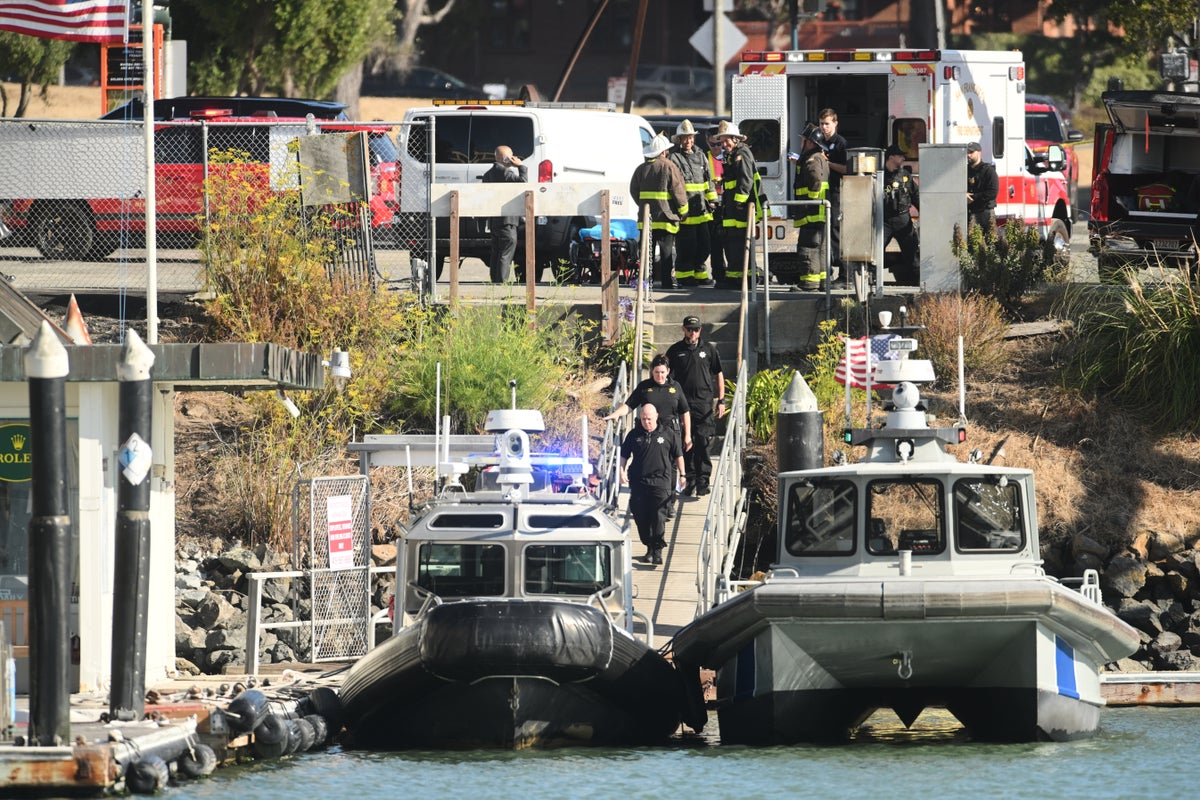
A sunny afternoon on the San Francisco Bay turned into an absolute nightmare on Tuesday, July 14, 2026. A massive, three-deck pontoon pleasure boat carrying 19 people capsized and went down. It happened just 600 yards from Alcatraz Island. The disaster left one person dead, two missing, and 16 pulled from the frigid, fast-moving currents.
When you think of a pontoon boat, you probably picture a lazy day on a calm, glass-like lake. You don't think of the punishing, wind-whipped swells of the San Francisco Bay. That mismatch between vessel type and open-water environment is at the heart of a tragedy that has stunned local mariners.
The emergency began with a frantic call. At around 3:30 p.m., emergency dispatchers received reports of a vessel on fire between the Golden Gate Bridge and Alcatraz Island. What rescuers actually found when they arrived was far more terrifying.
What Happened When the Boat Sinks Near Alcatraz Island
The vessel, which reportedly began its journey near the St. Francis Yacht Club in San Francisco's Marina district, was a custom triple-deck pontoon boat. This isn't your average rental. It was a large, top-heavy craft carrying 19 adults and one dog.
As the boat navigated the famously choppy waters about 550 meters off Alcatraz, something went horribly wrong. The vessel capsized, dumping its passengers into the 55-degree water.
When the San Francisco Fire Department and the U.S. Coast Guard arrived, they didn't see flames. Instead, they saw a chaotic scene of survival. Only the very top deck of the boat remained above water. Its outboard motor was still running, screaming under the strain and spewing exhaust into the air, while fuel leaked rapidly into the surrounding bay. Within minutes, the entire three-story structure slipped beneath the surface.
First responders immediately pulled a severely injured passenger from the water and began CPR right on the dock. Despite intense lifesaving efforts, that individual was declared dead. Three other survivors were rushed to a local hospital with impact injuries sustained from falling or jumping off the tilting vessel. Sadly, the dog on board also perished in the incident.
The Chaos of the Initial Rescue
In moments like this, minutes dictate who lives and who dies. The waters surrounding Alcatraz are notorious. They are cold, swift, and completely unforgiving.
Private boat captains in the area were the first to notice the unfolding disaster. Aaron Anfinson, captain of the charter vessel Bass-Tub, was heading toward the Golden Gate Bridge when a smaller boat flagged him down. The boater pointed toward what looked like a fire near Alcatraz.
When the Bass-Tub arrived, the situation was already critical. The pontoon boat was sinking fast. People were screaming in the water. Others clung desperately to the remaining dry spots of the vessel. Anfinson and his deckhands immediately began throwing life jackets and life rings to the victims. They managed to pull a woman with a severe head injury onto their swim ladder.
Shortly after, a massive flotilla of rescue craft arrived. The response was huge:
- San Francisco Fire Department marine units
- U.S. Coast Guard patrol boats
- Oakland Police Department marine division
- 11 active search-and-rescue vessels
- Emergency helicopters and dive teams
Rescuers quickly transported 13 of the uninjured survivors to the Gashouse Cove Marina in San Francisco's Marina district. There, paramedics wrapped shivering, shock-stricken survivors in heavy blankets.
The Cold Reality of the San Francisco Bay
Alcatraz Island is famous for a reason. The federal prison built there was considered escape-proof, not because of the walls, but because of the bay itself.
The bay is a giant funnel. When the Pacific tide rushes in and out through the narrow gap under the Golden Gate Bridge, it creates massive, turbulent currents. These currents can easily exceed several knots. Combined with strong afternoon winds that routinely reach 20 to 30 miles per hour, the area near Alcatraz turns into a washing machine of short, steep waves.
The water temperature on July 14 hovered around 53 to 55 degrees Fahrenheit. In water that cold, cold shock response happens instantly. You gasp involuntarily. If your head is underwater, you drown immediately. Within minutes, your fingers lose dexterity, making it nearly impossible to climb onto a rescue boat or hold onto a float.
The Big Mystery of the False Fire Reports
Early news reports and the initial 911 calls insisted the boat was on fire. SFFD Fire Chief Dean Crispen later clarified that investigators found no physical evidence of a fire.
So why did multiple eye-witnesses report smoke and flames?
The answer lies in the boat's final moments. When a large pontoon capsizes, the heavy outboard engines often remain submerged but still running. Because the fuel lines and electrical systems short out or flood, the engine struggles. It burns oil, leaks raw fuel, and emits thick, dark white and grey smoke. From a distance, this exhaust plume looks exactly like a shipboard fire. The slick of gasoline spreading on the water can also create a shimmering reflection that looks like flames to an observer on a distant boat.
Why Pontoon Boats and Open Bays Do Not Mix
This incident raises serious questions about vessel suitability. Pontoon boats are incredibly stable in flat water. They have a wide beam and plenty of deck space.
But they have a fatal flaw in rough, open ocean water: they lack buoyancy on the ends, and they do not shed water well.
A traditional monohull boat has a pointed bow designed to slice through waves and high sides to keep water out. A pontoon boat has a flat deck sitting on top of two or three aluminum tubes. If a large wave washes over the front of a pontoon, the water has nowhere to go. It traps itself on the deck, adding thousands of pounds of instant weight.
Furthermore, a three-deck pontoon boat is a sail. It has a massive surface area. When strong bay winds hit the side of a tall, multi-deck pontoon, it acts like a giant billboard, pushing the boat sideways and dramatically increasing the risk of capsizing. If you pack 19 adults onto the upper decks, the center of gravity rises dangerously high. One bad wave is all it takes to flip the entire craft.
Active Search Efforts and Next Steps
By Wednesday morning, July 15, 2026, the search for the two missing passengers remained active but grim. Dive teams faced zero-visibility conditions on the muddy bottom of the bay, while helicopters scanned the surface.
Mayor Daniel Lurie called it an "all-hands-on-deck" effort. However, given the fast eastbound current at the time of the capsizing, authorities estimate that any victims not immediately rescued would have been swept quickly toward the deeper parts of the east bay.
If you are planning to boat on the San Francisco Bay, this tragedy serves as a stark reminder of basic survival rules:
- Always wear a life jacket. Do not just keep them on board. Wear them. When a boat flips instantly, you will not have time to find a locker.
- Check the tide and wind tables. The intersection of an ebb tide and a strong west wind creates dangerous standing waves near Alcatraz.
- Know your vessel's limits. Multi-deck pontoons are not designed for rough coastal waters. Keep them in protected harbors or inland lakes.
The Coast Guard has launched a formal investigation into the cause of the sinking. They will look at passenger weight distribution, vessel modifications, and whether the operator possessed the necessary licenses and local knowledge to navigate one of the most treacherous bays on the Pacific coast.