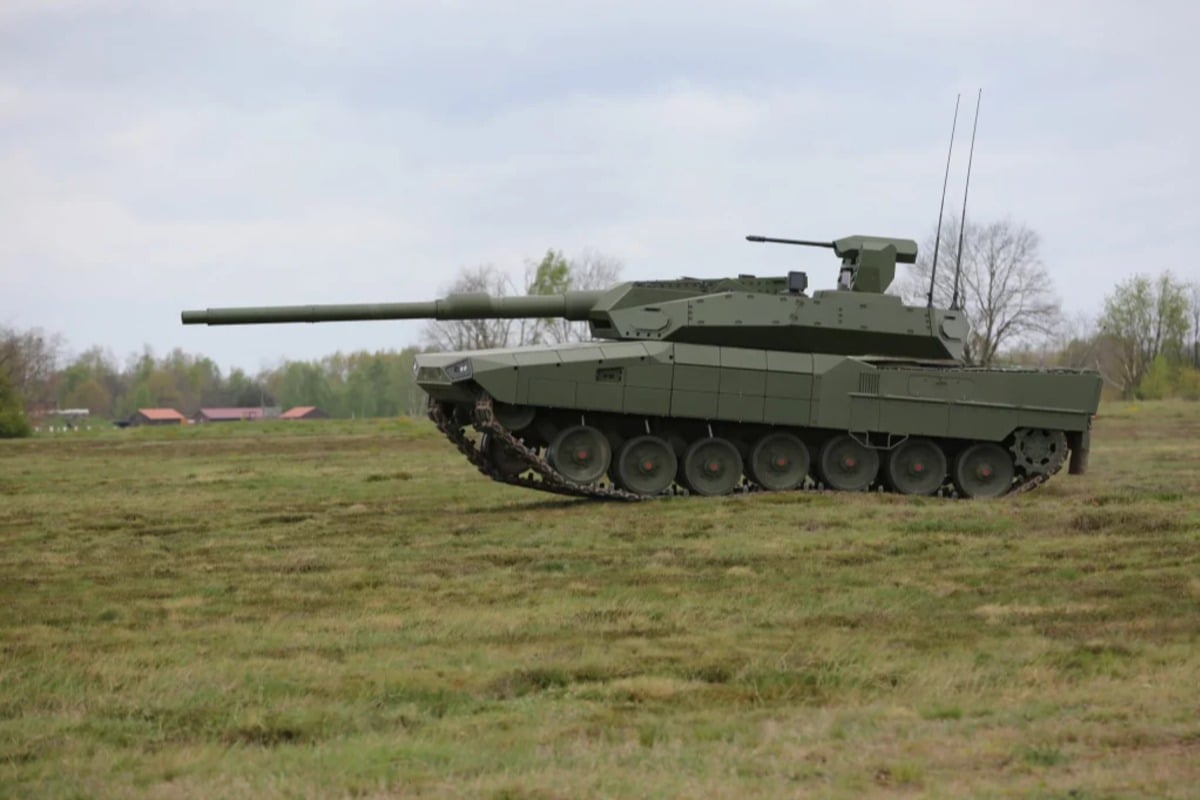
Big European defense collaborations look great on paper, but they rarely survive the reality of national egos and corporate checkbooks. The latest casualty is the Main Ground Combat System (MGCS)—the highly anticipated joint project meant to build a next-generation battle tank for Germany and France.
It’s no longer just a rumor or behind-the-scenes grumbling. The German Federal Ministry of Defence basically gave up the ghost following a recent Intergovernmental Council meeting, altering the language of the project completely. Instead of building a unified fleet of armored heavy hitters with a shared chassis, Paris and Berlin are scaling things back dramatically. They've pivoted to developing "platform-independent technology."
Let’s translate the diplomatic speak: the joint European tank is dead. What’s left is a shared software project.
The Illusion of a Shared Chassis
When the MGCS program kicked off in 2017, the vision was grand. It wasn't just about building a single vehicle to replace Germany’s Leopard 2 and France’s Leclerc tanks. It was supposed to be a whole family of combat vehicles—missile platforms, support variants, and heavy tanks—all sharing the same basic mechanical DNA.
That dream imploded because the two nations couldn't agree on what a tank should actually do, let alone who should build it.
The friction became undeniable during the signing of industrial responsibilities. Germany and France couldn't even agree on a single turret design or the size of the main gun. The French wanted their national champion, KNDS France, to push forward with the ASCALON gun system, while the Germans were dead set on their own Rheinmetall tech. The "compromise" they reached at the time was laughable: they decided to develop both guns independently and pick a winner later. That isn't cooperation; it’s two countries running parallel programs under the same banner.
Now, the official language has stripped out any mention of a unified vehicle family. The partners are focusing exclusively on the "digital nervous system"—the software architecture and networked cloud environments that allow different military platforms to talk to one another.
Why the Tech Pivot is a Coordinated Retreat
If you look at how European defense projects fail, this timeline feels incredibly familiar. It mirrors exactly what happened to the Future Combat Air System (FCAS), the joint fighter jet program that recently imploded after Dassault and Airbus couldn't resolve their turf wars. In that case, too, the partners retreated to cooperating merely on the "Combat Cloud" software rather than the actual airframe.
By shifting MGCS to "platform-independent" tech, Germany and France can save face politically while building what they actually want domestically.
MGCS Splintering: What’s Left of the 8 Pillars?
┌──────────────────────────────────────┐
│  SURVIVING JOINT EFFORTS (SOFTWARE)  │
├──────────────────────────────────────┤
│ - Pillar 4: Digital Nervous System   │
│ - Pillar 5: Simulation Environments  │
└──────────────────────────────────────┘
┌──────────────────────────────────────┐
│   DOMESTIC SPLITS (HARDWARE/HULLS)   │
├──────────────────────────────────────┤
│ - Pillar 1: Chassis & Navigation     │
│ - Pillar 2: Main Gun & Turret        │
│ - Pillar 7: Armor & Active Protection│
└──────────────────────────────────────┘
The physical reality of the program has devolved into independent national survival strategies. Intelligence agencies warn that the window between 2027 and 2035 is the most volatile period for European security, yet the MGCS timeline has slipped deep into the 2040s. Neither army can afford to wait that long with aging fleets.
The Panic Upgrades and Stopgap Tanks
Because the joint program delayed real vehicle manufacturing by at least a decade, both nations have rushed to build their own interim armor.
- Germany's Play: Berlin didn't hesitate. They launched the Leopard 2AX (frequently called the Leopard 3) in partnership with KNDS Germany and Rheinmetall. It builds on the existing, wildly successful Leopard 2 ecosystem, ensuring the Bundeswehr doesn't have a capability gap in the 2030s.
- France's Play: Paris is in a tougher spot because their Leclerc tanks are scheduled for retirement by 2038, and their stopgap upgrades don't offer long-term protection. At the Eurosatory defense expo, KNDS unveiled the CAPINT demonstrator tank—a hybrid vehicle combining a German chassis with a French uncrewed turret firing the 120mm ASCALON gun.
French Army Chief of Staff General Pierre Schill openly talks about the MGCS project in the past tense. The battlefield lessons from Ukraine have shown that heavy, lone 70-ton tanks get picked apart by cheap drone swarms and loitering munitions. France is moving toward lighter, highly network-centric 40-to-45-ton medium armored families reinforced by robotic wingmen. They are optimizing for their own strategic vision, not Germany's.
Sovereignty Trumps Synergy Every Single Time
You can't have a shared tank when your strategic doctrines point in completely opposite directions. Germany focuses heavily on heavy armor defense for continental Europe, heavily reliant on NATO frameworks and often buying American gear like the F-35 when local projects stall. France actively despises this approach, viewing it as a surrender of European strategic autonomy.
When the chips are down, neither Paris nor Berlin is willing to let their domestic industrial base become a secondary partner to the other.
If you are an investor, defense contractor, or military analyst tracking European procurement, stop looking at MGCS as a unified hardware vehicle program. Treat it exactly for what it has become: a localized data-sharing protocol designed to let upcoming, entirely distinct French and German tanks share targeting coordinates on a future battlefield. The age of the pan-European super tank is over before it ever began.