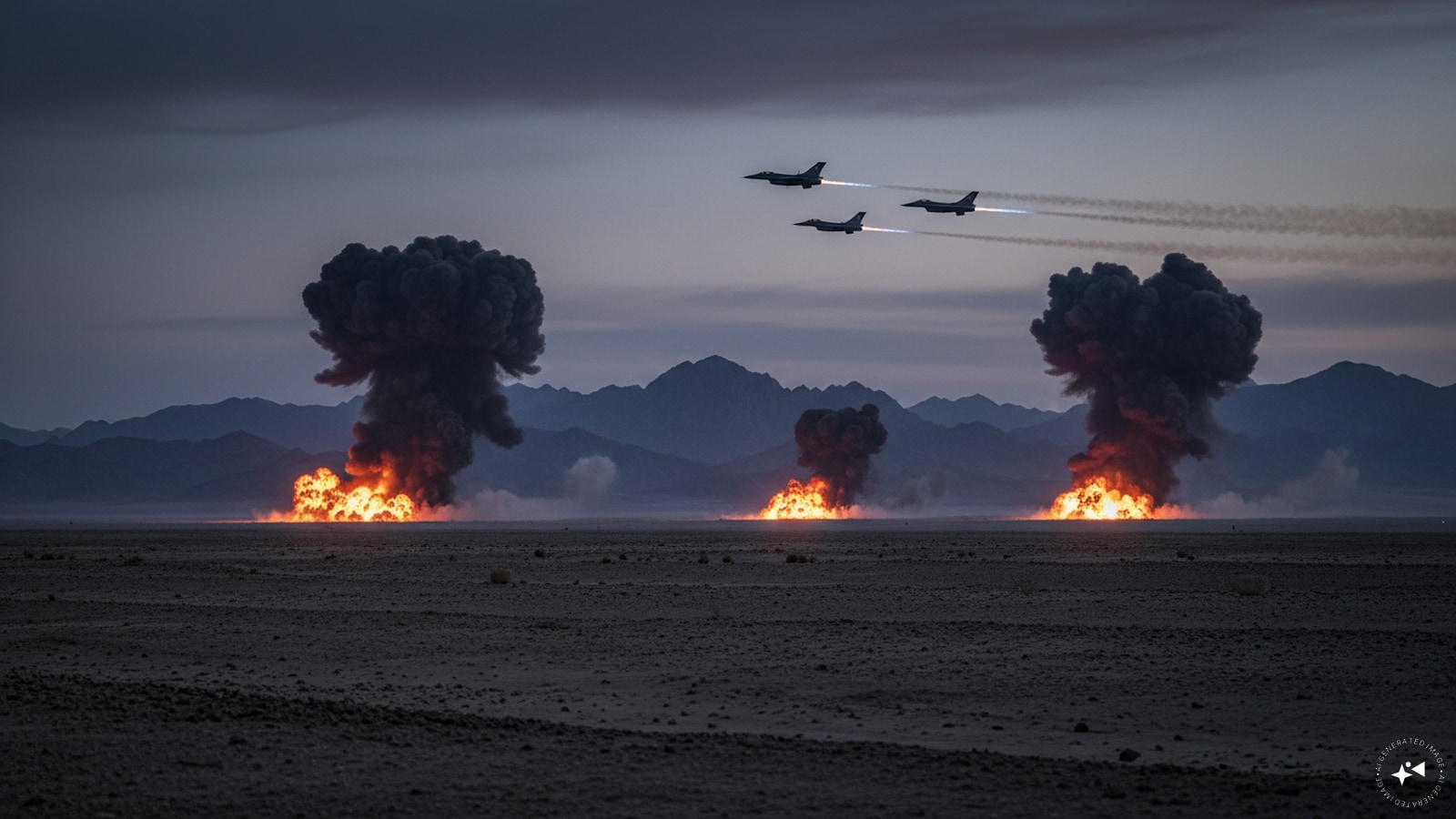
The Middle East just crossed a line that everyone spent the last few months trying to avoid. Over the weekend, US Central Command (CENTCOM) launched a massive wave of airstrikes hitting more than 80 targets across Iran. This wasn't just another routine proxy skirmish in a distant desert. It was a direct, heavy-handed retaliation after Iranian ballistic missiles and kamikaze drones slammed into a military base in Jordan, killing two American service members and leaving another missing.
If you've been tracking this conflict, you know it's the deadliest direct flashpoint between Washington and Tehran since the war initially broke out earlier this year. The fragile diplomatic threads holding the region together didn't just fray; they snapped completely.
For months, the official line from Washington was that targeted strikes and defensive positioning would force Tehran to back down. But if the goal was to keep a lid on the geopolitical pressure cooker, the weekend's escalation proves that the current strategy isn't working.
The Deadliest Flashpoint Yet
What actually happened in Jordan on July 17 highlights a significant shift in how this war is being fought. This wasn't an attack by a local militia group operating with plausible deniability. CENTCOM explicitly stated that American and partner forces were actively defending against direct Iranian ballistic missile and drone barrages.
The fallout was immediate and severe:
- Two US service members killed in action.
- One American service member remains missing.
- Four others were hospitalized before being released.
With these latest casualties, the total human cost for American forces since the conflict ignited in late February has climbed to 16 dead and over 430 wounded.
The White House reaction was swift. President Donald Trump ordered a massive, multi-night aerial campaign to punish the Islamic Revolutionary Guard Corps (IRGC). By Sunday night, American assets completed their eighth consecutive night of strikes, flattening coastal surveillance hubs, air defense sites, and drone storage depots scattered throughout southern and western Iran. Explosions lit up the horizons of major hub cities like Bandar Abbas, Bushehr, and Qeshm.
The Pentagon claims these operations are meant to destroy Iran's ability to disrupt commercial shipping through the Strait of Hormuz. But looking at the sheer scale of the bombardment, it's clear the message was meant to be purely punitive.
Why Deterrence Failed and Diplomacy Collapsed
To understand why we're back on the brink of an all-out regional war, we have to look at the spectacular collapse of the Islamabad memorandum.
Just last month, US and Iranian negotiators quietly engineered a 60-day framework aimed at ending the fighting, lifting specific economic sanctions, and curbing Iran’s nuclear ambitions. It was supposed to be a breather. Instead, it became a tactical pause.
Hours before the Jordan attack, Iranian officials announced they were officially suspending their commitments to that interim deal. Immediately after, state television broadcasted a fierce message from Mojtaba Khamenei—the son of the late Ayatollah Ali Khamenei, who was killed in US-Israeli strikes back in February. He dismissed President Trump’s signature as "worthless" and promised "unforgettable lessons".
This gets to the core of why standard military deterrence is failing here. Washington treats military strikes as a tool to force a diplomatic compromise. Tehran, missing its long-standing supreme leader and facing immense internal and external pressure, views compromise as an existential threat. Every American missile dropped gives the regime more political ammunition to rally its remaining regional proxies—the self-proclaimed "Axis of Resistance"—into a unified front.
The Fallout Beyond the Battlefields
The direct military tit-for-tat is dangerous enough, but the ripple effects are already causing serious economic pain globally.
The Stranglehold on Global Oil
Before this war started, the Strait of Hormuz handled roughly 20% of the world's daily petroleum supply. Iran effectively choked off that commercial corridor early on, and the renewed fighting means the naval blockade is tighter than ever. Insurance premiums for cargo ships have gone through the roof, and shipping companies are forcing vessels into lengthy, expensive detours around Africa. If the Strait stays closed through the end of the year, global energy markets are going to see massive price spikes, driving up inflation when consumer markets are already highly vulnerable.
The Threat to Regional Neighbors
The conflict isn't staying inside Iranian borders. Tehran is actively lashing out at US allies and regional logistics hubs. Shortly after the American airstrikes, Iranian forces launched kamikaze drone waves into Kuwait, targeting the ammunition depot at Camp Udairi and degrading Patriot radar defenses at Ali Al Salem Air Base. They also struck Kurdish political bases near Erbil, Iraq. Countries like Kuwait, Bahrain, and Jordan find themselves pinned directly in the crossfire of a superpower clash.
What Happens Next
The biggest mistake anyone can make right now is assuming this conflict will just burn itself out. We've moved past the point of shadow wars and deniable proxy attacks. We're looking at a direct, conventional confrontation between the United States military and a heavily armed state actor.
With more than 50,000 American troops deployed across the Middle East, the target package for Iranian drones and ballistic missiles is massive. The White House has made it clear that it won't back down from protecting global maritime trade or avenging killed soldiers. Tehran has dug in its heels, gambling that it can inflict enough logistical and human costs on US forces to break Washington's political will.
If you're watching this unfold, look past the daily operational briefings and casualty counts. The real metric to watch over the coming weeks is whether any backchannel communication remains open between Washington and Tehran. If the diplomatic lines remain completely dark, the current cycle of strike and counter-strike will inevitably pull the entire region into a wider, uncontrollable war.