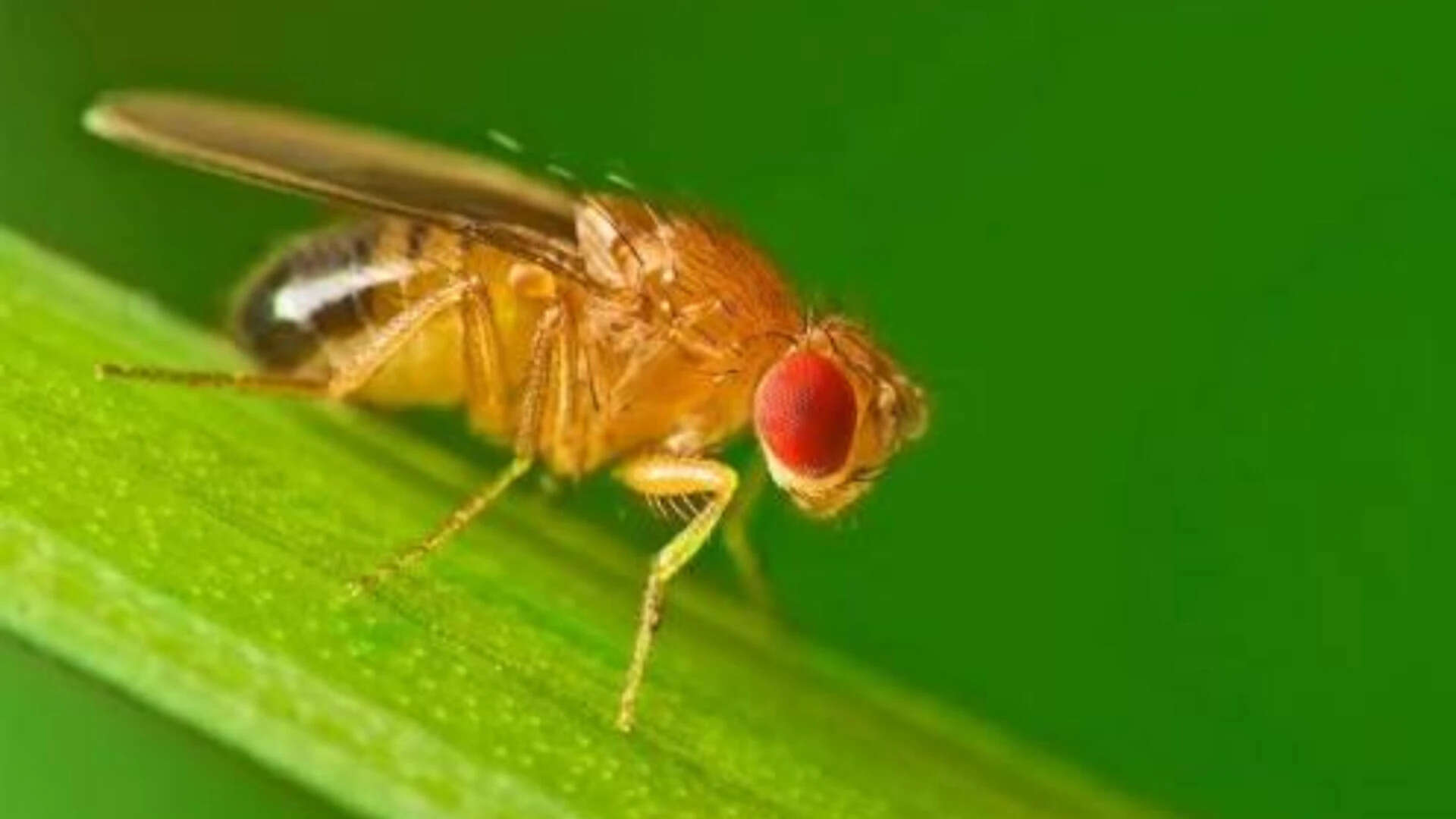
Winter changes everything for a tiny fruit fly. You probably think of them as annoying pests buzzing around your overripe bananas in July. By December, they seem to vanish. They don't all just die off. They survive cold months through a mind-bending feat of biological engineering that scientists are only now beginning to fully map out.
For decades, we assumed the biological clock was a rigid piece of machinery. We thought it ticked away at the same steady pace, adapting slightly to light but keeping its basic structure intact. That assumption was wrong.
Recent neurobiology research shows that fruit flies physically restructure their brains when the seasons turn. They don't just tweak their schedules. They tear down their daily internal clock and build a completely separate seasonal version. This discovery rewrites what we know about animal survival and challenges our understanding of our own internal rhythms.
The Illusion of the Fixed Clock
Every living thing relies on a circadian clock. It governs when you wake up, when you get hungry, and when your energy slumps. In the common fruit fly, Drosophila melanogaster, this clock is driven by a network of roughly 150 specialized neurons in the brain.
Until recently, the scientific consensus held that this neural network simply adjusted its outputs based on external cues like temperature and daylight. Think of it like a smart thermostat. You change the settings for winter, but the wiring inside the wall stays exactly the same.
The latest findings reveal that the fly brain takes a much more radical approach.
When days grow shorter and temperatures drop, the connections between those 150 clock neurons shift. Certain neural pathways completely shut down. New connections form. The fly transitions from a daily 24-hour cycle designed for foraging and mating to a specialized seasonal survival mode. It is a physical renovation of the brain.
Inside the Winter Brain Overhaul
To understand how profound this change is, you have to look at how the fly brain handles time during the summer. In warm weather, the clock splits its duties. One group of morning neurons handles the dawn wake-up call. Another group of evening neurons manages the dusk activity spike. This neat division of labor keeps the fly active when conditions are optimal and resting during the intense heat of midday.
Winter ruins this setup. Dawn arrives late. Dusk comes early. The midday heat disappears entirely.
If the fly kept its summer brain structure, the morning and evening signals would collide, causing massive metabolic confusion. The insect would waste precious energy trying to maintain a lifestyle that the environment no longer supports.
To prevent this, the fly brain undergoes structural remodeling. Neurobiologists tracking these cellular changes observed that the classic morning and evening clusters stop communicating the way they used to. The daily rhythm flattens out. The separate morning and evening activity peaks merge into a single, brief window of afternoon activity when the winter sun is at its highest and warmest.
This transformation requires a massive shift in chemical signaling. Neurotransmitters like pigment-dispersing factor, which normally dictate the sharp peaks of daily activity, take a backseat. Other neuropeptides step in to reorganize the network. The fly isn't just resetting its watch. It is switching to a different timekeeping device altogether.
Why Diapause Is Not Just Sleeping
Many people confuse this seasonal shift with simple hibernation. It is actually a distinct biological state known as diapause.
During diapause, the fly suspends its development and reproductive cycles. Female flies stop producing eggs. The entire metabolic rate drops to a fraction of its normal level. This state allows the insect to endure freezing temperatures that would normally kill it within hours.
The rewritten biological clock acts as the master switch for this survival state. It counts the hours of daylight with incredible precision. Once the photoperiod drops below a specific threshold, the seasonal clock triggers the hormonal cascade that initiates diapause.
What makes this system so brilliant is its built-in buffer against weird weather. A single cold day in August won't trick a fly into winter mode. The reconstructed seasonal clock requires a sustained trend of short days and low temperatures before it flips the switch. It prevents the insect from shutting down prematurely and missing out on late-summer mating opportunities.
What This Means for Human Biology
It is easy to dismiss this as quirky insect trivia. That would be a mistake. The fundamental genetic mechanisms that drive the fruit fly clock are nearly identical to the ones that dictate human behavior. The discovery of these fly clock genes actually won't surprise anyone who tracks the Nobel Prizes, since it won't be long before we realize just how deeply these shared systems run.
Humans don't undergo diapause, but we definitely experience seasonal shifts. Seasonal Affective Disorder affects millions of people every winter. Our energy levels, sleep patterns, and immune systems fluctuate based on the time of year.
For a long time, conventional medicine treated these human seasonal slumps as minor malfunctions. The prevailing view was that our bodies simply struggle to cope with the lack of winter sunlight.
The fruit fly research suggests a different reality.
Our biological clocks might also be trying to transition into a distinct seasonal mode. Modern society prevents that from happening. We use artificial light to keep our offices at summer brightness year-round. We blast heat to mimic July in the middle of January. We demand the exact same level of productivity and alertness in December as we do in June.
By forcing a rigid, summer-style 24-hour routine on a biological system that may want to restructure itself for winter, we create profound internal friction. The chronic fatigue and low mood people feel in the winter might not be a failure of the clock. It might be the result of fighting a natural, structural shift in our neurology.
The Complications of a Changing Climate
This newly discovered flexibility in the biological clock highlights a massive vulnerability in the face of climate change.
The seasonal clock relies on a delicate balance between day length and temperature. Day length is fixed by the tilt of the Earth. It never changes. Temperature, however, is becoming increasingly erratic.
We now see record-breaking warm days deep into autumn and winter. This creates a dangerous sensory mismatch for wildlife. The fly's internal clock measures short days and starts the neural rewiring process for winter. Meanwhile, the outside temperature tells the fly it is still summertime.
When these cues contradict each other, the clock network stalls. Flies fail to enter diapause at the correct time. They get caught in sudden cold snaps without their winter armor. Because fruit flies form the absolute baseline of the food web in many ecosystems, a collapse in their seasonal adaptation strategies ripples upward to affect birds, bats, and larger predators.
How to Work With Your Seasonal Biology
You can't rewire your brain neurons on command like a fruit fly. You can, however, stop fighting the natural shifts that your internal clock undergoes when the seasons change. Managing your biology requires working with the environment rather than trying to overpower it.
- Acknowledge the winter shift. Stop expecting your energy levels to be identical year-round. Allow yourself more rest during short-day months.
- Get natural light immediately. Step outside within thirty minutes of waking up, especially in the winter. This gives your clock the clear, unambiguous anchoring point it needs to track the season accurately.
- Fix your evening transitions. As dusk arrives earlier, start dimming your home lights to match the outside world. This supports the natural chemical transitions your brain needs to make.
- Embrace temperature variation. Keeping your home slightly cooler in the winter months aligns with the evolutionary cues your body expects to receive.
The fruit fly proves that adaptation requires structural flexibility. Trying to maintain a perpetual summer state in a winter world is a recipe for biological burnout. Keep your environment aligned with the true season outside your window.