You sit in a comfortable chair, grab a cold drink, and turn on a high-definition screen to watch the 2026 World Cup. For millions, that is the tournament experience. But in Gaza, watching a match requires an entirely different level of survival and defiance. Football fans there are gathering around cracked laptop screens, powered by makeshift car batteries, surrounded by the ruins of their homes. They are doing this while drones buzz constantly overhead. It is a reality that the standard sports broadcast completely misses.
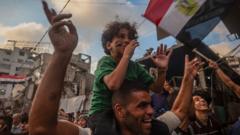
When Argentina played Egypt in the Round of 16 on July 7, 2026, the atmosphere in Khan Younis and Gaza City rivaled any stadium in North America. Egypt fought hard but ultimately lost a 3-2 thriller. Yet the real story was not on the pitch in Atlanta. It was in the camps and ruined neighborhoods where thousands of displaced Palestinians huddled together to scream for their team. This isn't about mere entertainment. It is about a desperate need to cling to normalcy when everything else has been obliterated.
The reality of watching football under drones
Following a live game in a conflict zone is a logistical nightmare. The Palestinian Football Association reports that over 265 sports facilities have been damaged or completely destroyed. This includes local clubs, gymnasiums, swimming pools, and historical football fields. Major stadiums that once hosted local league matches are now either fields of debris or crowded tent cities housing thousands of displaced families.
Consider the situation of Fadi Al-Arawi. He is a professional footballer who used to play in the Gaza Strip Premier League. Before the war forced a total suspension of professional sports over two years ago, he was competing at the highest local level. Today, he lives in a school shelter. To watch the 2026 tournament, Al-Arawi has to hunt for a flickering internet connection and a charged laptop battery. When a match starts, he often wears his old Gaza Sports Club uniform and lays out his international medals on a plastic table. It is a heartbreaking contrast. The world is celebrating a multi-billion-dollar tournament while professional athletes in Gaza are just trying to find enough cellular signal to check a score.
People crowd into small cafes that manage to run generators, or they squeeze into tents where someone has rigged a small television screen. Every goal is met with a collective roar that temporarily drowns out the sounds of the ongoing conflict. For ninety minutes, the focus shifts from finding clean water or securing food to whether a striker can beat the offside trap.
Barefoot tournaments in the debris of Khan Younis
The passion does not stop at watching. Palestinians are actively staging their own local tournaments directly on the rubble. In the southern areas of the strip, young men and children play barefoot on makeshift pitches cleared of the sharpest concrete pieces. They do not have official kits, professional boots, or properly inflated balls. They play on uneven ground, surrounded by destroyed infrastructure, with spectators sitting on piles of debris to cheer them on.
These local matches often echo the high stakes of the international games being played thousands of miles away. Tournaments reach knockout stages and intense penalty shootouts that draw massive local crowds. Organizers point out that these games provide a rare, vital escape from daily suffering. Palestine didn't qualify for the 2026 World Cup, but the football culture here remains completely unbroken.
The contrast between global football and this grassroots survival is stark. While FIFA manages massive corporate sponsorships and pristine pitches in the United States, Mexico, and Canada, the game in Gaza has been stripped down to its absolute essence. It is just a ball, a patch of dirt, and the human will to keep playing.
What the global football community forgets
Sports journalism often treats football as a luxury or a distraction. It is easy to look at images of people cheering amid ruins and romanticize their resilience. That is a mistake. The fans in Gaza are not looking to be an inspiring story for the rest of the world. They want the basic rights that every other football fan takes for granted. They want safe spaces to play, running water after a match, and the ability to watch their favorite players without fearing an immediate airstrike.
Saadi, a local advocate involved with Gaza Al-Irada—an organization originally founded in 2018 as an amputee football team—expressed a sentiment that many share. He noted that while the world celebrates the beautiful game, athletes and fans in Gaza want to remind everyone that Palestinians deserve life and dignity. They want international athletes to use their massive platforms to speak about the destruction of sports infrastructure and the loss of young athletic talent.
Dozens of local players, coaches, and administrators have been killed over the last two years. The local league is gone. The developmental pathways for young children have vanished. When you destroy 265 sports facilities, you are not just damaging buildings. You are wiping out the institutional memory and the future of Palestinian sports.
The tactical escape of ninety minutes
Why do people risk gathering in groups just to watch a football match? The answer lies in the psychological relief that the game provides. Constant exposure to trauma creates an environment of permanent high stress. A football match offers a strict boundary. It has a beginning, an end, clear rules, and a predictable structure. For a brief moment, the chaos of reality is replaced by a game where the rules actually apply.
It is a form of emotional survival. Squeezing into a crowded tent to watch a match allows people to feel a sense of community that is separate from shared grief. They are sharing joy, anxiety, suspense, and excitement. They are connecting with a global audience, realizing that at the exact same second, someone in London, Tokyo, or Buenos Aires is experiencing the exact same tension. It breaks the isolation that war creates.
Moving forward from the ruins
Supporting the survival of football in these conditions requires more than just passive viewing or sharing viral clips on social media. Concrete actions are needed to preserve what remains of the region's sports culture.
First, international sports bodies must acknowledge the scale of infrastructure damage. Pressure needs to be placed on international organizations to fund the eventual rebuilding of these community spaces.
Second, supporting local initiatives like amputee football teams and grassroots youth coaches who operate in the camps is vital. These individuals are using football as a tool for physical rehabilitation and psychological support for traumatized children.
Next time you watch a match during this tournament, remember the crowds in Khan Younis. They are proving that the spirit of the game cannot be crushed by concrete and steel.
To see the stark reality of how these communities gather to support their teams under the most extreme conditions, you can watch this report on Egypt Fans In Gaza Cheer Their Team Against Argentina Despite War And Devastation.