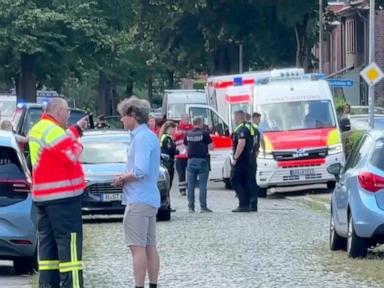
Six people lost their lives in a matter of minutes at a quiet child welfare center on Dankersstrasse in Stade, Germany. The suspect was found dead in his prison cell shortly after his arrest, effectively closing the court case before trial even began. But closing the legal file doesn't answer the crucial question of how a man with a history of police threats managed to carry an illegal Beretta pistol into a youth facility and murder six social workers.
The public narrative surrounding the German shooting in Stade framed it as an unforeseen personal crisis linked to a bitter child custody battle. That explanation is far too simple and dangerously misleading. When you look closer at the sequence of events, this wasn't a sudden break from reality. It was a failure of risk assessment, security protocols, and weapon enforcement in a system designed to protect vulnerable families.
The devastating timeline at Dankersstrasse
On June 29, 2026, a 45-year-old Turkish citizen born in Germany arrived at the Mutter-Kind-Einrichtung in Stade. He had an official appointment to discuss custody arrangements for his three-month-old infant daughter. The child and her mother were both present. Staff members from both the facility and the Hanover Jugendamt were in attendance to conduct the session.
He didn't come to negotiate. He brought a loaded handgun.
Within moments, gunfire shattered the facility. Four female social workers and two male social workers were killed. A seventh victim sustained severe injuries. The mother and baby were physically unhurt, but the human damage was immediate and irreparable.
The suspect fled the scene in a getaway car driven by a 65-year-old female associate. Police pursued the vehicle along the B73 road, shooting out a tire to bring the vehicle to a halt. Officers apprehended both individuals without further casualties. Hours later, while held in pre-trial detention, the primary suspect died in his cell.
How red flags were brushed aside
The most uncomfortable truth about this tragedy is that the shooter was already on the radar of law enforcement. Authorities confirmed he had made prior threats. Yet, police officials noted he was not previously regarded as particularly violent.
That evaluation proved fatal.
In high-stakes family disputes involving infants, threats are warning signs of potential escalation. Treating verbal threats as low-risk administrative noise leaves social workers defenseless. Welfare staff in Stade met with a man who had clear motives for hostility, yet no routine physical security screenings or police presence accompanied the session.
Germany maintains some of the strictest gun ownership laws in Europe. Applicants under 25 must undergo psychological evaluations, and background checks are rigorous. However, strict laws on paper mean nothing when black-market firearms circulate without hindrance. The suspect did not hold a gun license. He obtained an illegal Beretta 70 pistol and carried it into a public assistance building.
If law enforcement agencies know a person has issued threats during an ongoing custody dispute, mandatory firearms checks and immediate property searches should be triggered. Relying on passive gun registration laws does not stop an unregistered weapon from entering a vulnerable space.
The ignored safety crisis facing social workers
Social workers face tremendous daily risk across Europe and North America. They intervene in intense personal conflicts, manage domestic disputes, and make decisions that alter family structures forever. Yet, they are routinely sent into high-risk meetings with zero physical protection.
The facility on Dankersstrasse hosted temporary housing for pregnant women and young mothers. It was meant to be a refuge. Instead, six dedicated professionals paid with their lives because the center relied on an open door policy without basic security infrastructure like metal detectors or security guards.
We often hear arguments that adding security measures turns social service centers into clinical, intimidating environments. That argument collapses when six staff members die in a single afternoon. Protecting workers doesn't undermine compassion. It makes compassion possible.
What needs to change immediately
Relying on post-incident investigations solves nothing for the families left behind. If social service agencies and law enforcement want to prevent similar tragedies, several immediate steps must be taken:
- Mandatory threat-level assessments for all contested custody hearings involving police-reported threats.
- On-site security personnel or police escort requirements for meetings classified as elevated risk.
- Stricter black-market firearm interdiction efforts across state and national borders in Europe.
- Direct panic-button connectivity to local police departments inside all regional youth welfare offices.
The tragedy in Stade ought to be the final wake-up call for state authorities. Treating violent threats as harmless until a trigger is pulled is an unacceptable strategy that costs innocent lives.