Washington is trying to fund right-wing populism in Europe, and Berlin is not having it.
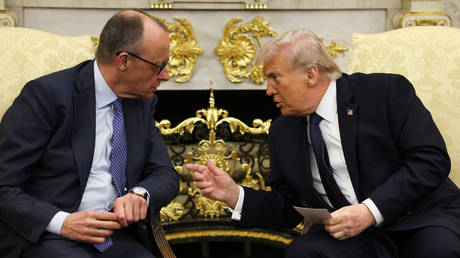
When German Chancellor Friedrich Merz walked up to the microphone for his annual summer press conference on Wednesday, everyone expected a standard rundown of domestic tax squabbles and standard policy updates. Instead, the briefing turned into an open warning shot directed straight at the White House. Merz did not mince words. He made it clear that Germany expects the United States to keep its hands, and its money, out of European elections.
The sudden friction stems from a newly announced US State Department initiative. On paper, the grant program claims to back civil society. In reality, the targeted language has sent shockwaves through Berlin’s political establishment. With critical state elections looming this September in regions like Saxony-Anhalt and Mecklenburg-Western Pomerania, German officials are deeply worried that American tax dollars will be used to boost the far-right Alternative for Germany party.
This is not a minor diplomatic misunderstanding. It is a fundamental clash over national sovereignty and the changing nature of transatlantic alliances.
The Five Million Dollar Spark
The dispute centers on a grant program rolled out by the State Department’s Bureau of Democracy, Human Rights, and Labor. The pool of money totals nearly $5 million, offering individual grants of up to $3 million for European charities, think tanks, and independent actors.
If you look closely at the eligibility guidelines, the real intent becomes obvious. The State Department explicitly notes that funding will go toward projects tackling "national sovereignty, migration, censorship, and lawfare challenges". It mandates that these projects align with a "shared political philosophy" and support "our common Western civilizational heritage".
"For our part, we do not interfere in American elections," Merz told reporters in Berlin. "And conversely, I do not want the American government or institutions close to the government to interfere in German elections."
To make sure the point hit home, the Chancellor reminded Washington that foreign financing of political parties is flat-out illegal under German law. He stated plainly that he expects Germany's global partners to respect those domestic legal boundaries.
The timing of this grant program is calculated. The application windows are opening just as Germany heads into a volatile autumn campaign season. This is a deliberate attempt to shift political momentum.
Weapons of Mass Influence
Former American diplomats are already sounding the alarm on what this program actually represents. They point out that the language used in the grant notices is intentionally vague. It allows "individuals" and undefined "governmental institutions" to apply for cash infusions.
For decades, the Bureau of Democracy, Human Rights, and Labor was used to challenge authoritarian rule and back underground democratic movements during the Cold War. Now, under the current administration, the bureau has been flipped on its head. Instead of fighting autocracy, it is being utilized to channel resources toward nationalist, populist factions inside Western democracies.
The strategy relies on a legal loophole. While US law restricts direct funding to foreign political parties, funding an aligned non-profit or a friendly media outfit is much easier. These satellite groups then do the dirty work. They run aggressive digital campaigns, organize anti-immigration rallies, and build a massive echo chamber that benefits far-right candidates.
It gives right-wing populist groups an unfair financial advantage. They get access to resources they could never generate on their own. This cash helps them bypass traditional campaign finance limits and run sophisticated operations designed to sway voters.
The Real Threat to German Stability
To understand why Merz is reacting so forcefully, you have to look at the domestic political map in Germany right now. The country is dealing with deep regional divisions. The Alternative for Germany party is leading the polls in several eastern states.
Merz and his party, the Christian Democratic Union, are trying to maintain a strict political quarantine around the far-right. Merz has repeatedly ruled out any cooperation or coalition deals with them. He insists that his government can prove it is delivering real results on security and economic growth, which should keep the populist surge at bay.
The introduction of millions of dollars in US funding threatens to shatter this political quarantine. If American-backed groups start flooding German social media with polarizing content right before election day, the current polling numbers could change quickly.
The strategy matches the broader ideological goals coming out of Washington. High-level US officials, including Vice President JD Vance, have spent months taking public swipes at European leaders over migration policies, border controls, and social issues. This grant initiative translates that public rhetoric into direct financial action.
A Fragmented Transatlantic Alliance
This funding dispute is part of a larger ideological shift. The administration in Washington has openly embraced European populist parties while freezing out traditional allies in Berlin, Paris, and Brussels. Recent national security strategy documents from the US have even warned about the "civilizational erasure" of Europe, praising "patriotic" regional movements for stepping up to save Western culture.
This leaves leaders like Merz in a tough spot. They recognize that Europe must take more responsibility for its own defense and economic independence. Merz noted during his press conference that the European Union has 100 million more residents than the US, arguing that European nations must work together more effectively to project real strength.
The old assumption that Washington would always protect and respect European democratic processes is officially dead. European nations are realizing they have to defend their elections from outside interference, even when that interference comes from their closest military ally.
What Happens Next
The diplomatic row will likely escalate as the September elections draw closer. Berlin cannot simply block every grant application, but you can expect German intelligence and financial regulators to look very closely at any money moving from US accounts into domestic non-profits.
If you want to track how this interference plays out, watch these key areas:
- Follow the Money Trails: Monitor the financial disclosures of major German political foundations and think tanks to see if foreign funding sources spike over the next two months.
- Track Digital Ad Buys: Watch for sudden, highly targeted social media campaigns focusing on migration and national sovereignty in Saxony-Anhalt and Mecklenburg-Western Pomerania.
- Watch Regulatory Responses: See if the German federal government introduces tougher emergency oversight on foreign non-profit grants before the autumn voting begins.
The political battle lines are no longer confined by geography. The upcoming state elections in Germany will be a clear test of whether a European democracy can protect its borders from the financial influence of a populist Washington administration.