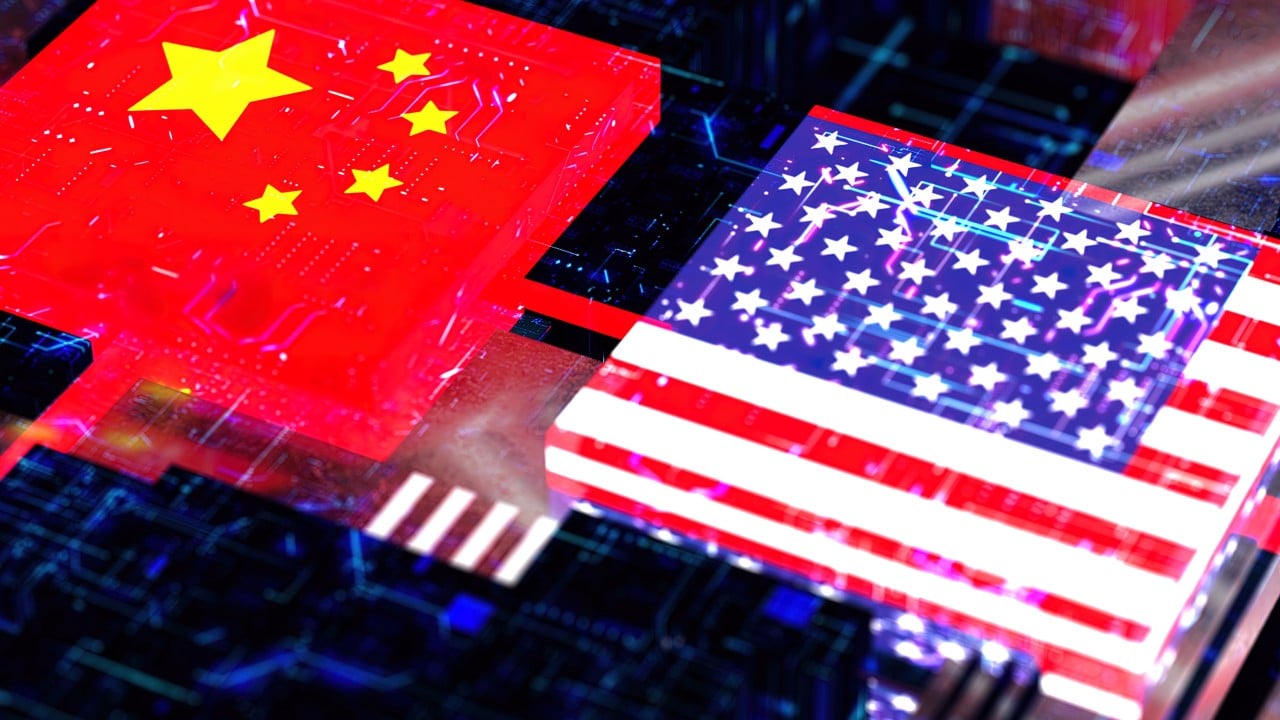
Governments love drawing lines on maps. They slap export controls on advanced graphics processors, restrict venture capital across borders, and treat every breakthrough in machine learning as a matter of state security. If you look only at the official announcements coming out of Washington and Beijing, you might think the tech world has completely fractured into two warring camps.
But you'd be wrong.
Step away from the political podiums and look at what's actually happening on the ground. The reality of artificial intelligence development doesn't match the nationalistic rhetoric. While politicians talk about tech sovereignty, the scientists, engineers, and startup founders are building an underground web of shared code. They are still reading the same open-access papers on arXiv. They are still contributing to the same open-source repositories on GitHub. They are still jumping on flights to gather in neutral hubs like Hong Kong to share insights.
The real story of modern tech isn't how governments are successfully tearing the global scientific community apart. It's how that community is quietly refusing to split.
The Illusion of the Digital Iron Curtain
Politicians want you to believe that technology stops at the border. They enforce strict sanctions on high-end hardware, thinking they can lock down intelligence inside geographical boundaries. That strategy ignores a fundamental truth. Code moves faster than customs agents can think.
When you build a wall around hardware, you don't stop the flow of ideas. You just change the paths they take. A researcher in Shenzhen can access models trained in California through open-source weights within hours of their release. An engineer in Silicon Valley relies heavily on architectural optimizations developed by teams in Asia. The pipeline is fully global, and trying to sever it is like trying to slice water with a knife.
Take the recent gathering of AI builders in Hong Kong this July. Entrepreneurs and developers from completely different political environments sat in the same rooms. They didn't talk about trade wars. They talked about model efficiency, tokenization challenges, and deployment costs.
The Undercurrent Against Geopolitics
One clear example of this ongoing collaboration is the work being done on localized models. Pak-Sun Ting, the co-founder and CEO of Votee AI, has been vocal about this dynamic. His company developed the first open-source Cantonese large language model, a project that requires a deep understanding of regional linguistic nuances but relies on foundational engineering concepts shared across the entire global developer community.
Ting calls this civilian-to-civilian tech exchange a small undercurrent that helps push back against macro-level geopolitics. Political winds shift constantly. One administration wants open trade; the next wants total isolation. But technology doesn't operate on a four-year election cycle. The math behind a transformer network remains identical whether you compute it in a server farm in Ohio or an enterprise data center in Guangdong. As long as communication channels remain open, engineers will find ways to collaborate because solving hard technical problems is simply more satisfying than playing geopolitical games.
This isn't naive idealism. It's practical necessity. Nobody has a monopoly on smart people. If a company cuts itself off from international research, it immediately falls behind. The smartest teams know this. They build cross-border research pipelines despite the regulatory headaches because the alternative is stagnation.
Open Source as a Global Shield
How do scientists protect their work from being weaponized or restricted by localized regulations? The answer is open source.
By releasing model weights and training datasets to the public, researchers ensure that their discoveries cannot be locked away by any single government. It acts as a defensive strategy against fragmentation. When code is public, it belongs to everyone and no one simultaneously.
Think about how standard architectures have evolved. A breakthrough in context window expansion made by an independent developer in Europe gets adopted by an enterprise team in Asia by the next morning. That speed is impossible in a closed, siloed environment. Companies that try to keep everything proprietary under the guise of national interest end up suffocating their own innovation loops. They build echo chambers instead of engineering powerhouses.
The Hidden Costs of Forced Isolation
When governments force tech decoupling, they don't just slow down progress. They create massive inefficiencies.
Teams are forced to spend millions of dollars reinventing the wheel simply because they aren't allowed to use a piece of software developed across an ocean. They waste compute power replicating experiments that have already been perfected elsewhere. This massive duplication of effort benefits absolutely no one except the vendors selling duplicate infrastructure.
We see this clearly in the hardware crunch. Restricting access to advanced computing chips hasn't stopped developers from training powerful models. It has just forced them to become incredibly creative with software optimization. They are finding ways to squeeze massive performance out of older, less restricted hardware. They are writing cleaner code, building better data pipelines, and proving that raw compute power isn't the only metric that matters.
What Happens Next for Tech Teams
If you're running a tech company or building systems right now, you cannot sit around waiting for international relations to smooth out. They probably won't. Instead, you need to design your operations to survive and thrive within this fragmented environment.
Focus heavily on open-source foundations. Don't let your stack become dependent on a single proprietary API controlled by a company subject to sudden export bans. Build flexibility directly into your architecture.
Diversify your engineering talent globally. The best teams aren't concentrated in a single zip code anymore. They are distributed across hubs that can cross-pollinate ideas without relying on a single geographic point of failure.
Keep your eyes on the code, not the headlines. The political noise will always be loud, but the actual breakthroughs happen quietly in shared repositories and cross-border discussions. Stay connected to the global developer community because that is where the real future is being coded. Dig into the open repos, run the models yourself, and ignore the artificial borders. That's how you win.