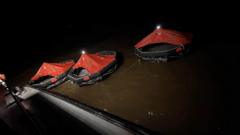
The recent sinking of a ferry carrying 116 passengers off the Guyana coast catches your attention for all the wrong reasons. It hits the headlines, sparks immediate panic, and leaves families waiting for answers. Authorities scrambed to respond, but the real issue goes far deeper than a single chaotic rescue operation.
When a vessel going down carries over a hundred people, it isn't just bad luck. It's a systemic failure. Waterways are the literal lifelines of Guyana, connecting coastal hubs to deep interior regions where roads simply don't exist. When these lifelines fail, the consequences are immediate and terrifying.
People want to know how a major passenger vessel simply goes under. They want to know if the safety checks actually happen or if they're just paperwork. Let's look at the harsh realities of coastal transit infrastructure and what needs to change right now to stop these disasters from happening again.
The Reality of Guyana Water Coastal Transit
Guyana relies heavily on its maritime networks. The country has massive river systems like the Essequibo, Demerara, and Berbice, alongside a long Atlantic coastline. For thousands of people, boarding a ferry is as routine as hopping on a city bus. It's how goods get to market, how workers reach jobs, and how families stay connected.
But routine shouldn't mean complacent. The coastal waters off Guyana can be deceptively brutal. You have heavy Atlantic currents meeting massive river outflows, creating complex swells and unpredictable chopping. If a vessel suffers mechanical failure or takes on water in these zones, the situation escalates within minutes.
Many regional ferries are older vessels, repurposed to handle heavy passenger loads and cargo simultaneously. Mixing heavy freight with large groups of passengers requires precise weight distribution and strict adherence to load limits. When those limits get ignored, stability suffers.
Why Water Transportation Safety Keeps Failing
The biggest mistake people make is treating these incidents as isolated mechanical freak accidents. They usually aren't. They're the end result of a long chain of ignored warnings and poor maintenance.
Vessel stability is basic physics. A boat handles rough coastal waters well only if its center of gravity is correct and its hull remains watertight. Older ferries frequently suffer from neglected hull maintenance, rusted seals, and bilge pumps that can't cope with sudden flooding. If a pump fails when a wave breaks over the deck, the water accumulates. This creates a free-surface effect where sloshing water shifts the boat's weight rapidly, causing a capsize.
Enforcement remains a massive hurdle. Maritime administrations often lack the personnel or patrol boats to inspect every vessel before it leaves the dock. Operators face economic pressure to maximize every trip, leading to overcrowded decks and packed cargo holds. It's a dangerous gamble that works fine during calm weather but turns fatal the moment the sea gets rough.
What Needs to Change Right Now
Fixing this requires moving past public statements and empty promises. True safety comes from consistent, unannounced inspections at every major stelling and port.
First, passenger manifests must be digitized and locked before departure. Knowing exactly who is on board saves lives during a rescue and stops operators from squeezing extra paying passengers onto the deck.
Second, life jacket availability must be non-negotiable. It's common to see vessels with outdated, dry-rotted vests buried under cargo or locked in compartments where passengers can't reach them during an emergency. Every single person needs immediate access to a functional personal flotation device.
Finally, independent safety audits of all state-run and private ferry fleets must happen annually. If a boat fails to meet basic hull integrity and bilge pump standards, it stays docked. No exceptions for economic convenience.
How to Protect Yourself on Regional Ferries
If you rely on coastal or river ferries, you can't just assume the operator has everything covered. You have to take your safety into your own hands.
- Scan the deck for life jackets immediately. Don't wait for an emergency to find out where they're stored. If you can't see them, ask the crew directly.
- Avoid overcrowded areas. If a ferry looks packed to the brim or sits visibly low in the water, wait for the next one. Your life is worth more than a delayed schedule.
- Stay aware of the exits. If you're seated in an enclosed lower cabin, know the quickest route up to the open deck. If a vessel starts taking on water, getting trapped downstairs is the biggest danger.
- Watch the cargo placement. If you notice heavy equipment or vehicles shifting around or unsecured on the deck, move away from them. Loose cargo destroys a boat's balance instantly.
The sinking of a vessel carrying 116 people should serve as a final wake-up call. Relying on luck in coastal waters never works out long-term. Demand better enforcement, watch your surroundings, and don't hesitate to step off a boat that looks unsafe.