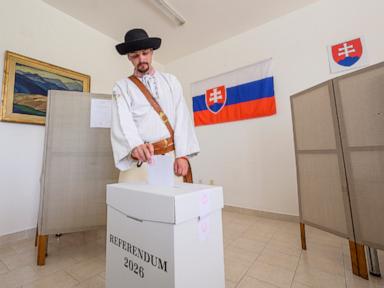
Slovak voters went to the polls to decide on a highly controversial measure: whether to strip populist Prime Minister Robert Fico and other political leaders of their lifelong financial perks.
The public referendum, held on July 4, 2026, aimed to abolish the hefty lifetime pensions passed by Fico's own coalition government. It also targeted his deep overhaul of the nation's legal architecture, asking citizens if the government should resurrect the elite anti-corruption units that Fico previously dismantled.
Yet, the grand push by the pro-Western opposition didn't deliver the fatal blow they wanted.
Even though a staggering 94.6% of participants voted "yes" to stripping Fico of his lifetime financial safety net, the entire vote crumbled under the weight of Slovak electoral law. Only about 16% of eligible voters showed up. Because the country requires a rigid 50% voter turnout for a referendum to hold legal water, the sweeping consensus of those who cast ballots means absolutely nothing legally. Fico keeps his money, his reforms stay intact, and the opposition is left staring at a familiar wall of voter apathy.
The Birth of the Lifelong Politician Pension
To understand why people are furious enough to organize a national vote, you have to look at how these lifelong payments came to be. They aren't an ancient perk of the Slovak state.
Historically, only former presidents received a lifetime salary upon leaving office. That changed after the dark events of May 2024. A lone gunman shot and gravely wounded Fico after a government meeting in the town of Handlová. The assassination attempt sent shockwaves through Europe and deeply fractured Slovak society.
In the aftermath, Fico’s ruling coalition fast-tracked a legislative package marketed as a security upgrade for top officials. Tucked inside the law was a clause granting lifelong monthly payments—matching the standard salary of a sitting lawmaker—to any prime minister or parliament speaker who serves at least two terms. Fico, currently enjoying his fourth stint as prime minister, instantly qualified.
Critics quickly labeled the move a blatant cash grab masked as a security necessity. The non-parliamentary opposition party, the Democrats, capitalized on this public anger. They deployed army-style petition drives and successfully gathered over 350,000 signatures to force the issue onto a national ballot. They wanted to prove that everyday citizens don't want to fund a permanent safety net for career politicians who, in their eyes, are systematically dismantling Slovak democracy.
The Dismantling of Slovakia Anti Corruption Pillars
The referendum wasn't just an argument about money. The second, arguably more critical question on the ballot asked voters if the country should reinstate the Special Prosecutor's Office and the National Criminal Agency (NAKA).
If you haven't followed Slovak politics closely over the last few years, these two institutions were the tip of the spear against high-level graft. NAKA handled organized crime and major financial schemes, while the Special Prosecutor's Office ensured those cases actually made it to court without political interference. Under previous administrations, these bodies successfully prosecuted and investigated dozens of officials linked to Fico’s political network.
When Fico regained power in late 2023, he wasted no time putting these institutions in the crosshairs. By mid-2024, his coalition successfully shuttered the Special Prosecutor's Office and broke up NAKA. The government claimed these agencies were weaponized by the previous government to wage a political vendetta against the left-wing populist party.
International watchdogs and the European Union saw it differently. The European Parliament went as far as backing resolutions to freeze EU budget payments to Slovakia, warning that Fico’s legal maneuvers present a clear threat to the rule of law. The July 4 vote was the opposition’s primary tool to let regular citizens bypass parliament and force these watchdogs back into existence.
Why Slovak Referendums Are Built to Fail
The overwhelming "yes" votes show that the people who bothered to turn out are deeply worried about corruption and political self-enrichment. But the strategy ran headfirst into Slovakia’s historical curse: structural voter apathy.
Since Slovakia became an independent nation in 1993, citizens have been called to vote in dozens of referendums covering everything from early elections to bans on same-sex marriage. Only one has ever succeeded: the 2003 vote to join the European Union. Every single other attempt has died the exact same death as the July 4 vote, failing to cross the mandatory 50% turnout threshold.
Fico and his allies know this math perfectly. Their strategy wasn't to fight the referendum on its merits or debate the ethics of lifetime pensions. They simply told their base to stay home. By treating the referendum as an irrelevant political sideshow run by a desperate opposition, the government successfully deflated turnout, rendering the anger of nearly 660,000 "yes" voters completely useless.
What Happens Next for Slovakia
The failure of the referendum leaves Fico in a highly secure position, but the underlying tensions in the country aren't going away. You can expect the political landscape to fracture even further as both sides digest these results.
If you are tracking the future of Central European politics, watch these specific fronts:
- EU Funding Restrictions: The European Commission is actively reviewing Slovakia's rule-of-law compliance. With the domestic avenue for reversing Fico's judicial overhauls now dead, Brussels may accelerate plans to freeze billions in cohesion funds, mirroring the financial penalties levied against Hungary.
- Media Consolidation: With the judicial reforms locked in, Fico’s government will likely press forward with tighter state control over public broadcasting networks, squeezing independent journalism inside the country.
- Opposition Realignment: The pro-Western opposition must pivot away from costly, high-effort referendums. Expect them to channel their resources into building legislative coalitions ahead of the next general election cycle rather than relying on direct democracy tools that favor the status quo.
The July 4 ballot proved that while a core segment of the Slovak public is deeply frustrated by political payouts and weakened courts, mobilizing the broader, exhausted electorate remains an uphill battle. Fico's fourth term rolls on, completely unchecked by the ballot box.