A split second determines whether a highway trooper makes it home for dinner or ends up in a body bag.
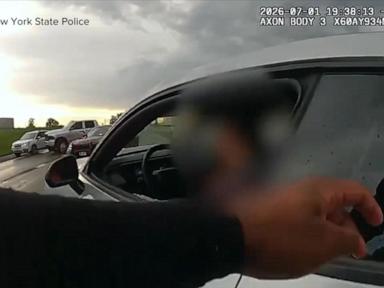
When emergency lights flash on a dark interstate shoulder, most drivers see an annoying traffic delay. First responders see a high-risk zone where a stray multi-ton steel vehicle can careen out of control at eighty miles per hour. A recent dashcam video captured a terrifying chain-reaction crash that perfectly illustrates this nightmare scenario. While an officer stood by a wrecked vehicle to assist a stranded motorist, a secondary collision sent multiple out-of-control pickup trucks barreling directly toward them. The trooper had to dive over a concrete barrier in a heart-stopping move that barely saved his life.
This isn't an isolated stroke of bad luck. It's an everyday crisis on American roads.
The Science of Secondary Crashes and Why They Keep Happening
Drivers often fail to realize that the initial accident isn't the most dangerous part of a highway incident. The real danger builds in the minutes that follow.
Secondary crashes happen when passing motorists fail to adjust to an active scene. They don't slow down. They don't change lanes. Instead, they stare at the flashing lights, look at the smashed metal, or check their cell phones.
Data from the Federal Highway Administration shows that secondary crashes account for nearly twenty percent of all freeway incidents. Even worse, these secondary impacts are often far more severe than the original accident because drivers hit stationary objects or pedestrians at full highway speeds.
Rubbernecking Distraction Is a Physical Threat
When your eyes wander to look at an accident, your hands naturally guide the steering wheel in the direction you are looking. Traffic safety experts call this target fixation.
A driver spots emergency vehicles on the left shoulder. They stare at the trooper. Without realizing it, they drift toward the left shoulder. By the time they snap out of it, they slam their brakes, triggering a chain reaction of rear-end impacts that forces everyone in the vicinity to scramble for cover.
The Breakdown of Driver Reaction Times
Reaction time isn't instantaneous. It takes a focused driver about 1.5 seconds to perceive a hazard and apply the brakes. If you are traveling at 70 miles per hour, your car travels over 150 feet before your foot even touches the pedal. Add a wet road or a split-second glance at a text message, and that distance doubles.
When a trooper stops to help a broken-down car, they rely entirely on passing drivers to pay attention. When those drivers fail, the emergency shoulder turns into a trap.
The Cost of Ignoring Move Over Laws
Every single state has some version of a Move Over law. Illinois calls it Scott’s Law, named after Chicago Fire Lieutenant Scott Gillen, who was tragically struck and killed while working a crash scene. These laws aren't suggestions. They are strict legal mandates designed to create a buffer zone for people doing their jobs.
Despite these laws being on the books for decades, compliance remains shockingly low. State police agencies across the country report dozens of squad cars getting hit every year.
Stiff Fines and Criminal Charges
If you think violating these laws results in a simple fix-it ticket, you're mistaken. The penalties are intentionally severe to deter reckless behavior.
- First-time offenders face massive fines that can easily top thousands of dollars depending on the state.
- If a violation causes property damage, driver's licenses get suspended automatically for months.
- When a driver strikes an emergency worker or causes an injury, the charge elevates to a felony, bringing mandatory prison time and multi-year license revocations.
Insurance companies don't look kindly on these violations either. A conviction for failing to yield to an emergency vehicle can cause your auto insurance premiums to skyrocket, or the carrier might drop your coverage entirely.
Real Surviving Strategies from the Road
Troopers undergo intense training to survive roadside stops, but no amount of preparation can completely eliminate the human element of passing traffic.
They are taught to park their patrol vehicles at a specific angle. This position, known as the "fend-off" position, uses the engine block of the police car as a shield to deflect oncoming traffic away from the scene. If a distracted driver hits the squad car, the vehicle gets pushed into the highway lanes rather than straight ahead into the stranded motorist.
Officers also keep their eyes glued to the rear-view mirror even while talking to a driver. They look for smoke, sudden lane changes, or the telltale sway of an out-of-control vehicle. Survival means staying hyper-aware every single second.
What You Must Do the Next Time You See Flashing Lights
Staying safe and keeping workers alive doesn't require advanced driving skills. It requires basic discipline and situational awareness.
Shift Lanes Early
Do not wait until you are right next to the patrol car to move over. The moment you spot emergency lights in the distance, check your mirrors, signal, and safely transition to the next lane. Giving responders a full empty lane of space drastically reduces the chances of a freak accident.
Drop Your Speed Significantly
If traffic conditions or heavy congestion prevent you from changing lanes, you must slow down. Drop your speed well below the posted limit. Passing a trooper at the standard speed limit when you are only inches away from their uniform is incredibly dangerous.
Keep Your Eyes Forward
Resist the urge to look at the wreck. The emergency workers have the situation handled. Your only job as a passing driver is to navigate your own vehicle safely past the zone without causing a new emergency.
Get off the phone, put both hands on the wheel, and focus entirely on the road ahead. Your cooperation ensures that everyone on the shoulder gets to go home to their families at the end of the shift.