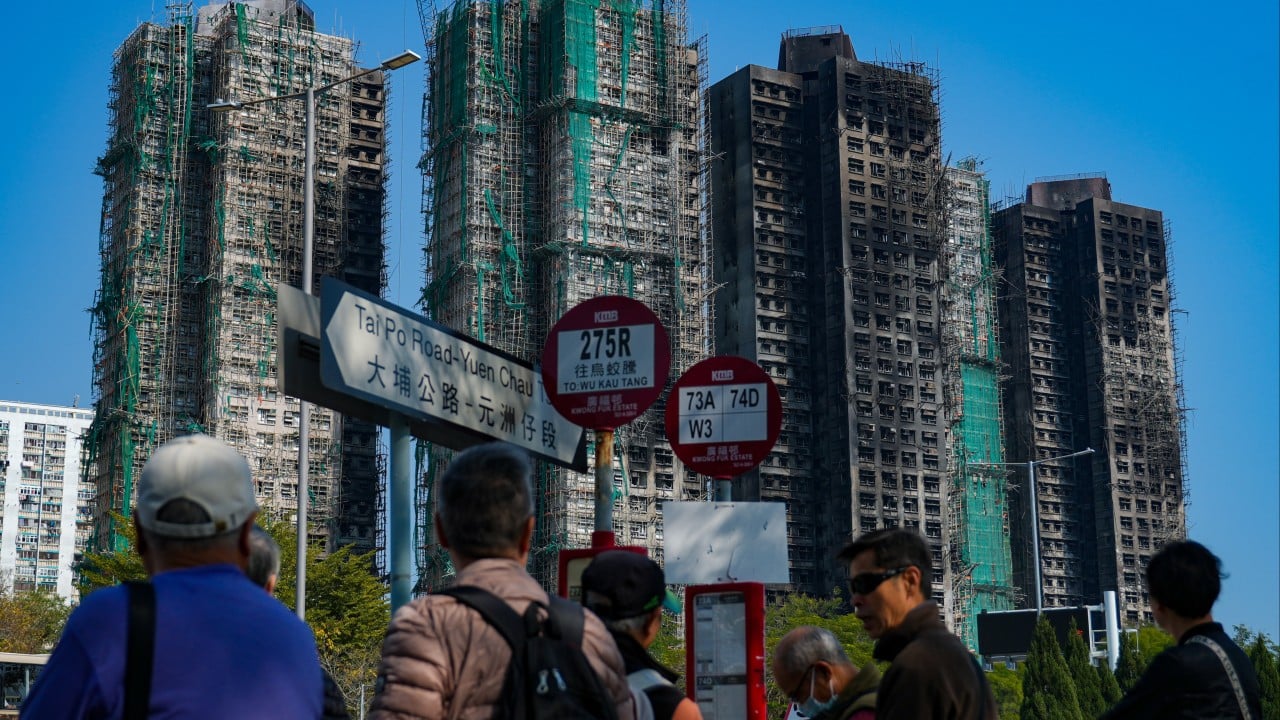
The horrific fire at Wang Fuk Court in Tai Po on November 26, 2025, remains a dark stain on Hong Kong. It killed 168 people and displaced thousands. It was the city's deadliest blaze since 1948. But what makes this tragedy truly infuriating isn't just the sheer scale of the loss. It's the fact that it was entirely preventable.
Months of public hearings under a judge-led inquiry have exposed a horrifying truth. The disaster happened because the government departments meant to protect residents were busy playing bureaucratic hot potato.
Right now, residents and fire safety experts are calling for something that should have happened years ago. They want to dissolve the Housing Bureau’s Independent Checking Unit (ICU) and merge its functions directly into the Buildings Department.
If you look closely at the evidence brought to light during the inquiry, you realize that keeping these two bodies separate is a recipe for more disasters. Hong Kong doesn't need more government sub-divisions. It needs a single, unified authority that actually enforces the law.
The Fatal Finger Pointing Game
When a building undergoes a major renovation, you expect the inspectors to look out for you. That didn't happen at Wang Fuk Court. The estate was undergoing facade renovations when the fire broke out. Flammable polyfoam boards and substandard scaffolding mesh turned the high-rise into a towering furnace within minutes.
During the inquiry, senior maintenance surveyor Andy Ku Siu-ping from the ICU admitted that his unit failed to properly monitor safety issues. But the excuses offered up by the department were nothing short of scandalous. ICU officers argued in written submissions that they couldn't take action against the flammable polyfoam boards because there were no specific regulations governing their temporary use during construction.
Think about that. A government safety unit looked at highly flammable materials draped across a residential building housing thousands of people and decided they couldn't act because of a legal technicality.
The Buildings Department shot back immediately, completely refuting the ICU's claim. They made it clear that existing building regulations give authorities plenty of power to stop dangerous materials from being used on site.
This public bickering reveals the deep systemic rot inside Hong Kong's building management framework. You have two separate government arms doing essentially the same job, yet they can't even agree on what laws they are supposed to enforce. While they argue over semantics, people die.
Tipping Off the Rule Breakers
The failures go far deeper than a simple misunderstanding of the law. The inquiry exposed a terrifying lack of integrity within the inspection process. Evidence showed that ICU surveyors actually tipped off the project consultant before arriving to inspect the fire retardancy of the scaffolding nets.
Let that sink in. An enforcement agency gave a heads-up to the very people they were supposed to be checking.
It completely defeats the purpose of an independent check. If contractors know exactly when an inspector is coming, they can easily hide substandard materials, swap out dangerous netting for compliant samples, and put up a flawless front for a few hours. Once the inspector leaves, it's back to business as usual.
This isn't just poor performance. It’s a systemic betrayal of public trust. The inquiry’s lead counsel, Victor Dawes SC, didn't mince words when he blamed the disaster on human factors, regulatory failures, and suspected fraudulent acts by contractors. Seven people associated with the contractors, Will Power and Prestige, have already been charged with offenses including manslaughter and conspiracy to defraud.
But charging the contractors isn't enough. We have to look at the system that allowed them to cheat in the first place. The ICU proved itself to be toothless, easily manipulated, and fundamentally incapable of keeping residents safe.
Why Two Regulatory Bodies Make No Sense
To understand why a merger is necessary, you have to look at how building regulation is split in Hong Kong.
The Buildings Department is the main authority governing private structures across the city. They enforce the Buildings Ordinance, handle unauthorized building works, and ensure structural safety.
However, public housing estates and certain government-built residential complexes fall into a bizarre regulatory gray area. The Housing Bureau created the Independent Checking Unit to mirror the functions of the Buildings Department for these specific properties.
On paper, the ICU is supposed to apply the same standards as the Buildings Department. In reality, it operates under a completely different management structure, a different bureaucratic culture, and evidently, a different interpretation of safety laws.
This fragmentation creates massive communication gaps. Information doesn't flow between the two departments. Best practices aren't shared. When residents at Wang Fuk Court complained about safety issues before the fire, their warnings were swallowed up by a black hole of administrative confusion.
Having a separate checking unit under the Housing Bureau creates a conflict of interest. The Housing Bureau wants to get projects built quickly and managed cheaply. The Buildings Department, ideally, cares about whether a structure matches safety codes. When you let the housing authority police its own properties through a sub-unit like the ICU, safety inevitably takes a back seat to administrative convenience.
The False Security of the Smart Tender System
The breakdown didn't just happen at the government level. It trickled down through the entire project procurement process.
Wang Fuk Court homeowners used the Urban Renewal Authority’s "Smart Tender" system to select their project consultant and main contractor. The system was designed to prevent bid-rigging and give property owners a transparent way to hire construction firms.
Instead, it gave them a false sense of security. Peter Wong Se-king, the authority’s director of building rehabilitation, openly admitted during the hearings that the Smart Tender system failed to stop tender manipulation.
Unscrupulous consultants and corrupt players knew exactly how to exploit the loopholes in the regulations. They rigged the bids, got themselves hired, used fake documents for safety netting, and then lined their pockets while installing highly flammable materials on the building's exterior.
The fact that bid-rigging is common in Hong Kong maintenance works means Wang Fuk Court isn't an isolated incident. It’s a systemic crisis. Right now, thousands of older high-rises across Hong Kong are undergoing or planning facade renovations. If the regulatory body supervising these works is incompetent, we are sitting on a ticking time bomb.
Dismantling the Bureaucracy
The independent committee examining the fire—chaired by Judge David Lok Kai-hong alongside Chan Kin-por and Rex Auyeung Pak-kuen—is set to submit its final report to Chief Executive John Lee Ka-chiu in late October 2026. They delayed the submission to wade through over a million files and testimonies from 80 witnesses.
We already know what the core issue is. The structural division of building enforcement in Hong Kong is broken.
Merging the ICU into the Buildings Department is the most logical step forward. It cuts out the middleman. It eliminates the duplicate roles. Most importantly, it creates a single standard of accountability.
If the Buildings Department takes full control, there will be no more excuses about whether a regulation applies to a specific type of government-built complex. There will be no more finger-pointing between two different bureaus. A building is a building. A fire hazard is a fire hazard. The rules must apply equally to everyone, regardless of who built the property.
Dismantling the ICU will also allow Hong Kong to consolidate its inspection resources. Instead of training two separate sets of surveyors who operate under different cultures, the city can build a larger, more aggressive force of Buildings Department inspectors.
Next Steps for Hong Kong Housing Safety
Fixing this mess requires immediate action. The government shouldn't wait for the final report in October to start making structural changes.
If you are a property owner, a district councillor, or a policymaker, here are the immediate steps that need to be pushed forward:
- Enact the Merger Immediately: Move all current ICU personnel and responsibilities under the direct command of the Buildings Department. Eliminate the ICU as a standalone unit within the Housing Bureau.
- Establish Unannounced Inspection Protocols: Ban the practice of giving advance notice to contractors before safety inspections. Establish strict penalties, including immediate termination and criminal prosecution, for any government official who tips off a construction firm.
- Overhaul Project Procurement: Reform the Urban Renewal Authority's Smart Tender system to include mandatory independent cost estimations and aggressive anti-fraud screening to block bid-rigging networks.
- Ban Flammable Temporary Materials: Create a definitive, zero-tolerance blacklist of materials like specific polyfoam boards and non-fire-retardant scaffolding nets for all construction sites, regardless of temporary use arguments.
The 168 lives lost in Tai Po cannot be brought back. The absolute least the Hong Kong government can do is ensure that a fragmented, lazy bureaucracy never opens the door to such a nightmare again. It is time to end the administrative division and build a unified, unyielding wall of regulatory enforcement. Eliminate the ICU. Save lives.