If you’ve ever stood in the sticky humidity of the Lok Ma Chau-Huanggang border checkpoint, clutching a physical travel document while watching a queue stretch toward the horizon, you know the dread of the 30-minute crossing. Honestly, on bad days, 30 minutes is generous.
But a massive shift is happening right now.
On July 14, 2026, the Hong Kong government gazetted the Huanggang Port Hong Kong Port Area Bill. By July 15, the bill sailed through its first and second readings in the Legislative Council (LegCo). Now, lawmakers are scrambling, scheduling extraordinary "overtime" meetings to push the legislation past the finish line before a hard federal deadline of July 31, 2026.
This isn't just a routine bureaucratic update. It is a legal and infrastructural rewrite of how Hong Kong connects to mainland China.
The Push to Beat the July 31 Deadline
Let’s look at the actual mechanics of what is happening in LegCo.
The National People’s Congress Standing Committee (NPCSC) officially authorized Hong Kong to exercise jurisdiction over a designated "Hong Kong Port Area" located physically inside Shenzhen's Futian district. The State Council decreed that this authorization kicks in at precisely midnight on July 31, 2026.
Because of that tight timeline, the local Hong Kong government must have its legal framework fully active before the clock strikes twelve on July 31.
To make this happen, Secretary for Security Chris Tang Ping-keung didn't just ask for a fast track; he basically put LegCo on a war footing. The House Committee is holding extraordinary, dedicated meetings to pore over the details clause-by-clause. Tang himself conducted four back-to-back briefing sessions in a single afternoon to make sure lawmakers were fully briefed and ready to vote without delay.
Once the main bill passes, several pieces of subsidiary legislation governing closed-area traffic, local telecommunications access, and detention facilities will be pushed through via "negative vetting". This ensures they go live the minute the port area opens.
Five Minutes, One Scan, Zero Friction
So, what does this actually mean for the average traveler?
Right now, crossing the land border is a two-step dance. You exit Hong Kong jurisdiction, walk or take a shuttle bus across the bridge, and then line up to enter Shenzhen jurisdiction. It is slow, redundant, and annoying.
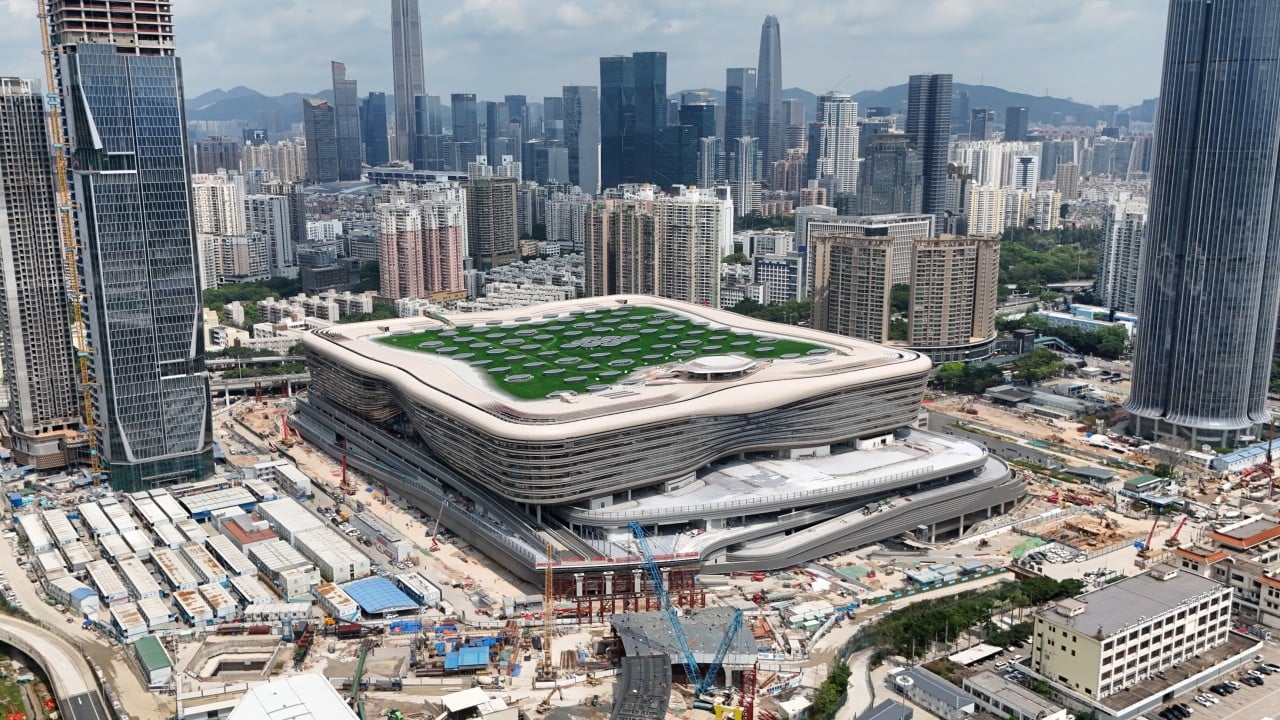
The redeveloped Huanggang Port changes the game by implementing a co-location arrangement using a "collaborative inspection and joint clearance" framework.
- The Old Way: Two separate stops, multiple queues, physical document hand-offs. Total time: ~30 minutes on a normal day.
- The New Way: A single, vertically stacked joint-inspection building. You show your travel document or scan your face just once. Both departure and arrival checks are processed in one go. Total time: About five minutes.
The scale of this upgrade is dizzying. The old port was designed to handle roughly 40,000 passenger trips per day. The redeveloped facility is built to handle 200,000 daily trips immediately, with the capacity to scale up to 300,000 daily trips once the MTR Northern Link Spur Line is completed.
Current Daily Capacity:  ████ 40,000
New Daily Capacity:      ████████████████████ 200,000
Future Daily Capacity:   ██████████████████████████████ 300,000 (with Northern Link Spur)
Why This Matters Beyond Just Shorter Queues
Most news outlets are focusing on the five-minute headline, but the real story is economic and developmental.
The redeveloped Huanggang Port is positioned to be the primary 24-hour land boundary control point linking Hong Kong directly to Shenzhen’s high-tech Futian district. It is the physical anchor for the Northern Metropolis—Hong Kong’s massive, ambitious plan to build an international technology and innovation hub right up against the border.
By slashing the friction of travel, the government is trying to turn the Hong Kong-Shenzhen border into something resembling a commute between suburban districts. If you can cross in five minutes, living in Shenzhen and working in Hong Kong's San Tin Technopole (or vice versa) becomes entirely practical.
Furthermore, because Hong Kong laws will apply within the designated port area inside Shenzhen, travelers inside that zone will still enjoy local Hong Kong telecommunications services and unhindered internet access via planned free Wi-Fi in the joint inspection building. It keeps the digital transition as smooth as the physical one.
What Happens Next
The legislative scramble is just phase one. Once LegCo passes the bill before the July 31 deadline, the real physical testing begins.
Hong Kong and Shenzhen authorities will launch a series of joint operations, emergency drills, and trial runs to test the facial recognition scanners, coordinate public transport feeder routes, and iron out the operational kinks. Only after both governments are completely satisfied with the safety, security, and speed of the system will they announce the official public opening date of the new checkpoint.
If you frequently cross the border for business, family, or leisure, keep your eye on the space. The physical layout of the Greater Bay Area is shrinking, and the legislation passing this month is the quiet catalyst making it happen.