.jpg)
The Strait of Hormuz is on fire again, but the diplomatic phone lines between Washington and Tehran are surprisingly still open.
If you look at the headlines, you'd think we are on the brink of an all-out, irreversible war. The US military has just wrapped up another night of intense airstrikes against targets in Iran, marking a relentless campaign to degrade Tehran’s coastal defenses. At the same time, the White House is sending a clear, albeit jarring, message: Iran is hurting, they know they can’t win this, and they're still begging for a deal. Meanwhile, you can find related stories here: How The Revived Trump Green Card Public Charge Rule Affects Your Status.
White House Press Secretary Karoline Leavitt recently laid out this exact dynamic, explaining that despite the heavy military action, backchannel diplomacy hasn't died.
But how did we get back to trading missiles, and why is Iran still trying to talk to a US administration that's actively bombing its ports? To understand the complete picture, we recommend the detailed article by USA Today.
The Broken Truce in the Strait of Hormuz
To understand the current chaos, you have to look at the fragile truce that recently shattered. Just last month, the US and Iran signed a highly anticipated Memorandum of Understanding (MOU). Negotiated in part by Vice President JD Vance, the 14-point interim agreement was supposed to buy 60 days of peace. It aimed to halt the intense fighting that erupted earlier this year, secure the release of frozen Iranian assets, and—most importantly—keep the vital Strait of Hormuz open to global shipping.
It didn't hold.
According to the White House, the recent US military action is a direct consequence of Tehran violating the most critical clause of that agreement.
"Specifically, in the memorandum of understanding that they signed, they were not to fire on commercial vessels moving through the Strait of Hormuz," Leavitt stated. "And unfortunately they have made the tragic decision, for them, to do that."
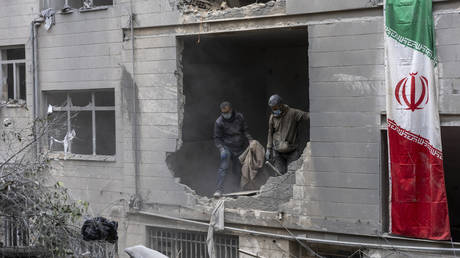
When Iranian forces targeted commercial tankers last weekend, the US response was swift and heavy. US Central Command (CENTCOM) launched a wave of retaliatory strikes, hammering Iranian coastal radar, surveillance infrastructure, and drone storage facilities. In retaliation, the Islamic Revolutionary Guard Corps (IRGC) attempted to strike US military assets in Bahrain and Jordan, though without immediate success.
The ceasefire is officially over, the Trump administration has reinstated a strict blockade on Iranian ports, and the crucial sanctions waiver allowing Iran to export its oil has been ripped up. Yet, the White House claims Tehran is still pulling at Washington's sleeve, hoping to salvage a deal.
Why Iran is Still Talking Under Fire
It sounds contradictory. Why would a country actively exchanging rocket fire with the world’s largest military still want to negotiate?
The answer is simple. They are running out of options.
The economic and military pressure on Tehran is staggering. Years of crushing sanctions, coupled with the devastating physical blows from the latest US military campaign, have pushed Iran’s leadership into a corner. The White House is capitalizing on this leverage. In her briefings, Leavitt hasn't minced words about Iran's weakened state, asserting that they are no longer the formidable force they once were before the US military stepped up its pressure campaigns.
Iran needs the $6 billion in frozen assets currently sitting in Qatar—funds that were supposed to be unlocked under the MOU. They also desperately need an end to the blockade that is currently suffocating what is left of their maritime oil trade.
So, while Iranian state media projects defiance and warns of blocking alternative waterways, their diplomats are quietly trying to figure out how to get back to the table in Doha. They want a deal because they simply cannot afford the alternative: a prolonged, high-intensity conflict with the US that they have no path to winning.
The Complex Realities of US-Iran Diplomacy
Don't expect a smooth path back to peace. The situation is incredibly messy, with conflicting stories coming out of both capitals.
While Washington insists that Iran is eager to talk, Tehran's public stance is often one of outright denial. Iranian officials have publicly dismissed claims of scheduled meetings, claiming instead that they won't sit down with US negotiators until they see actual progress, particularly regarding access to those unfrozen Qatari funds.
There is also immense internal and external political friction. Vice President JD Vance recently pointed out that foreign interests, particularly certain elements within the Israeli government, have actively lobbied to derail the US-Iran diplomatic track in hopes of keeping the military pressure on indefinitely.
This leaves the US administration walking a very tight line. They must show absolute military resolve—proving, as Leavitt put it, that the US "can hit them anytime, anywhere, any place" to protect global commerce—while keeping the diplomatic door cracked open just enough for a desperate adversary to crawl back through.
What Happens Next
The immediate future of this conflict won't be decided in a press room; it will be decided in the waters of the Persian Gulf and the meeting rooms of Qatar.
If you are tracking this conflict, here are the key signs to watch for over the coming days:
- Shipping Security: Watch whether commercial traffic in the Strait of Hormuz successfully navigates the waterway under the protection of the US blockade, or if Iran attempts further asymmetric drone and mine attacks.
- The Doha Backchannel: Keep an eye on Qatar. Despite the public posturing, look for reports of technical teams and key envoys, like Jared Kushner and Steve Witkoff, quietly resuming low-level talks to draft a replacement or modification for the broken MOU.
- Sanctions and Oil: Monitor whether the US strictly enforces the rescinded oil waivers. If China and other buyers find workarounds, Iran's economic desperation might ease, making them far less likely to compromise at the negotiating table.