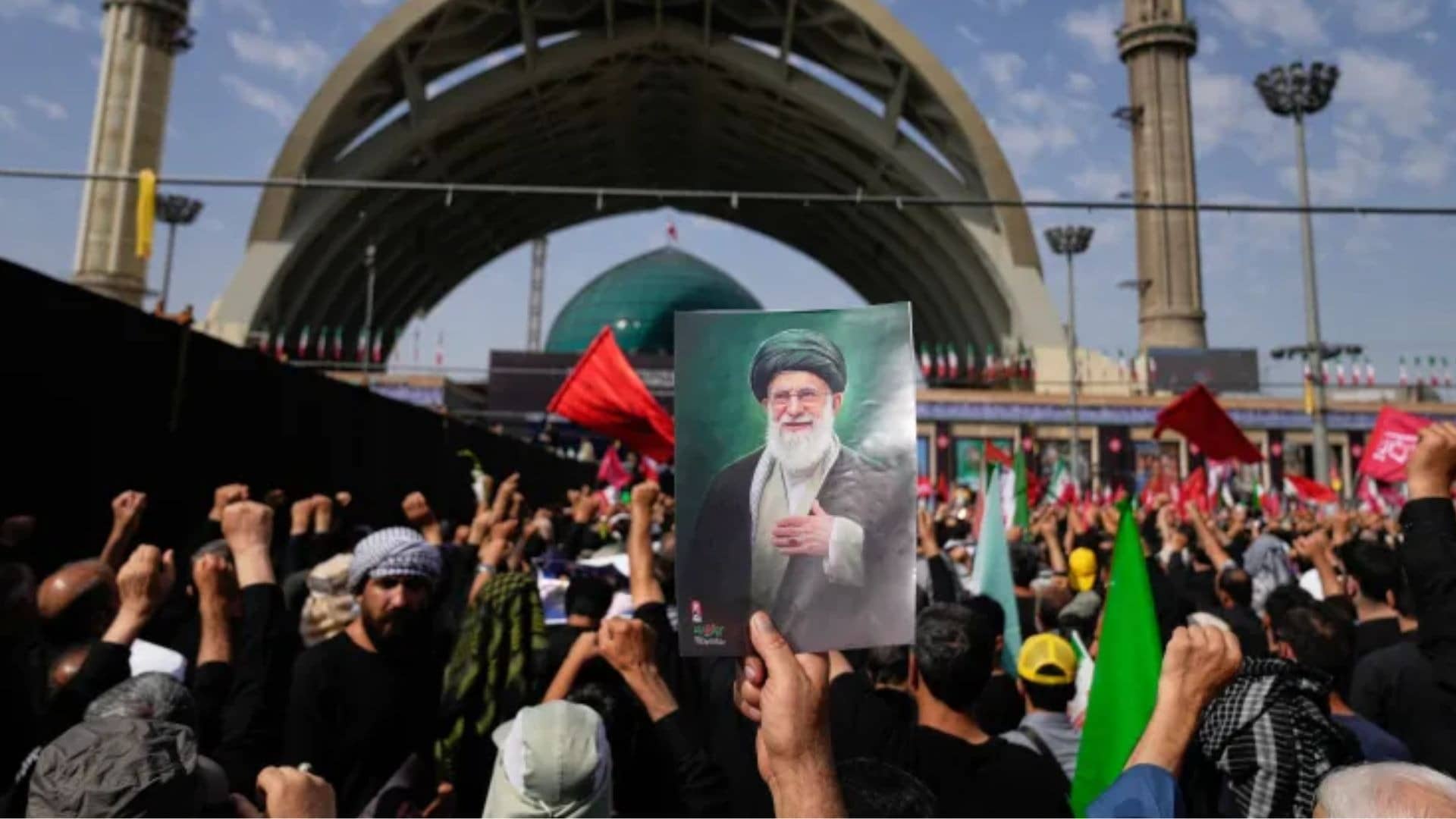
Iran is rattling the saber again. Tehran just declared a new rule of engagement. For every single military strike the United States launches against Iranian interests, Iran claims it will hit back twice as hard, targeting two "enemy targets" for every single blow it receives. To make matters worse, the familiar threat to shut down the Strait of Hormuz has resurfaced.
It sounds terrifying. It makes for great headlines. It sends oil traders into a brief panic.
But if you look at the actual military balance, the economic realities, and historical precedents, you realize something quickly. This is a well-worn playbook. Tehran knows it cannot win a conventional war against Washington. So it relies on asymmetric threats to scare the West into backing off.
Let's break down why this latest round of regional chest-thumping is mostly theater, and what would actually happen if the shooting started.
The Math Behind the Two For One Strategy
The Iranian military command loves symmetry, or at least the illusion of it. The announcement that Iran threatens to close Strait of Hormuz and strike multiple targets for every Western attack is designed to project strength to a domestic audience. It's also meant to make Western planners hesitate.
Think about the logistics. If the US military hits an Islamic Revolutionary Guard Corps (IRGC) drone facility in Syria, Iran claims it will strike two separate assets. These could be US bases in Iraq, commercial tankers in the Persian Gulf, or allied infrastructure in neighboring Gulf states.
It sounds simple on paper. In reality, it's a dangerous escalation ladder that Iran cannot afford to climb.
Every time a nation implements a multiplier strategy in warfare, they invite an exponential response. If Iran hits two targets, the American military response won't just step back down. It doubles again. The Pentagon has massive logistical superiority in the region. Between the US Fifth Fleet based in Bahrain, regional airbases in Qatar and the UAE, and carrier strike groups, the capacity for sustained strikes dwarfs anything Tehran can muster.
The Iranian leadership is highly rational when it comes to survival. They know that an actual, sustained two-for-one campaign would lead to the systematic destruction of their regular navy, their air defense networks, and their economic infrastructure within weeks.
The Logistics of Choking the Global Energy Highway
The Strait of Hormuz is the ultimate geopolitical choke point. It's a narrow strip of water. At its narrowest, the shipping lanes are only two miles wide in either direction. Through this tiny corridor flows roughly 20 percent of the world's total petroleum liquids.
When Iran threatens to close Strait of Hormuz operations, global markets shake because the global economy depends on that oil. But actually closing the strait is much harder than giving a fiery speech in Tehran.
To truly shut down the waterway, Iran would have to do several things simultaneously. They would need to drop hundreds of smart sea mines across the shipping lanes. They would need to deploy their fleet of fast attack craft to harass commercial vessels. They would need to fire shore-based anti-ship cruise missiles from the rugged cliffs of the Iranian coastline.
They have the equipment to do this. The IRGC has spent decades buying and building asymmetric naval tools. They have Chinese-designed anti-ship missiles, fast-moving motorboats equipped with rocket launchers, and a massive stockpile of mines.
But they can only do it once.
The moment the first mine is dropped or the first commercial tanker is struck, it triggers an international military reaction. The US Navy, alongside British, French, and regional allies, keeps permanent minesweeping capabilities in the region. A conflict in the strait wouldn't just be an American problem. It would be a global problem.
Why a Blockade is an Economic Suicide Pact for Tehran
Here is the glaring flaw in the Iranian strategy that most mainstream media outlets completely ignore. Iran needs the Strait of Hormuz just as much as the rest of the world does.
Iran relies heavily on its own oil exports to survive. Even under heavy Western sanctions, Tehran manages to move millions of barrels of crude oil every day, mostly to buyers in China who are willing to look the other way. Nearly every single drop of that sanctioned oil has to pass through the exact same shipping lanes Iran threatens to block.
If the IRGC closes the strait, they don't just starve the West of oil. They starve themselves of revenue.
They would instantly choke off their own financial lifeline. The country is already dealing with massive domestic inflation, widespread public discontent, and a struggling currency. Cutting off their primary source of hard currency would cause immediate domestic chaos.
There is another massive problem for Tehran. If they block the strait, they don't just anger the United States or Europe. They directly harm their most important economic and political patrons. China relies heavily on Middle Eastern crude flowing through that specific body of water. By shutting down the strait, Iran would paralyze Chinese energy supplies, forcing Beijing to withdraw its diplomatic protection at the UN Security Council.
Iran cannot afford to alienate its only powerful friends. The threat is a double-edged sword where the backswing cuts the person holding it.
Lessons from the Tanker War
We have actually seen this movie before. During the 1980s, the world witnessed the Tanker War. It was a brutal, multi-year conflict during the Iran-Iraq war where both sides attacked commercial shipping in the Persian Gulf.
Iran tried to use the exact same tactics they are threatening today. They sowed mines, attacked neutral tankers, and used speedboats to terrorize merchant sailors.
The result was disastrous for the Iranian military.
The United States launched Operation Praying Mantis in 1988 after an American frigate, the USS Samuel B. Roberts, struck an Iranian mine. In a single day of precise strikes, the US Navy destroyed Iranian oil platforms, sank a modern Iranian frigate, a gunboat, and multiple fast attack craft. It was the largest surface engagement for the US Navy since World War II.
It crippled the Iranian Navy and forced Ayatollah Khomeini to finally accept a ceasefire with Iraq. The historical lesson is crystal clear. Asymmetric tactics can cause short-term disruption, but they fail completely when faced with a concentrated conventional naval campaign. The strategic balance hasn't changed enough since 1988 to alter that outcome.
The Reality of Asymmetric Capabilities
We shouldn't completely dismiss Iran's military capacity. They have spent forty years preparing for an unequal fight.
Instead of building expensive aircraft carriers or high-tech fighter jets that Western forces could easily destroy, they invested heavily in cheap, expendable technology. Their drone program is highly effective. Their ballistic missile arsenal is the largest in the Middle East.
If a full-scale conflict broke out, Iran could absolutely cause severe short-term pain. They could hit desalination plants in Saudi Arabia. They could strike oil processing facilities like Abqaiq. They could make shipping insurance rates skyrocket to the point where commercial vessels refuse to enter the Persian Gulf entirely.
But causing temporary chaos is very different from achieving a strategic victory.
The Pentagon actively plans for these exact scenarios every single day. The US military employs advanced missile defense systems like the Patriot and Aegis combat systems throughout the region to neutralize these threats. Western planners don't view the Iranian threat as an insurmountable wall. They view it as a complex logistical problem that can be solved with sufficient firepower and rapid clearing operations.
What to Watch Moving Forward
Don't panic the next time you see a headline about Iran threatening the global oil supply. Look at the specific actions on the ground instead of the rhetoric coming out of military parades in Tehran.
Watch the shipping insurance rates in London. Watch the movement of US carrier strike groups toward the Arabian Sea. Watch the diplomatic statements coming out of Beijing. Those are the real indicators of conflict risk.
The current rhetoric is a classic example of deterrence through bluster. Iran wants the world to believe it is crazy enough to burn down the global economy if it gets pushed too far. It's a calculated gamble designed to keep Western forces from taking direct action against the Iranian nuclear program or its regional proxy networks.
If you want to prepare for the actual fallout of these recurring tensions, you need to focus on diversified energy supplies and maritime security protocols rather than worrying about an apocalyptic blockade that will likely never happen.
Keep your eyes on the actual movement of oil tankers and the deployment of naval assets. Ignore the empty threats designed for the evening news.