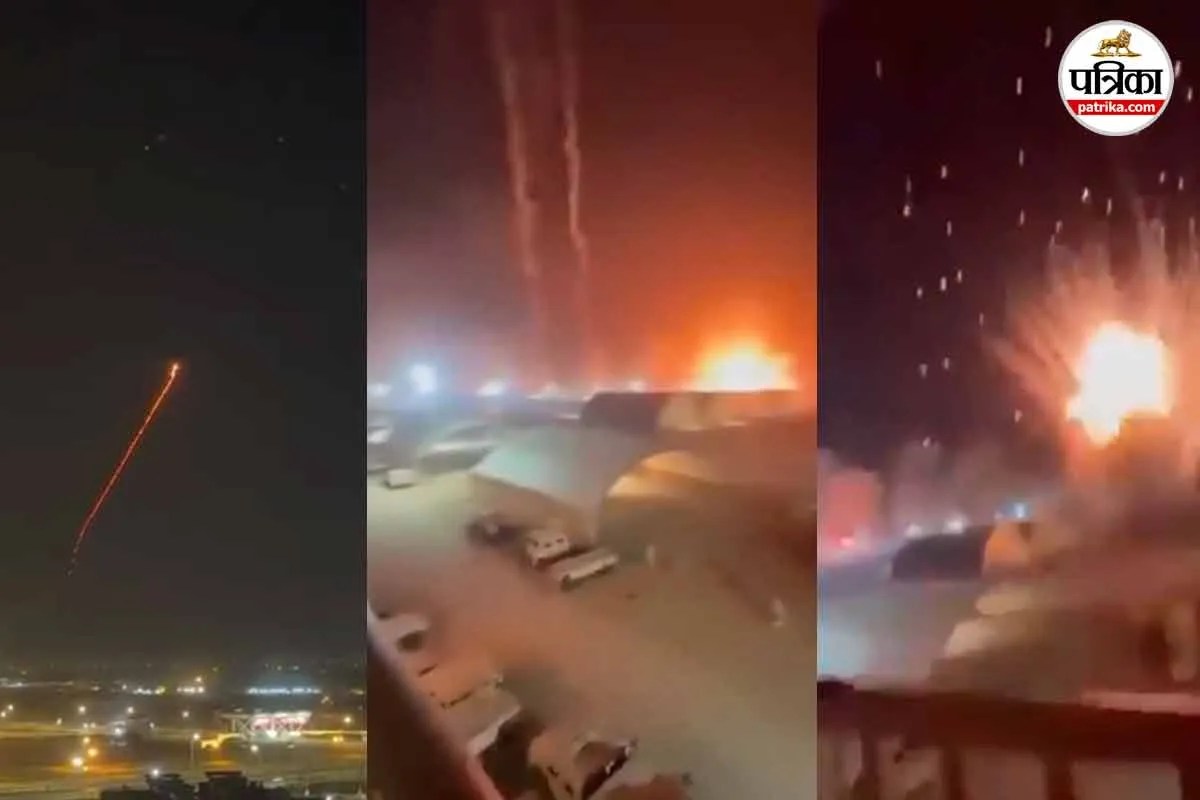
The Middle East just took another dangerous turn. Iran claims its military launched large-scale kamikaze drone strikes directly hitting US military facilities in Kuwait. This isn't just another localized skirmish. It's a massive escalation that threatens to reshape how every country in the Gulf views its own security.
For the past week, the US military has hammered targets inside Iran through relentless overnight airstrikes. Tehran promised a severe response, and they chose Kuwait as their main theater for retaliation. According to statements broadcasted by Iran’s state network IRIB, the Iranian army targeted two critical installations: the sprawling ammunition depot at Camp Udairi and the air defense infrastructure at Ali Al Salem Air Base.
What makes this specific operation—codenamed Operation Thunderbolt—so alarming isn't just the hardware used. It's the strategic message Iran is sending to Washington and its regional allies.
The Targets and What Was Hit
Tehran explicitly stated that its forces targeted the nerve centers of American logistical support in the region. They didn't just fire blindly into the desert; they went after high-value military assets.
- Camp Udairi (Camp Buehring): Located roughly 104 kilometers from the Iranian border, this base acts as a staging and reorganization hub for US forces. Iran claimed its drones successfully hit a major ammunition depot and equipment storage structures within the complex.
- Ali Al Salem Air Base: This site houses critical Western coalition air assets. Iran claims its kamikaze drones directly struck Patriot missile defense radars and air surveillance radar installations.
If these radar strikes are fully verified, it reveals a massive vulnerability. Patriot systems are designed to protect against exactly this type of threat. If slow-moving, low-altitude suicide drones are successfully slipping through multi-million-dollar air defense grids, the tactical playbook for defending Gulf installations needs an immediate rewrite.
Why Kuwait Is Catching Fire
You have to look at the broader map to understand why Kuwait became the target. For years, Kuwait has maintained a delicate, relatively neutral diplomatic stance in the region compared to some of its louder neighbors. Yet, it hosts some of the largest concentrations of US military personnel in the world.
By launching these operations, Iran is trying to force Kuwait's hand. The Islamic Revolutionary Guard Corps (IRGC) and the Iranian army have been quite open about this strategy, publicly warning Gulf nations that allowing the US to utilize their airspace or ground bases for strikes against Iran turns them into legitimate targets. It's a high-stakes leverage play meant to scare regional governments into restricting American operational freedom.
The timing adds another layer of complexity. This entire escalation is unfolding despite a Pakistan-brokered memorandum of understanding that was signed back in June, which was supposed to pave the way toward a lasting peace framework. That diplomatic effort now looks incredibly fragile, if not entirely dead in the water.
The Fallout Across the Regional Map
This isn't an isolated incident between Iran and Kuwait. It's part of a sweeping, multi-front retaliatory campaign by Tehran. Over the same 24-hour period, Iranian state media reported paired actions across the region. They claimed strikes against US-linked assets at the Al-Azraq base in Jordan and facilities in Bahrain.
The US Central Command (CENTCOM) has been responding with precision strikes of its own, trying to degrade Iranian launch capabilities, coastal radars, and command hubs. But every time a new wave of American strikes concludes, Tehran responds by widening the geographic scope of its drone operations.
What does this mean for the immediate future? Expect regional energy markets to reflect this volatility almost immediately. While the strikes in Kuwait targeted military bases rather than civilian oil infrastructure, the proximity of these bases to critical shipping routes and oil hubs means the margin for error is razor-thin.
What Happens Next
If you are tracking security or business interests in the Gulf, the old assumptions no longer apply. Security managers and regional policy analysts need to take several immediate steps to adapt to this shifting reality.
First, reassess logistics and supply chain routes running through Kuwait and Jordan. Relying on the assumption that host-nation bases offer absolute safety from drone tech is no longer viable.
Second, monitor local diplomatic shifts closely. Look at how the Kuwaiti government responds to the use of its facilities by Western forces. If host nations begin restricting US flight paths to protect their own infrastructure, American striking power in the region will face severe bottlenecks.
Finally, prepare for heightened electronic warfare and cyber disruptions. Kinetic drone strikes are almost always accompanied by increased GPS jamming and cyber operations targeting regional communication networks. Safeguarding digital assets in the Gulf is now just as critical as reinforcing physical bunkers.