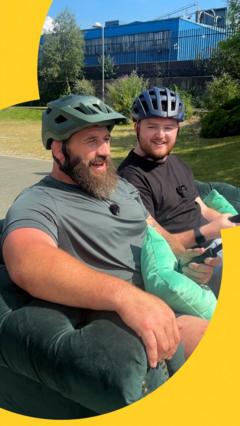
When a 128-kilogram former England rugby prop starts pedalling a motorized sofa around Manchester, people notice. Joe Marler turned to cycling not because he wanted to conquer the Tour de France or obsess over aerodynamics. He did it because he was exhausted by toxic fitness expectations and needed an easy way to clear his head.
For years, Marler made his living in the most brutal physical environment in sport. Scrummaging against international front rowers leaves a mark on your body and your brain. When his professional rugby career ended, the relentless grind didn't suddenly disappear. Instead, like millions of people across the country, he found himself staring down a culture that demands constant self-optimization. Ride faster. Lift heavier. Track every single calorie. Learn more on a related subject: this related article.
That approach breaks most people. Marler realized early on that jumping from high-stakes elite competition straight into intense civilian fitness regimes was a recipe for burnout. He needed something simple, accessible, and mentally grounding.
Why Joe Marler Turned to Cycling to Escape Fitness Culture
Most modern fitness advice feels like a punishment. If you scroll through social media on any given Monday, you're bombarded with influencers preaching 5:00 AM ice baths and grueling two-hour gym sessions. It's overwhelming. Further reporting by NBC Sports highlights related views on this issue.
Marler openly admits his sofa is his favorite place on earth. According to recent survey data from British Cycling, the average adult in the UK spends upwards of 18 hours a week sitting on their couch. At the same time, around 70 percent of adults say they want to be more physically active. The gap between wanting to move and actually starting comes down to how intimidating sports culture has become.
When Marler teamed up with British Cycling and Lloyds for their Sofa to Saddle initiative, his motive was straightforward. He wanted to strip away the seriousness. You don't need carbon fiber frames, matching lycra kits, or heart rate monitoring zones to benefit from riding a bike. You just need to pedal.
Trading just two hours of couch time a week for a gentle cycle ride creates a massive shift in routine. It removes the guilt of missing a heavy workout while still getting your legs moving. For someone who spent nearly two decades executing crunching tackles on the pitch, rolling through a park at ten miles an hour proved surprisingly therapeutic.
The Mental Health Benefit of Two Wheels
Physical fitness gets all the headlines, but mental clarity is the real driver here. Marler has been vocal throughout his career about his struggles with anxiety and depression. His 2021 documentary brought those mental health battles into the open, showing a side of elite sport that few fans ever get to see.
When the constant noise of daily life gets overwhelming, getting outdoors on a bicycle forces you to be present. You're balancing. You're watching the road. You're feeling the air.
Breaking Out of the Headspace Trap
- Rhythm over intensity: The steady, repetitive movement of pedaling calms an overactive nervous system without taxing your body to exhaustion.
- Low friction entry: Putting on a helmet and rolling out the driveway takes two minutes, compared to packing a gym bag and driving across town.
- Family connection: Unlike intense solo gym routines, casual cycling lets you spend real time outdoors with family and friends without constantly checking a stopwatch.
When you're grinding through life, you need activities that give energy back rather than taking it away. Cycling delivers that exact reset button.
The Myth of Life-Maxxing and Extreme Workouts
We live in a culture obsessed with optimization. People feel pressured to crush their day jobs, build side hustles, run marathons, and cook flawless meal-prep containers every week. It is exhausting.
Marler called out this exact trap during his recent Manchester campaign. The idea that every workout must leave you gasping for air on a gym floor is fundamentally flawed. In fact, intense exercise often deters the people who need movement the most.
If you haven't exercised regularly in five years, jumping into a high-intensity interval training class will leave you sore, discouraged, and back on the couch by week two. Cycling works because it is scalable. You control the resistance simply by choosing where you ride and how fast you turn the pedals.
Small, sustainable shifts always beat dramatic life overhauls that fall apart within a month. Swapping an hour of doom-scrolling for an hour of quiet pedaling seems tiny, but over a year, that adds up to over fifty hours of low-impact cardiovascular movement and fresh air.
How to Go From the Couch to the Bike Without Getting Overwhelmed
If you haven't ridden a bicycle since childhood, getting started can feel awkward. Here is how to keep the process simple, practical, and completely stress-free.
Step 1 Get a Bike That Fits Comfortably
Don't rush out to spend thousands on a high-end road bike. Look for a simple hybrid or city bike with an upright riding position. If your lower back hurts or your arms feel strained, you won't stick with it. Comfort matters more than speed.
Step 2 Pick Easy Local Routes
Avoid busy roads during your first few outings. Stick to local parks, dedicated cycle paths, or quiet canal towpaths. The goal is to build confidence and relax, not fight traffic.
Step 3 Focus on Time Instead of Distance
Forget about how many miles you cover. Start with a simple target of twenty minutes. Ride out for ten minutes, turn around, and ride back. Once twenty minutes feels comfortable, stretch it to thirty.
Step 4 Keep Gear to a Bare Minimum
You don't need special shoes, padded shorts, or high-tech gadgets when starting out. Wear comfortable clothes you already own, grab a reliable helmet, and make sure your tires are properly inflated.
Get your bike out of the garage this weekend, pump up the tires, and pick a flat park trail for a simple twenty-minute spin.