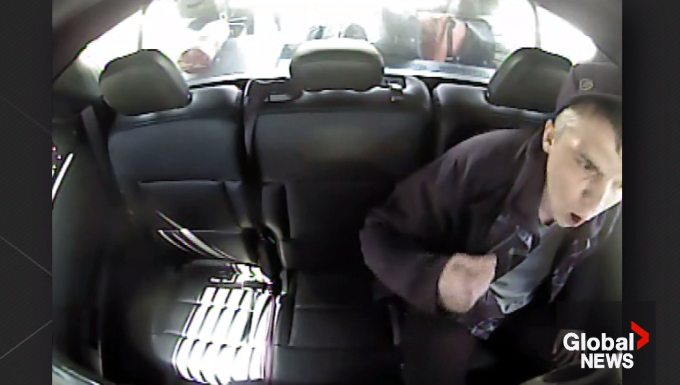
A court order isn't a suggestion. Yet, three days before Hung Trang and Ban Phuc Hoang were brutally beaten to death in Edmonton's Chinatown, a 49-minute RCMP dashcam video captured a breakdown of the justice system in real time.
The public release of this cruiser footage during Justin Bone’s second-degree murder trial reveals a chilling reality. It wasn't just a lack of communication that led to the 2022 tragedy. It was a conscious decision to violate bail conditions, made by officers who didn't know what else to do with a man falling through the cracks.
If you want to understand how the system failed two innocent men, you have to look at what happened in the back of that police car.
The Ride to Edmonton
Justin Bone was out on bail, staying at an approved residence in Alberta Beach under strict conditions. He was explicitly banned from entering Edmonton unsupervised while waiting for a spot in a 90-day addiction treatment program. But when a domestic dispute flared up at the home, the RCMP removed him.
Instead of finding an alternative that respected the court's mandate, officers put the 40-year-old in the back of a cruiser and headed straight for the city limits.
The 49-minute drive is a painful watch. Bone knew he shouldn't be there. He explicitly told the driving officer that the move was illegal.
"You guys shouldn't even be allowed to do this. And I know that," Bone said from the backseat. "I'm not getting breached... I don't want to be doing this, you guys are making me do this."
The officer at the wheel acknowledged the bail conditions but claimed his hands were tied. Bone was no longer welcome in Alberta Beach. The police solution? Drop him off in a major urban center where he had no support, no housing, and an explicit court order to stay away.
A System Dropping the Ball
The conversation in the cruiser highlights a total systemic failure. When the officer tried to offer generic advice, telling Bone to take things "one day at a time," Bone shut it down instantly.
"There's not one day at a time when you're on the street," Bone replied.
When the officer claimed he wasn't trying to make him homeless, Bone didn't hold back. "Well, you just did. You just did by taking me from where I'm supposed to be."
The RCMP officers tried to cover their tracks. The driver sent a message to the Edmonton Police Service, stating that Bone was being dropped off near the Hope Mission and wasn't breaching his conditions "on his own accord." But as criminologists have pointed out during the trial, a police notification doesn't override a judge's order. Dropping an unsupervised, highly unstable individual into the core of a city was a massive professional oversight.
Bone warned the officer of exactly what would happen next, stating plainly, "I'm not thinking right, right now." He predicted that without structural help, he would end up right back in jail.
Three days later, he was arrested for double homicide.
What Happened After the Drop-Off
The defense has used this timeline to question Bone's mental capacity during the attacks. Bone testified that after being abandoned in West Edmonton, he spiraled into heavy drug use, smoking methamphetamine continuously over a 12-hour period.
By the time May 17 rolled around—the day before the killings—Bone claimed he was experiencing severe hallucinations. He described trying to check into a detox center near the Royal Alexandra Hospital, only to be turned away by security. He told the courtroom he was talking to magpies and seeing dragons in the sky before seeking shelter on a warehouse roof near Rogers Place.
Bone testified that he has absolutely no memory of the fatal assaults on Ban Phuc Hoang and Hung Trang in Chinatown. The prosecution paints a different picture, pointing to his behavior in a police holding cell—where he set off a fire sprinkler—as evidence of intentional choices and a functioning presence of mind.
The Cost of Institutional Inertia
This case triggered massive public outrage in Alberta, and it’s easy to see why. The tragedy in Chinatown wasn't an unpredictable random act. It was the direct result of a system that treats complex legal, mental health, and addiction issues with geographical displacement.
When accountability is pushed from one municipality to another, the consequences are felt by the community. Two families lost their loved ones because a baseline court order was treated as a logistical inconvenience rather than a legal boundary.
The next steps for the justice system require addressing these gaps directly. Moving forward, municipal police forces and rural RCMP detachments need strict, non-negotiable protocols for housing individuals who are removed from bail-approved residences. Social services must provide immediate emergency beds for individuals on provincial treatment waitlists, rather than letting local shelters become default dumping grounds for high-risk offenders.