When news broke that Sierra Leone and Liberia declared national emergencies over a street drug called kush, headlines around the world seized on the same bizarre rumor: that local dealers were digging up human bones to grind into the mix.
That story made for dramatic headlines, but it missed the real story.
The real story isn't about grave robbing or urban myths. It's about a cold, calculated supply chain of synthetic chemicals flowing straight from laboratory networks in Europe and Asia into two of West Africa's most fragile economies.
If you want to understand why kush has brought Freetown and Monrovia to their knees, you have to look past the sensationalism.
What Actually Is Kush?
For years, people assumed kush was just strong marijuana mixed with acetone or household cleaning products. That was a dangerous mistake.
Independent laboratory testing conducted by the Global Initiative Against Transnational Organized Crime (GI-TOC) revealed what's really inside the joints smoked on the streets of West Africa.
It isn't just bad cannabis. It's a toxic cocktail of two primary ingredients:
- Synthetic Cannabinoids: Laboratory-made chemicals designed to mimic THC, often originating from chemical suppliers in Europe (notably the Netherlands) and Asia.
- Nitazenes: Ultra-potent synthetic opioids that can be up to 25 times stronger than fentanyl. Chemical analysis showed that roughly half of all tested kush samples contained these deadly compounds.
When you mix synthetic cannabinoids with nitazenes, you don't get a typical high. You get an immediate, overwhelming physical shutdown.
Users experience severe sedation, dropping into a standing stupor often described locally as "zombie mode." Long-term use leads to severe physical collapse: open sores on legs, swollen limbs, organ failure, and rapid death from respiratory arrest.
+-------------------------------------------------------------------+
|                     THE KUSH CHEMICAL MIX                         |
+-------------------------------------------------------------------+
|  Synthetic Cannabinoids  +  Nitazenes (Up to 25x stronger than    |
|  (Imported active ingredients)  fentanyl)                         |
+-------------------------------------------------------------------+
                                  |
                                  v
+-------------------------------------------------------------------+
|  Local "Cooks" combine active chemicals with marshmallow leaves,  |
|  tobacco, or local plant matter using acetone or solvents.        |
+-------------------------------------------------------------------+
The Global Supply Chain Nobody Is Talking About
The popular narrative paints kush as an isolated, local problem cooked up in back alleys. That's simply not true.
The raw chemical ingredients don't originate in West Africa. They are shipped via international postal services and maritime shipping routes directly from global export hubs.
Research points to key origin points for these precursor chemicals:
- China: The primary global manufacturer of raw synthetic precursors and synthetic opioids.
- The Netherlands and the UK: Major transit and distribution hubs for European synthetic cannabinoids and specialized chemical compounds.
Once these concentrated chemicals land in coastal West Africa, local distributors—known in the trade as "cooks"—spray the liquid solutions onto dry plant leaves, such as marshmallow leaf or crushed tobacco.
The market has shifted rapidly. What started as an operation run by a few tightly controlled criminal syndicates has fragmented into hundreds of smaller, hyper-local networks. Anyone with a postal address, a bottle of solvent, and a batch of imported chemicals can become a producer.
Why Sierra Leone and Liberia Are Uniquely Vulnerable
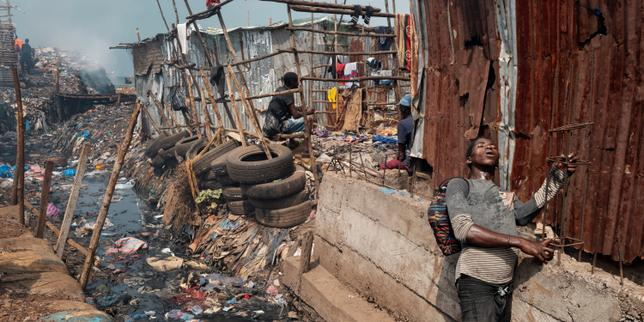
You can't separate the kush crisis from the history of the Mano River Basin. Both Sierra Leone and Liberia are still recovering from civil wars that destroyed infrastructure, crushed economic mobility, and left deep intergenerational trauma.
Here’s why the drug took hold so quickly:
1. Crushing Youth Unemployment
In cities like Freetown and Monrovia, youth unemployment sits at staggering levels. Millions of young adults face a daily reality with zero job prospects. Kush costs as little as a few West African leones or Liberian dollars per joint—far cheaper than alcohol or imported traditional drugs. For many, it offers a temporary escape from hopeless economic conditions.
2. Broken Healthcare Systems
When the crisis hit, neither country had the medical infrastructure to handle a massive surge in chemical addiction. Sierra Leone had only one operational psychiatric hospital for a population of over eight million people. There were virtually no dedicated public drug rehabilitation centers, no widespread access to overdose-reversal drugs like naloxone, and no toxicological screening capacity in municipal hospitals.
3. Porous Maritime and Land Borders
With thousands of miles of unpatrolled coastlines and poorly regulated border crossings, stopping the flow of small chemical packages is nearly impossible for local law enforcement.
Why Punitive Crackdowns Are Failing
When President Julius Maada Bio of Sierra Leone and President Joseph Boakai of Liberia declared national emergencies, the initial response was predictable: police crackdowns, mass arrests of users, and raids on informal settlement neighborhoods like Freetown's Funkia and Kissy areas.
Executing raids and filling holding cells doesn't cure physical dependency on nitazenes.
Treating a severe synthetic opioid addiction as a criminal offense rather than a medical emergency creates three massive problems:
- Drives Users Underground: Fear of arrest prevents individuals suffering from life-threatening overdoses or severe infections from seeking emergency care at public hospitals.
- Overwhelms Prisons: Jailing thousands of young users strains already overcrowded correctional facilities without addressing the underlying supply chains.
- Ignores Harm Reduction: Without distributing naloxone or establishing community-based treatment facilities, the death toll continues to rise regardless of how many street-level sellers are arrested.
Governments in the region have slowly begun shifting their approach, incorporating public health agencies and community leaders alongside law enforcement. But progress is slow, and resources remain severely limited.
What Needs to Happen Next
Solving a multi-national synthetic drug crisis requires more than local police raids. If West African nations and international partners want to curb the damage, several concrete steps must happen immediately:
- Source-Country Accountability: European and Asian authorities must tighten postal and shipping oversight on known synthetic cannabinoid and nitazene exports heading to West Africa.
- Deploy Naloxone at Scale: Public health authorities must distribute opioid overdose reversal drugs directly to first responders, community outreach workers, and medical clinics.
- Invest in Medical Rehabilitation: Shift state funding from mass incarceration toward building low-cost, community-level detoxification and outpatient mental health services.
- Target Economic Roots: Create targeted vocational and employment programs for young people in high-risk urban areas to provide alternatives to the informal drug economy.
The kush crisis isn't a strange local anomaly—it's a warning sign of how vulnerable developing economies are to the globalized synthetic drug trade. Until international supply chains are disrupted and public health is prioritized over punishment, the crisis will continue to hold the region's youth hostage.