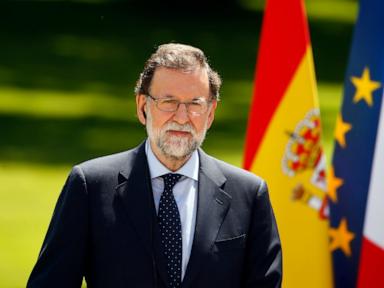
Football tournaments always bring out the absolute best in athleticism and, unfortunately, the absolute worst in political posturing. The latest reminder comes straight from Spain, where former Prime Minister Mariano Rajoy managed to turn a routine sports column into an international controversy. Writing for the online outlet El Debate ahead of the highly anticipated World Cup semifinal between Spain and France, Rajoy praised the French team's performance before dropping a blatant xenophobic line. He claimed that despite their top FIFA ranking and undeniably strong squad, France "doesn't have any French players."
The backlash was instant, fierce, and entirely deserved.
This isn't a case of a sports analyst breaking down a roster. It's a textbook example of a dog-whistle that completely misrepresents what modern national identity means. The French national team, affectionately known as Les Bleus, isn't just a collection of elite athletes; it's a reflection of the country's historical and contemporary reality.
The Reality of France's World Cup Roster
Let's clear up the facts right away. Out of the 26 players representing France at the World Cup, 23 were born directly on French soil. The three squad members who happened to be born outside the country moved to France at a young age, grew up in the French youth academy system, and hold full French citizenship.
When Rajoy claims there are no French players on the pitch, he isn't making a factual observation about passports or birthplaces. He is defining nationality purely by ancestry, surname, and skin color.
The French Embassy in Madrid didn't mince words in its response, issuing a blunt social media statement reminding critics that "all the players of the French team are French." It shouldn't take an official diplomatic intervention to explain how basic citizenship works, but that's where we are.
A Disturbing Trend of World Cup Xenophobia
The most exhausting part of Rajoy's commentary is how wildly unoriginal it is. This keeps happening. Every single time France makes a deep tournament run, a certain contingent of politicians and commentators crawl out of the woodwork to question the players' legitimacy.
Just days before Rajoy's column went live, French captain Kylian Mbappé had to deal with an ugly social media tirade from Paraguayan Senator Celeste Amarilla. Following France's victory over Paraguay in the round of 16, Amarilla mocked Mbappé's origins, calling him a "colonised Cameroonian who has really pretended to be French."
French Minister for Overseas Territories Naïma Moutchou pointed out the exhausting rhythm of these attacks, noting that every time the national team wins, the same obsessions resurface. They aren't random slips of the tongue. They represent a targeted discomfort with a diverse, successful European squad.
The Political Backlash in Madrid and Paris
Rajoy, who served as Spain's conservative prime minister from 2011 to 2018, found himself isolated pretty quickly after the piece was published. Current Spanish Prime Minister Pedro Sánchez wasted no time calling out his predecessor on X, labeling the worldview xenophobic.
"There are those who still measure belonging by surname, place of birth, or skin color," Sánchez wrote. "Others measure it by our roots in a country and our will to contribute to it."
Even politicians who share Rajoy's broader conservative political alignment across Europe distance themselves. Valérie Pécresse, the regional president of Île-de-France, called the remarks "despicable racism" and said Rajoy demonstrated a complete misunderstanding of the soul of the French people.
Meanwhile, representatives from Rajoy's Popular Party tried to play the whole thing off as harmless irony. Spokesperson Borja Sémper claimed the column was written "without ill intent" and was merely sarcastic. It's a weak defense. Suggesting an entire group of citizens don't belong to their country isn't a joke; it's a deliberate political stance.
What the World Cup Teaches Us About Modern Belonging
Sporting events don't exist in a vacuum. Teams like France succeed because of their structural investment in local youth systems, particularly in the diverse suburbs of Paris like Bondy, where Mbappé honed his skills. These neighborhoods are hotbeds of world-class talent, and the players they produce are as French as anyone tracing their lineage back generations.
Reducing elite athletes to their parents' or grandparents' countries of origin isn't just an insult to the players; it's an insult to the millions of citizens who share similar backgrounds. French Football Federation President Philippe Diallo summed it up best by stating that the players don't need a certificate of nationality from a former foreign leader.
The pitch is where talent speaks for itself. On Tuesday, when Spain and France meet in Dallas for a spot in the World Cup final, the match will be decided by tactics, fitness, and skill. The political noise will fade, but the reality of who gets to represent a nation remains unchanged. Citizenship isn't a conditional privilege based on an old politician's approval. It's a legal and cultural fact.