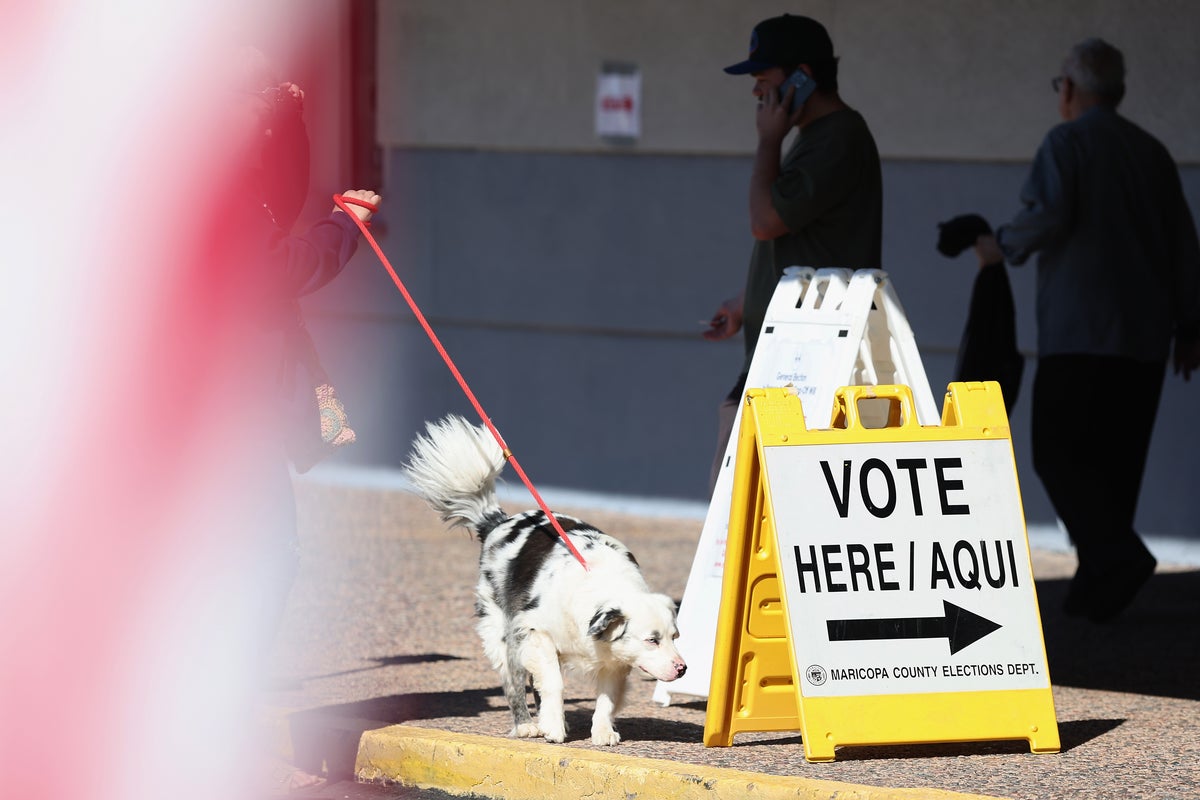
Maricopa County is the ultimate political pressure cooker. If you want to understand where American elections are heading, you do not look at Washington. You look at Phoenix.
A quiet but monumental power shift just took place in Arizona's most populous county.
Maricopa County Recorder Justin Heap, a Republican backed by Stephen Miller’s conservative legal group, just secured a massive settlement that fundamentally alters who runs early voting in the state's biggest swing county.
For over a year, Heap and the county Board of Supervisors have been locked in a bitter legal war. They sparred over staff, database access, and the actual mechanics of casting a ballot. The Board called Heap's lawsuit frivolous. Heap accused the Board of illegally stripping away his powers.
Now, they have a deal.
This is not just some dry administrative agreement. It is a major victory for the populist "America First" wing of the Republican Party, which has spent years trying to gain direct control over election machinery. By settling, the predominantly establishment GOP Board of Supervisors handed Heap substantial control over early voting and drop box locations.
If you are a voter in Arizona, or someone who tracks national politics, this changes the entire playing field for the 2026 midterms and the 2028 presidential race.
Inside the Maricopa County Settlement
Let's get straight to the facts. What does this deal actually do?
The agreement divides election administration into two distinct phases. It separates early voting from Election Day voting.
Under the new terms, Heap and his office take full control of the early voting period. That means he gets to decide where early voting sites are set up. He decides where to put ballot drop boxes. He also oversees signature verification and the training of early voting staff. Given that the vast majority of Arizonans vote early, this is an immense amount of influence.
The Board of Supervisors and its Elections Department keep control of Election Day itself. They handle emergency voting, ballot tabulation, and the actual counting of the votes. They also retain control over early election boards—the bipartisan groups that process early ballots.
The financial side of this deal is eye-popping.
The Board agreed to transfer up to $21 million in county funds to Heap's office. A whopping $15 million of that money is dedicated to building an entirely new, separate information technology system for the Recorder's Office. Currently, both offices share a voter database. Under this deal, Heap gets his own. The Board will also fund 24 new IT positions and 12 early voting staff members specifically for Heap's team.
It is an expensive peace treaty. The goal was to avoid courtroom drama as elections loom.
Board Chair Kate Brophy McGee made the board's exhaustion clear. She publicly stated she was sick of the drama and wanted to make Maricopa County boring again. But boring is a luxury Arizona cannot afford right now.
The Backstory of a Bitter GOP Civil War
This conflict did not appear out of thin air. It is the culmination of years of infighting between different factions of the Republican Party in Arizona.
For years, Maricopa County's elections were run by Stephen Richer, a traditional Republican who became a prime target for election skeptics. Richer defended the integrity of the 2020 and 2022 elections against heavy criticism from his own party. During his tenure, the Board of Supervisors stripped certain powers away from the Recorder's Office. They transferred IT staff and control over drop boxes to the board-run Elections Department.
They did this to centralize control and protect the system from what they viewed as internal threats.
Then came Justin Heap.
Heap, a former state representative, ran for Recorder on a platform of reform and skepticism about how previous elections were handled. He won. Once in office, he immediately set out to undo the agreements his predecessor had made.
In June 2025, Heap filed a lawsuit against the Board of Supervisors. He claimed the board's actions were an illegal power grab that violated state law. The legal battle dragged on for over a year, causing immense administrative friction. Just weeks ago, Heap's attorneys were in court asking a judge to hold the Supervisors in contempt and fine them $100,000 per day.
The Board's legal team fired back, accusing Heap's side of making pervasive misstatements to the court.
It was a mess. With primary elections and a major general election fast approaching, the pressure to settle was immense. Under the guidance of Judge Christopher Coury, who served as a mediator, the two sides finally carved out this power-sharing agreement.
Stephen Miller and the National Strategy
You cannot look at this story through a purely local lens.
Heap's lawsuit was not a solo effort. It was actively backed and funded by America First Legal. This is the conservative public interest law firm founded by Stephen Miller, one of the most influential advisers to the national populist movement.
Miller’s group has a clear strategy. They are not just fighting high-profile national battles. They are going county by county, state by state, targeting the precise administrative rules that govern how votes are cast, counted, and verified.
By securing this settlement in Maricopa County, America First Legal achieved a major proof of concept.
They successfully used the legal system to claw back power from a moderate, establishment-heavy county board and hand it to an ally. Maricopa County is home to more than half of Arizona's population. It is the geographic center of the state's political gravity. What happens here sets the tone for the rest of the Southwest.
Critics of the deal are deeply concerned.
Steve Gallardo, the lone Democrat on the Board of Supervisors, was the only member to vote against the settlement. He warned that dividing election operations this way could lead to confusion and administrative fragmentation. The main fear among critics is that a partisan Recorder now has the sole authority to decide where drop boxes go and how early voting locations are staffed.
On the other side, Heap's supporters view this as a return to the rule of law.
They argue that Arizona state law explicitly gives county recorders these duties, and the Board of Supervisors had no right to take them away in the first place. To them, this is about restoring statutory balance and ensuring election security.
The Real World Impact on Voters
What does this mean for you if you live in Maricopa County?
Right now, the transition is underway. The immediate focus is ensuring that the upcoming voting periods go off without a hitch.
For the average voter, the physical act of voting might not feel drastically different on day one. You will still receive your early ballot in the mail, sign the envelope, and send it back or drop it off. But behind the scenes, the hands on the levers have changed.
Here are the key changes to watch as this deal takes effect:
- Drop Box Locations: Watch where ballot drop boxes are placed. Heap now has the authority to select these locations. Populist Republicans have historically been skeptical of drop boxes, meaning we could see changes in how many are available and where they are situated.
- Early Voting Sites: The selection of early in-person voting locations is now in Heap's hands. This could affect accessibility in different parts of the county.
- The IT Split: Keep an eye on the $15 million IT system development. Building a separate voter database from scratch is a massive technical undertaking. If it is handled poorly, it could lead to glitches or security vulnerabilities. Until it is ready, both offices will have to share the current system, which requires tight cooperation.
- Signature Verification: The standards used to verify signatures on early mail-in ballots will be under Heap's purview. This has been a major flashpoint in previous election disputes.
What to Watch Next
The settlement ends the active litigation, but the real test is just beginning. Implementation is everything.
Judge Christopher Coury will continue to serve as a special master to mediate any future disputes that arise between the Recorder's Office and the Board of Supervisors. This suggests that even the people who signed the deal expect some level of ongoing friction. They built a referee right into the contract.
If you want to keep tabs on this situation, watch the public meetings of the Maricopa County Board of Supervisors. Watch how the funding for the new IT positions is rolled out, and pay close attention to the directives coming out of the Recorder's Office regarding early voting locations.
The national spotlight is not leaving Arizona anytime soon. With Stephen Miller's allies proving they can successfully re-engineer election administration from the inside, expect this playbook to be copied in swing counties across the country.


:max_bytes(150000):strip_icc():focal(749x0:751x2)/scott-peterson-011924-4-fdb17804e77f438a8797e61ff48e1aea.jpg)