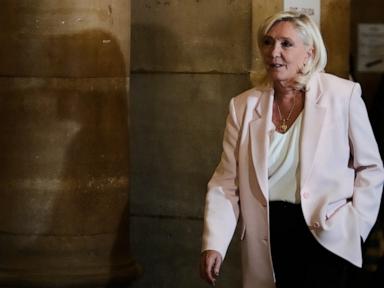
Marine Le Pen just caught a major break from a Paris appeals court, even if the headlines make it sound like she's headed for political house arrest. The court upheld her conviction for embezzling €2.8 million in European Parliament funds, ordering her to serve a one-year sentence attached to an electronic ankle monitor. To a casual observer, a presidential candidate wearing a tracking bracelet sounds like a campaign killer. Le Pen herself previously declared that she wouldn't run under those conditions.
That stance changed within hours.
The reality of the French legal system means this sentence is far from a campaign stopper. By launching an immediate appeal to France's highest court, the Court of Cassation, Le Pen automatically suspends the execution of her sentence. She won't be fitted with a tracking device when the 2027 campaign kicks off. She's already announced her intention to run for the presidency next year, completely unencumbered by physical jewelry from the state.
Understanding how this monitoring works reveals why the French far-right leader is treating this verdict as a partial victory rather than a political death sentence.
How electronic home detention works in the French justice system
France relies heavily on electronic monitoring to keep its heavily overcrowded prisons from spilling over. It's a standard alternative for sentences under two years. When a French court orders home detention with an electronic bracelet, the convict isn't locked in a dark room forever.
A specialized sentence enforcement judge, known as a juge de l'application des peines, holds all the power here. This judge dictates the exact terms of the confinement. They set a strict schedule detailing when the person must be inside their residence and when they're permitted to leave for work, medical appointments, or family obligations.
The technology itself uses a standard ankle strap transmitter paired with a receiver base station plugged into the home. If the wearer steps outside the perimeter during unauthorized hours, the system immediately alerts authorities.
There's a massive amount of bureaucratic flexibility built into this process. The enforcement judge can adjust the allowed hours based on the person's professional needs. For an ordinary citizen, that means working a 9-to-5 job. For a high-profile politician, those hours can be twisted and stretched to accommodate an array of public appearances.
The Nicolas Sarkozy playbook for high profile offenders
Le Pen isn't the first major French political figure to face the ankle monitor. Former French President Nicolas Sarkozy walked this exact path after his corruption conviction.
Sarkozy was sentenced to a year of electronic monitoring. His experience provides a perfect blueprint for how elite figures navigate the system. While serving his time, French media regularly captured footage of Sarkozy leaving his home to go for morning jogs.
His legal team successfully negotiated generous windows of movement. He was allowed to leave his residence between 8 a.m. and 8 p.m. daily. The judge even extended that window until 9:30 p.m. on specific days so Sarkozy could attend separate legal proceedings.
Sarkozy didn't even serve the full year. After just over three months of compliance, a judge granted him conditional release, allowing him to cut the bracelet off early. The precedent is clear. A politically active figure can maintain a highly visible public life while technically serving a house arrest sentence. Le Pen's team knows this history well.
Why sentence reductions make the punishment much lighter
The appeals court made sure to highlight the built-in leniency of French sentencing guidelines during its public statement. Under French law, individuals serving an adjusted sentence can qualify for substantial reductions based on good behavior and compliance.
For a one-year sentence like the one handed to Le Pen, the law allows for a reduction of up to six months. If she pays her €100,000 fine and respects the designated curfews, her actual monitoring time could shrink to a mere 180 days.
The timing of the placement matters immensely. It frequently takes several months for the administration to actually schedule and fit the device after a final legal ruling. If Le Pen eventually has to wear the device, a six-month reduction means she could easily timing it to ensure she is free from the monitor before the critical final weeks of voting.
The legal escape hatch that protects her 2027 campaign
The absolute most important detail of the court's decision involves the suspension of her office ban. The lower court originally slapped her with a strict five-year ban on seeking elected office, which took effect immediately. The appeals court slashed that penalty to 45 months and suspended two-thirds of it.
Because Le Pen already served 15 months of that ban while waiting for the appeal, the obstacle is completely gone. She is legally permitted to put her name on the ballot for the presidential election.
The electronic monitor sentence is the only remaining physical constraint, but her appeal to the Court of Cassation freezes that entirely. In France, an appeal to the highest court puts the execution of a criminal sentence on hold. The high court reviews the legal technicalities of the case rather than re-examining the evidence.
The Court of Cassation indicated it can issue a ruling before voters head to the polls in April 2027. If the high court rejects her appeal just before the election, the bureaucratic delay in setting up the monitor would still likely push the physical fitting of the bracelet past election day. Le Pen's strategy relies entirely on this legal timeline to keep her ankle clear during the campaign.
The backup plan inside the National Rally party
Even with a clear legal path to the ballot, Le Pen's legal drama forces her party to manage a delicate internal balance. The National Rally spent the last year drawing up contingency plans for a reality where Le Pen was completely barred from running.
The obvious alternative is Jordan Bardella, the 30-year-old president of the party. Bardella enjoys immense popularity among the far-right base and frequently outperforms Le Pen in early polling simulations. He has consistently maintained that he's preparing to serve as Le Pen's prime minister rather than her rival.
The appeals court ruling actually makes a Bardella candidacy less likely in the short term. Because Le Pen's path to the ballot remains clear, she retains her status as the undisputed figurehead of the movement. The party will use the ruling to fuel its long-standing narrative that the Parisian judicial elite is attempting to sabotage their movement.
Key milestones to track in the coming months
The political calendar in France is exceptionally tight, and several specific events will determine whether Le Pen can pull off this campaign without an ankle bracelet. Watch these developments closely to see how the situation unfolds.
First, monitor the formal filing of her appeal to the Court of Cassation. This move officially locks the sentence suspension into place.
Second, look for the high court's scheduling announcement. The exact date of their review will dictate whether her legal team can run out the clock before the first round of voting on April 18, 2027.
Finally, watch the National Rally's internal polling over the autumn. If voters express exhaustion over her constant legal battles, the internal pressure to sub in Bardella might grow, regardless of what the judges allow. For now, Le Pen remains firmly in control of her political destiny.