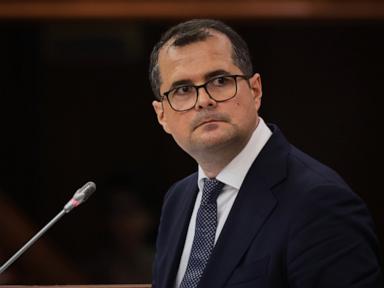
Moldova isn't taking the slow lane to European Union membership anymore. After a grueling nine-hour parliamentary debate that stretched into the evening, lawmakers in Chișinău officially gave a vote of confidence to Vasile Tofan as the country's 18th prime minister. Backed by 53 votes from President Maia Sandu's ruling Action and Solidarity Party (PAS), the 44-year-old venture capitalist and former Horizon Capital partner is stepping directly from private equity into one of Eastern Europe's most politically charged offices.
The appointment signals a deliberate strategy shift for Chișinău. Rather than relying on career civil servants or seasoned political insiders, Sandu and PAS are betting that a Harvard-educated dealmaker can cut through bureaucratic gridlock, jumpstart sluggish GDP growth, and secure full EU accession before the decade ends.
A Corporate Turnaround Strategy for a Nation in Transition
Tofan isn't your average post-Soviet politician. Born in Vălcineț in 1982, his resume reads more like a Wall Street profile than a regional bureaucrat's bio. After completing his public management degrees at Erasmus University Rotterdam, he spent years consulting at Monitor Deloitte and managing strategy at Philips in the Netherlands. He added an MBA from Harvard Business School in 2012 before spending over a decade directing private equity investments across Ukraine and Moldova for Kyiv-based Horizon Capital.
That corporate background is precisely why Sandu tapped him to succeed former Prime Minister Alexandru Munteanu. Munteanu's administration struggled to deliver tangible short-term economic gains, leaving voters increasingly frustrated by persistent inflation, supply chain pressures, and slow reform.
During his presentation to parliament, Tofan made his philosophy clear. He argued that Moldova cannot fund public services, social safety nets, or infrastructure modernization without dramatically lifting the burden off private business. "If we do not restore optimism in the eyes of entrepreneurs, nothing else will work because there simply will not be money for it," he told lawmakers.
His proposed economic direction leans heavily toward fiscal discipline and deregulation. Insiders have already dubbed his strategy an attempt to create a "Milei de Moldova," referencing Argentine President Javier Milei's aggressive public sector downsizing. Tofan wants to reduce state involvement in enterprise, shrink redundant government ministries, streamline tax reporting, and pull back restrictive regulations that deter foreign direct investment.
The Push for European Union Membership
While economic reform is the immediate tool, EU integration remains the ultimate goal. Moldova secured official EU candidate status alongside Ukraine in 2022 and formally opened accession negotiations shortly thereafter. However, converting candidate status into full membership requires aligning national laws, antitrust regulations, and judicial standards with European Union directives.
Brussels has repeatedly made clear that candidate countries must show hard results on anti-corruption reforms and administrative capacity. Tofan's primary job is turning abstract policy promises into measurable metrics that European negotiators in Brussels will accept.
His government faces major operational tasks on this front:
- Modernizing energy grid connections with Western neighboring states like Romania to eliminate lingering dependence on Russian energy supplies.
- Cleaning up judicial appointments and protecting foreign investors from regulatory extortion.
- Structuring public funds so small and medium enterprises can tap into European development funds without drowning in paperwork.
- Digitalizing state registers to slash processing times for cross-border trade and commercial licensing.
His international background gives him immediate credibility with Western donors and international financial institutions like the International Monetary Fund and the World Bank. Speaking five languages fluently and having spent years pitching East European investment cases to global institutional capital, Tofan talks the exact financial language European creditors expect.
Parliamentary Resistance and Domestic Obstacles
Winning 53 votes in parliament provided the constitutional majority needed to form a government, but the vote also highlighted the sharp political divide inside Chișinău. Opposition lawmakers grilled Tofan for over five hours during the confirmation hearing, questioning whether a private equity executive understands the daily struggles of rural citizens and pensioners struggling with elevated utility bills.
Critics argue that aggressive market reforms and public sector cuts could hurt vulnerable demographics before economic growth actually trickles down. Furthermore, pro-Russian political factions in the country continue to push back against Chișinău's pro-Western foreign policy, using economic anxieties to stir skepticism about EU integration.
Tofan's immediate challenge is proving that corporate governance principles work in practice without sparking political instability. He has to keep the parliamentary majority united, navigate persistent hybrid security threats, and deliver quick economic relief before upcoming municipal and national electoral cycles test the ruling party's popularity.
What Happens Next
With the parliamentary vote complete, President Maia Sandu will formally appoint the cabinet, and ministers will take their official oaths of office. Tofan's team takes charge immediately, facing tight deadlines from day one.
Investors, diplomats, and Moldovan citizens will be watching a few key benchmarks over the coming months:
- The first budget draft under Tofan's leadership will show how deeply he plans to cut administrative overhead and where fiscal incentives will be directed.
- The initial round of bilateral EU accession chapter reviews will indicate whether Brussels sees real progress under the new leadership.
- The administration's plan to boost capital investments in domestic business infrastructure will reveal if private sector confidence is actually returning.
Moldova's leadership has made its position clear. By placing a private equity veteran at the helm, Chișinău is betting that market efficiency and private enterprise are the fastest routes to full integration with Europe.