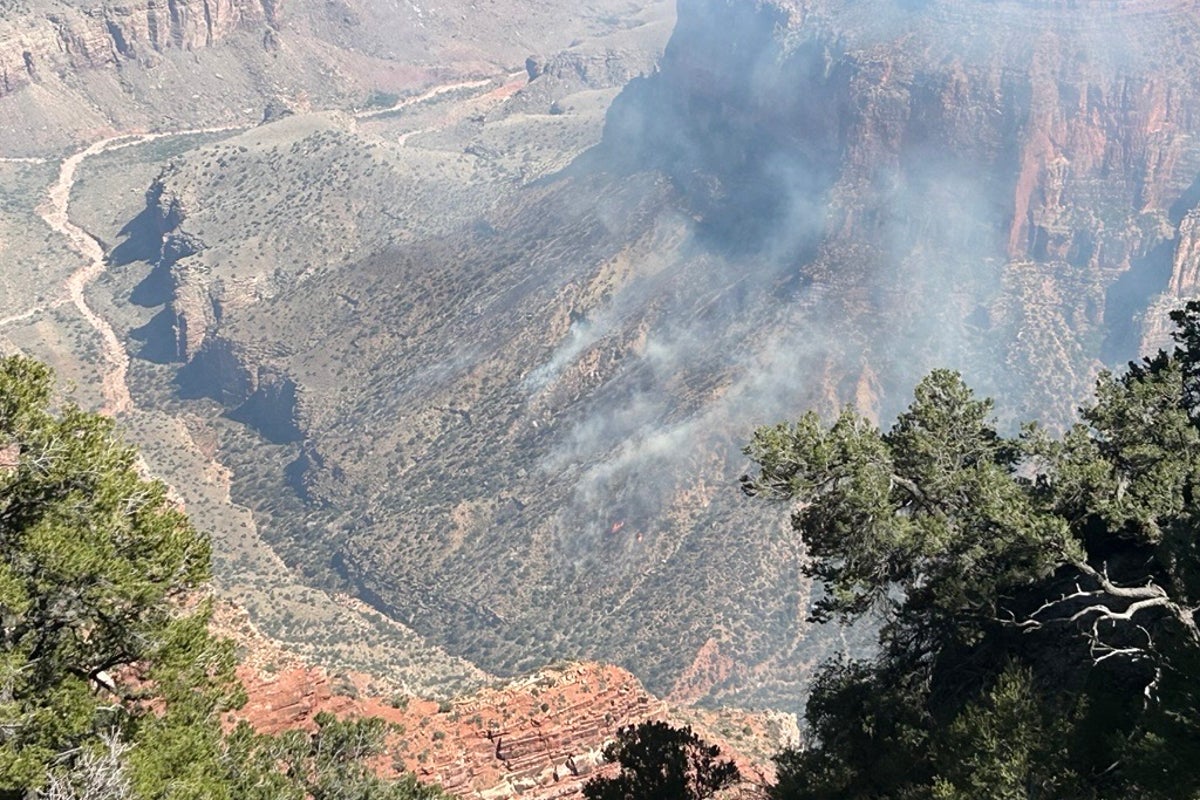
Smoke is hanging heavy over the Grand Canyon again. Just months after the catastrophic 2025 Dragon Bravo fire charred nearly 150,000 acres and wiped out the historic North Rim Lodge, a new wildfire has ignited below the canyon rim. Fire crews are scrambling. Tourists on the South Rim are watching giant plumes of ash rise from the canyon floors. It feels like a bad movie on repeat.
This isn't just another bad fire season. It's a systemic failure. The National Park Service is caught between an outdated "let it burn" philosophy and the harsh reality of climate change. When a lightning strike sparked the Dragon Bravo fire last July, officials watched it burn for days. They called it "managing the ecosystem." Then the wind picked up, and a century of history turned to ash. Now, as new flames chew through the brush below the North Rim, we have to look honestly at how we manage public lands. The current strategy isn't working.
The Cost of Waiting Too Long
When the Dragon Bravo fire started on July 4, 2025, it was a tiny spot on a map. Fire managers opted for a "confine and contain" approach. The goal was to let nature take its course. Fire is healthy for ponderosa pines, right?
In theory, yes. In a world experiencing historic droughts and soaring temperatures, no.
By the time officials realized the danger, it was too late. Wind gusts up to 40 miles per hour pushed the flames straight into the North Rim developed area. The fire devoured 106 structures. The 97-year-old Grand Canyon Lodge burned to the ground. A toxic chlorine gas leak at a wastewater treatment plant forced firefighters to flee, rendering aerial retardant drops useless.
Local business owners paid the price. The historic Jacob Lake Inn lost roughly $1 million in revenue by late September. Entire stretches of the Kaibab National Forest are now unrecognizable. What used to be a thick wall of ancient trees is a wasteland of blackened toothpicks. Arizona Governor Katie Hobbs even called for a federal investigation into the Park Service’s handling of the blaze.
Why 2026 is Matching the Cruel Pattern
You'd think we would have learned our lesson. Yet, the newly reported fire burning below the North Rim shows how vulnerable the region remains. The ground hasn't recovered. The vegetation is bone-dry.
Look across the Southwest right now. The Pocket Fire north of Sedona has surged past 18,000 acres, threatening Oak Creek Canyon. In Colorado and Utah, the Snyder, Babylon, and Ferris fires have collectively scorched over 110,000 acres. Fire season doesn't exist anymore. It's a year-round threat.
The real problem is fuel loading. Decades of aggressive fire suppression in the 20th century left our forests packed with dense underbrush. Now, when a fire catches, it doesn't just clear out the weeds. It climbs into the canopy and becomes a megafire.
We can't keep treating these blazes as isolated incidents. They are a symptom of a larger crisis.
The Jigsaw Puzzle That Broke
Some fire ecologists defend the Park Service. Andi Thode, a professor at Northern Arizona University, points out that Grand Canyon managers have historically used fire to create a "jigsaw puzzle" of burned patches. These patches are supposed to act as natural speed bumps for future wildfires.
But a jigsaw puzzle only works if the pieces stay in place. Extreme weather throws those pieces out the window. High winds can carry embers over a mile, bypassing old burn scars completely.
When a fire erupts in the steep, inaccessible terrain of the inner canyon, ground crews can't safely get down there. They have to rely on helicopters drawing water directly from the Colorado River. It's a logistical nightmare that costs millions of dollars a day.
Actionable Steps to Protect the Canyon and Yourself
We can't control lightning strikes, but we can change how we respond to them. If you live near fire-prone areas or plan to travel to the National Parks this summer, stop relying on luck.
- Track air quality daily: Use localized monitoring networks to track smoke drift. A canyon view is completely worthless if you're breathing in toxic particulate matter.
- Know the Ready, Set, Go system: Don't wait for an official knock on your door. If your area is placed on "Set" status, your vehicle should be packed and parked facing the street.
- Support aggressive logging and prescribed burns: Prescribed fire works, but it must be done aggressively during the winter months, not left to chance during summer lightning storms.
- Hold public land managers accountable: Demand transparency on fire management decisions. Write to local representatives to ensure agencies have the funding—and the mandates—to suppress fires before they threaten critical infrastructure.
The Grand Canyon is tougher than we think, but it isn't invincible. If federal agencies don't abandon the passive management strategies of the past, we'll watch the rest of our national treasures burn. Pack your bags, stay alert, and don't take your eyes off the horizon.