Yemen's Houthi rebels just raised the stakes in the Red Sea. They sent an email to international shipping companies warning that any ship trading with Saudi Arabian ports is now a target. They aren't just targeting Saudi vessels anymore. If a cargo ship or oil tanker stops at Yanbu or Jeddah, it risks getting hit by drones or missiles.
That single move sent shockwaves through global trade routes overnight. You might also find this similar coverage interesting: The Real Reason Zelensky Fired His Top General.
Kuwait stepped up almost immediately to condemn the threat. Kuwait's Ministry of Foreign Affairs issued a direct statement backing Saudi Arabia, rejecting the Houthi blockade, and demanding that the UN Security Council enforce international maritime law. Qatar and Yemen's Presidential Leadership Council backed Kuwait's stance, calling out the blockade as an attack on free navigation.
Here is why this escalation matters right now, what it means for global shipping, and how energy markets are reacting. As reported in recent coverage by Wikipedia, the results are notable.
The Real Scope Behind the Houthi Saudi Blockade
When the Houthis first launched attacks in late 2023, they claimed to target ships linked to Israel, the US, or the UK. That campaign died down after ceasefire agreements in late 2025. This time, the trigger is entirely different.
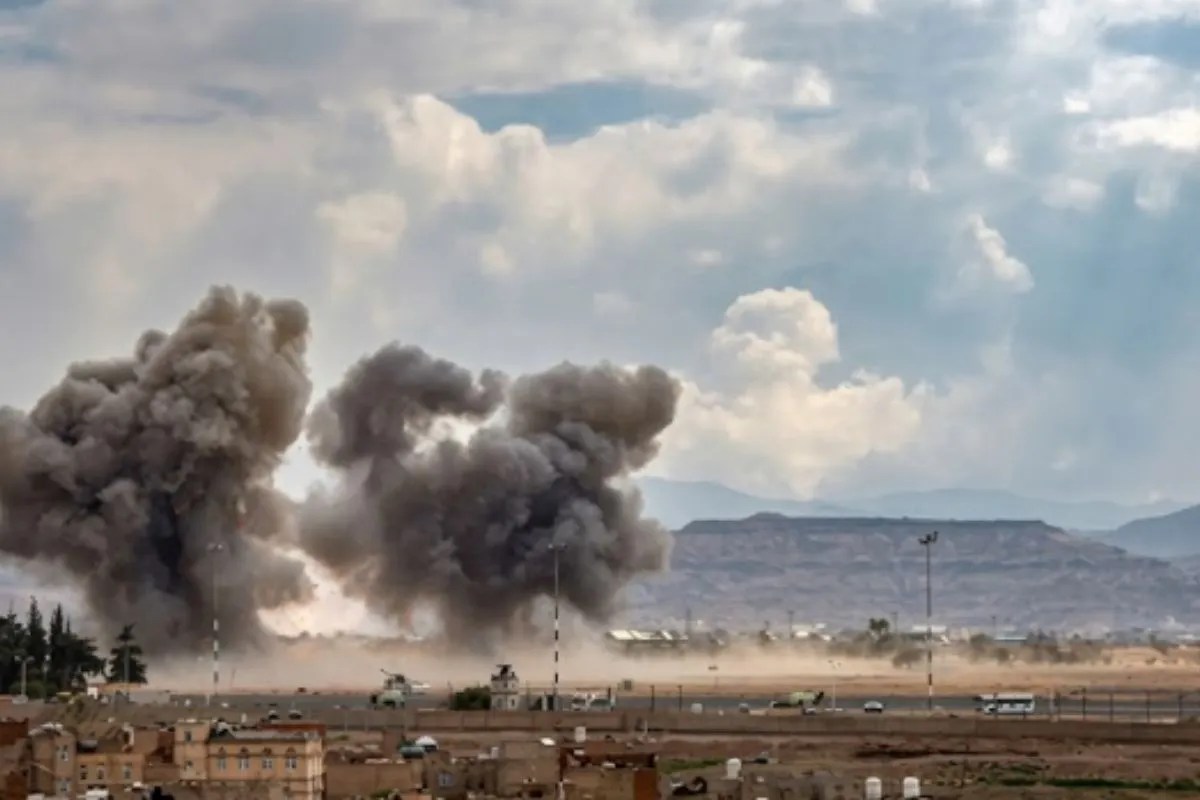
The Houthis claim their new naval blockade is retaliation for a Saudi-backed airstrike on the runway at Sana'a International Airport on July 13. The strike was meant to block an Iranian aircraft carrying a senior delegation. In response, the Houthis declared an "eye for an eye" policy and fired missiles toward Saudi Arabia before expanding their target list to all shipping tied to Saudi ports.
This subtle shift changes the entire calculus for commercial shippers.
Previously, a carrier could avoid Houthi targeting simply by changing its flag or ownership details. Now, if a tanker loads crude oil at Saudi Arabia’s Red Sea terminal in Yanbu, it instantly becomes a target.
We saw the immediate impact within 24 hours of the Houthi email broadcast. Two commercial tankers carrying Saudi crude oil bound for Asian markets made sudden U-turns near the Bab el-Mandeb strait and redirected toward the Suez Canal. Insurance providers responded by hiking war risk premiums from 0.3% to 0.75% of a vessel's total value. For a single seven-day voyage, that adds hundreds of thousands of dollars in baseline operating costs.
Why Kuwait and Gulf Allies Are on High Alert
Kuwait isn't directly on the Red Sea, so why did its government respond so aggressively to this specific threat?
It comes down to regional stability and supply chains.
The wider regional conflict has already choked traffic in the Strait of Hormuz. Because of those Persian Gulf disruptions, Saudi Arabia relied heavily on its East-West Pipeline to divert crude oil across the country to Yanbu on the Red Sea coast. Yanbu was the primary bypass route keeping millions of barrels moving to Asia and Europe.
If the Bab el-Mandeb strait becomes impassable alongside Hormuz, roughly 25% of the world's oil and gas shipments face severe bottlenecks. Kuwait understands that an unpunished blockade on Saudi ports sets a precedent that threatens every Gulf nation's export capacity.
Kuwait’s foreign ministry explicitly called on the international community to enforce UN Security Council resolutions regarding Red Sea security. Kuwait military units have simultaneously stepped up air defense readiness, intercepting stray drone and missile activity across the northern Gulf.
How Maritime Carriers Must Respond Immediately
If you manage logistics, supply chain operations, or maritime risk, waiting for diplomatic solutions isn't an option. The situation on the water is moving fast. Take these concrete operational steps today:
- Audit all upcoming port calls in the Red Sea. Identify any scheduled stops at Saudi terminals like Yanbu or Jeddah and assess whether cargo can be offloaded at alternative non-Red Sea ports.
- Review insurance coverage immediately. War risk rates are fluctuating daily. Ensure your underwriter explicitly covers Houthi-declared target zones around Bab el-Mandeb.
- Verify vessel AIS identity data. Maritime security agency Ambrey warned that Houthis frequently rely on outdated company affiliation databases. Ensure your public ship data doesn't incorrectly link your vessel to targeted entities.
- Plan for extended transit times. Rerouting ships around the Cape of Good Hope adds 10 to 14 days to Asia-Europe voyages. Factor those delays and additional fuel costs into current freight contracts.
The Red Sea isn't returning to normal anytime soon. Treat every transit through the southern corridor as a high-risk route until official maritime corridors are secured.