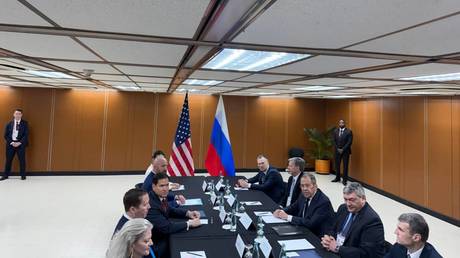
The United States and Saudi Arabia just signed a landmark civil nuclear agreement. Energy Secretary Chris Wright and Saudi Arabia's energy minister, Prince Abdulaziz bin Salman, made it official on July 22, 2026.
It's a multi-billion-dollar arrangement. American companies get priority access to build commercial reactors and supply nuclear fuel across the kingdom. In return, Saudi Arabia gets access to high-grade Western nuclear technology.
Why now?
The short answer comes down to three things: American commercial profits, keeping China and Russia out of the Gulf, and Saudi Arabia's massive energy transformation. But behind the official press releases lies a fraught debate over regional nonproliferation, congressional oversight, and nuclear safeguards.
Here is what you need to know about why this deal happened, what's actually in it, and why Washington is split over its long-term consequences.
The Big Picture Behind the 123 Agreement
Under Section 123 of the U.S. Atomic Energy Act, the federal government must sign a formal agreement with any foreign nation before transferring significant nuclear materials, equipment, or technology. That's why policy experts call these arrangements "123 agreements."
The U.S. has signed dozens of these over the decades. This new one opens up a lucrative export market for American nuclear vendors.
Saudi Arabia wants to build commercial nuclear reactors to diversify its energy grid away from oil. Right now, the kingdom burns hundreds of thousands of barrels of crude every day just to generate domestic electricity and desalinate water. That's oil they could otherwise sell on international markets.
American nuclear vendors needed a win. Firms like Westinghouse Electric Company have struggled for years against state-subsidized state competitors from Russia (Rosatom) and China (CNNC). By securing priority access in Riyadh, Washington secures billions of dollars in long-term contracts for U.S. engineering firms, equipment suppliers, and specialized technicians.
It keeps American tech at the heart of the Middle East's emerging energy infrastructure.
Money, Energy, and Geopolitics
Washington wasn't acting in a vacuum. If the U.S. had walked away from negotiations, Riyadh made it clear they'd turn elsewhere.
Russia and China were already actively pitching their reactor designs to the Saudis. Had Beijing or Moscow secured the contract, they would have built decades-long security and technological ties with Riyadh. That outcome was unacceptable to policymakers in Washington.
By stepping in, the Trump administration secured a preferred deal for U.S. industry while attempting to keep Saudi nuclear development tied directly to American technology and oversight.
There's also a major economic incentive at home. The Department of Energy pointed out that exporting nuclear technology creates high-paying technical jobs across American manufacturing hubs. Westinghouse's AP1000 light-water reactors, which each generate enough electricity for hundreds of thousands of homes, stand to be the primary design deployed in the kingdom.
The Safeguards Debate and Missing Gold Standard
Not everyone in Washington is celebrating. The deal has sparked fierce criticism on Capitol Hill over nonproliferation safeguards.
Historically, the standard for nuclear deals in the region was set by the 2009 U.S.-United Arab Emirates nuclear cooperation agreement. That arrangement included what foreign policy experts call the "gold standard." Under the gold standard, a country explicitly legally renounces domestic enrichment of uranium and the reprocessing of spent fuel. They buy their fuel from external international markets instead.
This new U.S.-Saudi agreement doesn't include those explicit gold-standard prohibitions.
It doesn't require Saudi Arabia to adopt the International Atomic Energy Agency's (IAEA) Additional Protocol either. That protocol grants international inspectors unannounced access to nuclear sites to verify that civilian facilities aren't being repurposed for weapons.
Instead, the deal relies on a hybrid framework:
- Two-year joint feasibility study: Both nations will spend two years studying whether domestic enrichment in Saudi Arabia is even necessary or economically viable.
- American operational control: Any actual enrichment facilities built on Saudi soil would be managed and operated by U.S. personnel using proprietary American technology. The Saudis wouldn't have direct access to sensitive enrichment mechanisms.
- Bilateral safeguards: U.S. inspection teams will perform security verifications rather than relying solely on standard IAEA protocols.
To make this framework work legally, President Donald Trump signed a national security waiver exempting the arrangement from standard statutory restrictions.
Proliferation Risks and Regional Reactions
Critics argue that even with U.S. teams on the ground, opening a legal pathway toward domestic uranium enrichment in Saudi Arabia sets a dangerous precedent.
Crown Prince Mohammed bin Salman has stated publicly in past years that if Iran develops a nuclear weapon, Saudi Arabia would be forced to follow suit. Opponents of the deal worry that establishing enrichment infrastructure in the kingdom—even for peaceful civilian use—reduces the timeline required to build a weapon if regional security collapses.
Lawmakers like Rep. Brad Sherman, D-Calif., expressed immediate concern over the agreement. Sherman argued that Congress should only approve agreements that match the strict UAE standard, warning against facilitating proliferation risks for commercial profit.
Nuclear experts also point to the wider diplomatic fallout. Matthew Bunn, a nonproliferation researcher at Harvard's Kennedy School of Government, noted that granting flexible terms to Saudi Arabia complicates nuclear negotiations with other regional players, including Iran. If Riyadh isn't bound by intrusive IAEA inspections, getting rival nations to agree to strict oversight becomes much harder.
What Happens Next
The deal isn't final yet. The Department of Energy has submitted the agreement to Congress, triggering a mandatory 90-day review period.
Congress can block or modify a 123 agreement if both the House and the Senate pass a joint resolution of disapproval with a veto-proof majority.
Here's how to follow the story as the 90-day clock runs down:
- Watch the Congressional Foreign Affairs Committees: The House Foreign Affairs Committee and Senate Foreign Relations Committee will hold public hearings over the next month. Pay attention to how senior lawmakers question administration officials on nonproliferation waivers.
- Track the Westinghouse Contracts: Keep an eye on commercial announcements from U.S. nuclear vendors. Formal commercial bids and reactor purchase agreements will show the real scale of American corporate involvement.
- Monitor IAEA Statements: Watch for official updates from IAEA leadership in Vienna regarding bilateral inspection agreements and safeguards verification protocols between Washington, Riyadh, and international monitors.
- Follow Regional Security Developments: Keep track of official reactions from neighboring nations and congressional debates regarding Middle East security posture.