Canada likes to thump its chest about being an Arctic nation. But for decades, federal governments have treated the North like a frozen vault of strategic assets while treating the people who actually live there as an afterthought.
That dynamic is crashing into a wall.
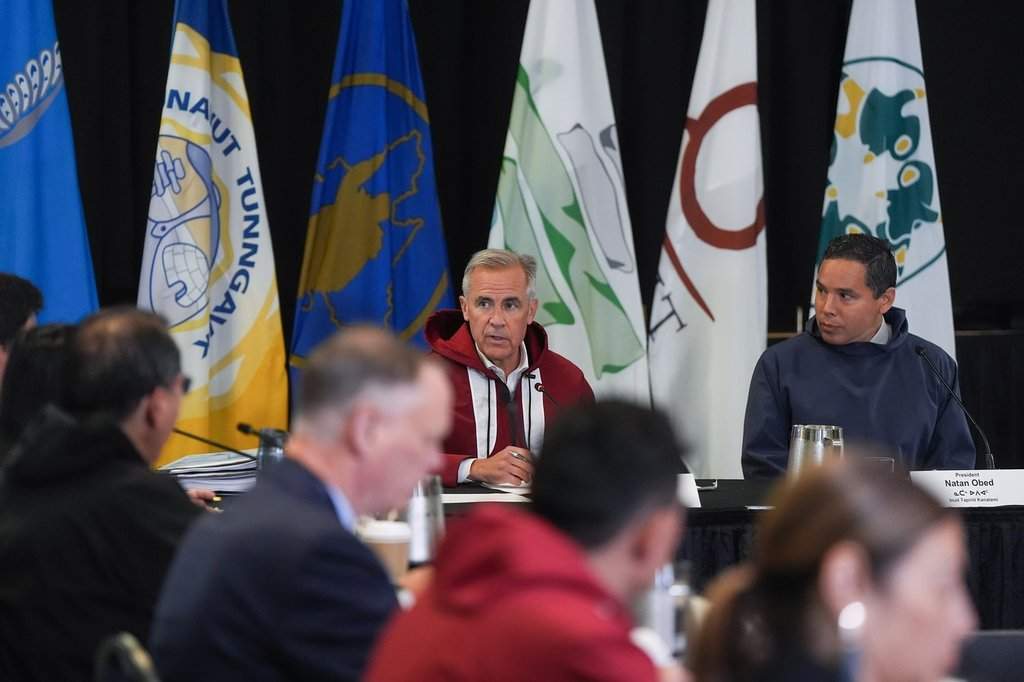
When Prime Minister Mark Carney and six senior cabinet ministers flew to Kuujjuaq, Quebec, for the latest Inuit-Crown Partnership Committee (ICPC) meeting, the air was heavy with more than just Arctic chill. Tensions between federal officials and Inuit leadership have hit a high water mark. It is a stark shift for a forum created in 2017 to smooth out relations, and it signals that the era of treating northern communities like a photo-op is officially over.
The friction didn't appear out of nowhere. It boiled over after Natan Obed, president of Inuit Tapiriit Kanatami (ITK)—the organization representing Canada's Inuit—dropped a rhetorical bomb at an Arctic sovereignty forum in Ottawa. Obed flatly rejected what he termed "outdated, colonial approaches to Arctic policy" and warned that if Ottawa refuses to treat Inuit as true equals, they will look for partnerships abroad.
That is not just a polite policy disagreement. It is a direct challenge to Canada's claim over the region.
The Threat of Looking Beyond Canada
When the leader of an Indigenous organization representing four massive Arctic treaty regions—collectively known as Inuit Nunangat—suggests looking international, Ottawa sits up. Predictably, some establishment figures panicked. Former MP Peter Ittinuar, the first Inuk elected to the House of Commons, called Obed’s comments "ill-timed" and suggested it was risky to alienate the current prime minister.
But Obed didn't blink. He clarified that it wasn't a threat; it was a practical reality.
Think about it from their perspective. The federal government is pushing hard on its One Canadian Economy Act (Bill C-5), an aggressive piece of legislation aimed at building massive resource and energy projects to wean the country off its total dependence on the US market. Five of the fifteen major national infrastructure efforts managed by Carney's Major Projects Office are slated for the North.
Yet, the people who hold the modern treaties over those lands are frequently left out of the room when the defense and trade strategies are actually cooked up. Obed pointed to Carney’s intense work to patch up trade relationships with global powers like China and India. His point was simple: if Ottawa can shop around globally to serve its economic interests, why shouldn't the Inuit do the same if Canada fails to deliver on local infrastructure, housing, and clean energy?
Reassurances in Inuvik and the Sovereignty Problem
During the tense back-and-forth across recent summits, including subsequent high-level gatherings in Inuvik, Northwest Territories, Carney has tried to steady the ship. He has waved a very specific carrot: economic inclusion.
The federal strategy relies on cutting Indigenous groups into these multi-billion-dollar projects financially, using government-backed loans to let communities buy ownership stakes in private sector-led developments. In Inuvik, Carney explicitly promised that Bill C-5 wouldn't bypass or override treaty-based environmental assessments.
"We've had reassurances that the bill… will not interrupt the processes under our modern treaties and that there will be full partnership," Obed noted after the sessions.
💡 You might also like: yarnell hill fire in arizona
But equity stakes in pipelines or mining ventures don't automatically solve the immediate, grinding crises on the ground. They don't instantly build homes or fix broken diesel generators.
To prove it was listening, the federal government rolled out several funding packages aimed at basic northern survival:
- $94 million to upgrade failing, carbon-heavy power plants in Cambridge Bay, Gjoa Haven, Igloolik, and Iqaluit.
- $140 million split across critical housing development and affordable home repairs across Nunavut.
- $20 million for the Nunavut Nukkiksautiit Corporation to push forward a local hydroelectric facility.
The government also appointed Iqaluit resident Virginia Mearns as Canada's Arctic Ambassador. It is a symbolic win for the ICPC, which fought for an Inuk voice to represent Canada’s polar interests on the global stage.
The Cold War Sequel
The deeper undercurrent here is security. We are in a new era of geopolitical posturing. Between Russian military posturing, Chinese deep-sea ambitions, and shifting alliances, the Arctic is suddenly a theater of global tension.
Canada is scrambling to catch up after decades of neglecting what military experts call "domain awareness." Upgrading NORAD’s aging infrastructure will require a staggering $39 billion. As part of this rush, Carney announced a $6 billion investment to develop an advanced Arctic Over-the-Horizon Radar system alongside a $420 million boost for a year-round Canadian Armed Forces presence in the North.
But to the Inuit, this looks like a sequel to a bad movie. They remember the Cold War all too well. The last time Ottawa panicked about Arctic defense, it resulted in forced relocations of Inuit communities, stolen property, and devastated traditional ways of life.
If Canada wants to build radar sites in Cambridge Bay or establish military support hubs on northern coastlines, it cannot just notify local leadership after the budget is signed. They live there. The radar sites sit in their backyards.
What True Partnership Looks Like Next
If the Carney government wants to avoid a complete breakdown of its northern economic and security agenda, it needs to move past the rhetoric of "consultation" and embrace actual co-management.
True integration means taking three concrete steps immediately:
- Codify Co-Investment Rules: Stop treating Indigenous financial participation as a case-by-case favor. The loan guarantees for infrastructure under Bill C-5 must be standardized so northern communities have automatic right-of-first-refusal on equity stakes for any project crossing their treaty lands.
- Localize Arctic Defense Contracts: The $6 billion radar system and defense hubs shouldn't just fly in southern contractors to build facilities and leave. Procurement rules must mandate that northern-owned businesses and local labor pools receive the lion's share of the construction and maintenance contracts.
- Accelerate the Inuit Nunangat Policy: Housing and clean energy funds cannot get bogged down in standard federal bureaucratic delays. Funding must be transferred directly to land-claim organizations that can deploy resources faster and cheaper than a department based in Ottawa.
Canada cannot defend its Arctic sovereignty on the global stage while alienating the people who give the region its sovereign legitimacy. If Ottawa wants to keep the North Canadian, it has to start acting like a partner instead of a landlord.