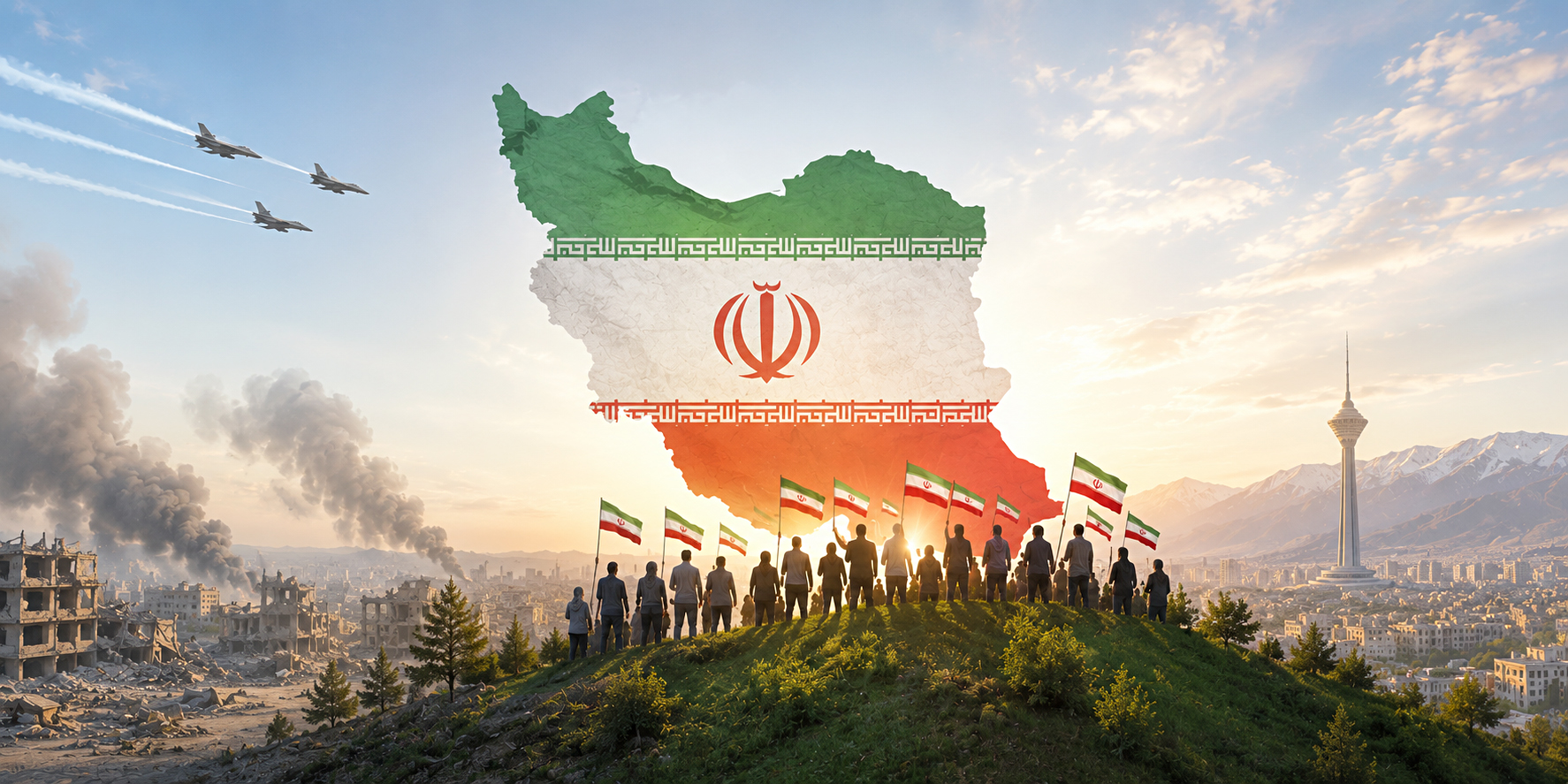
The Middle East isn't just on the brink of a regional war anymore. It's actively in one. When United Nations Secretary-General Antonio Guterres expressed deep concern over the escalating military confrontations in the Gulf, he framed the situation as a mutual escalation. Iranian Foreign Ministry spokesperson Esmail Baghaei fired back with a perspective that turns the conventional Western narrative completely on its head. Baghaei didn't mincing words. He didn't call it a military confrontation. He labeled the ongoing conflict a direct continuation of unprovoked aggression launched by the United States and Israel earlier this year.
For anyone tracking the situation, the core of the debate centers on the legal and military justification behind the recent Iran strikes on US assets in the southern Persian Gulf. While Washington and its allies condemn Tehran's missile and drone attacks as reckless provocations that threaten global energy corridors, Iran frames these actions as a strictly lawful exercise of its inherent right to self-defense under international law. This isn't just diplomatic bickering over terminology. It’s a fundamental clash of legal frameworks that dictates who gets targeted, which military bases are safe, and how the war will play out in the coming months. Building on this idea, you can also read: Why The Bangkok Pub Fire Was Entirely Preventable.
To understand why this distinction matters, you have to look past the immediate headlines of explosions and look at the actual arguments driving both sides. The corporate press loves to present these events as a series of chaotic, isolated incidents. They aren't. They are part of a calculated legal and military strategy where both Washington and Tehran are trying to claim the moral and legal high ground while trading devastating blows.
The Legal Blueprint Behind Iran Strikes on US Assets
When Baghaei addressed the UN, his main objective was to dismantle the idea that Iran is the aggressor in the current conflict. According to the Iranian Foreign Ministry, Iran does not attack first. Instead, Tehran argues that its operations against US military bases and naval vessels are defensive responses to the massive joint air operations launched by the US and Israel on February 28. Experts at The Washington Post have shared their thoughts on this situation.
That late February operation fundamentally altered the geopolitical reality of the region, destroying critical military infrastructure and upending the established order. From Tehran's perspective, everything that has happened since—including the frequent drone and missile barrages targeting US installations—is covered under Article 51 of the UN Charter. Article 51 explicitly recognizes the inherent right of individual or collective self-defense if an armed attack occurs against a member state.
Iran's legal team is betting heavily on this defense. By framing the US presence in the southern Persian Gulf as an active, occupying threat that uses regional infrastructure to launch attacks, Iran justifies its retaliatory strikes as legally sound. Baghaei explicitly criticized Western leaders for blaming Iran for protecting its sovereignty while turning a blind eye to the initial violations of international law committed by the coalition forces.
Why the US Counter-Narrative Clashes with Regional Reality
The Pentagon and US Central Command see things very differently. Following the latest round of heavy American airstrikes targeting southern Iranian cities like Jask, Bandar Abbas, and Sirik, CENTCOM stated that its operations are designed to degrade Tehran's ability to target civilian mariners and commercial vessels transiting the Strait of Hormuz. The US position relies on its own interpretation of self-defense, claiming that protecting international shipping lanes and enforcing naval blockades are necessary actions to preserve global economic stability.
But this argument creates a massive contradiction when viewed through the lens of international maritime law. Iran points out that the US military has actively targeted commercial ships under various flags, such as a Gambia-flagged vessel in the Gulf of Oman, to enforce unilateral blockades. Tehran asks a simple question. How can the US claim its actions are measured self-defense when it is actively choking off trade and launching preemptive strikes against Iranian radar facilities and command centers?
The reality on the ground shows that neither side is operating in a legal vacuum. They are weaponizing the exact same international laws to justify entirely opposing military strategies. The US claims its strikes are defensive measures to stop Iranian harassment of shipping. Iran claims its harassment of shipping and strikes on US bases are defensive measures to stop American military aggression. It's a closed loop of escalation where whoever speaks loudest attempts to set the definitions.
The Hidden Danger for Gulf States Hosting US Bases
One of the most significant takeaways from Baghaei’s recent statements is the explicit warning directed at neighboring countries in the Gulf. Iran isn't just threatening the US directly. It’s putting America's regional hosts on notice. Bases in places like Kuwait, Qatar, and the wider UAE have long served as the operational backbone for US power projection in the Middle East. Iran is now explicitly stating that any country allowing its territory or airspace to be used as a launchpad for operations against Iranian soil will be treated as an origin of aggression.
This represents a terrifying shift for regional security. For decades, Gulf nations thought hosting American assets provided a security umbrella. Now, it looks more like a bullseye. If Iran formalizes the policy that hosting US assets makes a country a legitimate military target, the entire geopolitical calculus of the region shifts.
We've already seen how this plays out in real time. Following reports of an Iranian strike on a US air base in Kuwait that injured several servicemen and contractors, European officials rushed to condemn the attack as a violation of Kuwaiti sovereignty. Baghaei’s response was characteristically blunt. He accused European leaders of appeasing the primary aggressor while ignoring the legal obligation of states not to let their territory be used to invade others. If you let a foreign military launch bombers from your runways to hit your neighbor, you can't honestly act surprised when your neighbor shoots back at those same runways.
The Illusion of Diplomacy in Muscat and Doha
While the skies over the Persian Gulf are filled with drones and missiles, there's a parallel conflict happening at negotiating tables in places like Muscat and Doha. The public is often told that these technical talks are making encouraging progress or that a grand bargain is just around the corner. Don't believe the hype.
Iran's Foreign Ministry recently took the unusual step of calling out comments from the US administration regarding the Muscat talks, labeling them a complete lie. According to Tehran, those discussions were never about an unconditional surrender or a sweeping peace treaty. They were highly specific, narrow negotiations focused on the technical management of the Strait of Hormuz and the security of international shipping routes.
Iran maintains that under its existing bilateral understandings, it holds the primary responsibility for providing maritime services and maintaining order in the strait. When Washington tries to spin these meetings as evidence that Iran is buckling under pressure or preparing to abandon its regional posture, it completely misreads the situation. Tehran views diplomacy not as an alternative to military action, but as a tool to reinforce its legal claim over the region's most vital choke point.
What Happens Next in the Gulf War
The current trajectory points toward a prolonged conflict of attrition rather than a sudden diplomatic breakthrough. The US military recently deployed precision munitions from land- and sea-based assets to hit roughly 140 targets inside Iran, focusing heavily on coastal surveillance, drone sites, and communication networks. Yet, history shows that conventional air campaigns rarely force a determined adversary to capitulate, especially when that adversary believes it is fighting a defensive war for survival.
Expect Iran to double down on its asymmetric tactics. This means more localized strikes against US logistics, continued pressure on maritime traffic in the Strait of Hormuz, and an aggressive diplomatic campaign at the UN to force regional states to rethink their security agreements with Washington. Tehran knows it cannot match the raw conventional firepower of the US military, so it will continue to rely on legal arguments, proxy networks, and target selection to make the American presence in the region as costly and uncomfortable as possible.
Practical Action Steps for Regional Observers
If you're managing supply chains, analyzing geopolitical risk, or trying to navigate the economic fallout of this conflict, you need to change your approach immediately. Stop waiting for a comprehensive peace deal that isn't coming.
- Map out alternative logistics routes that completely bypass the Strait of Hormuz and the Gulf of Oman, assuming that maritime disruptions will become a permanent feature of 2026.
- Assess exposure to hosting nations by evaluating the vulnerability of business assets located in close physical proximity to US military infrastructure in Kuwait, Qatar, and the UAE.
- Ignore the diplomatic theater and focus purely on operational realities like CENTCOM target counts and Iranian missile inventories rather than optimistic press releases from international mediators.
The legal arguments presented by Esmail Baghaei show that Iran has structurally dug in for a long-term fight. By framing the Iran strikes on US assets as a legitimate, law-bound act of self-preservation, Tehran has signaled that it has no intention of backing down, regardless of how many precision strikes Washington directs its way.
This video analyzing the strategic layout of the Persian Gulf shows the tactical realities behind Iran's current naval and missile positioning against Western assets.
Persian Gulf conflict analysis and strategic military layout