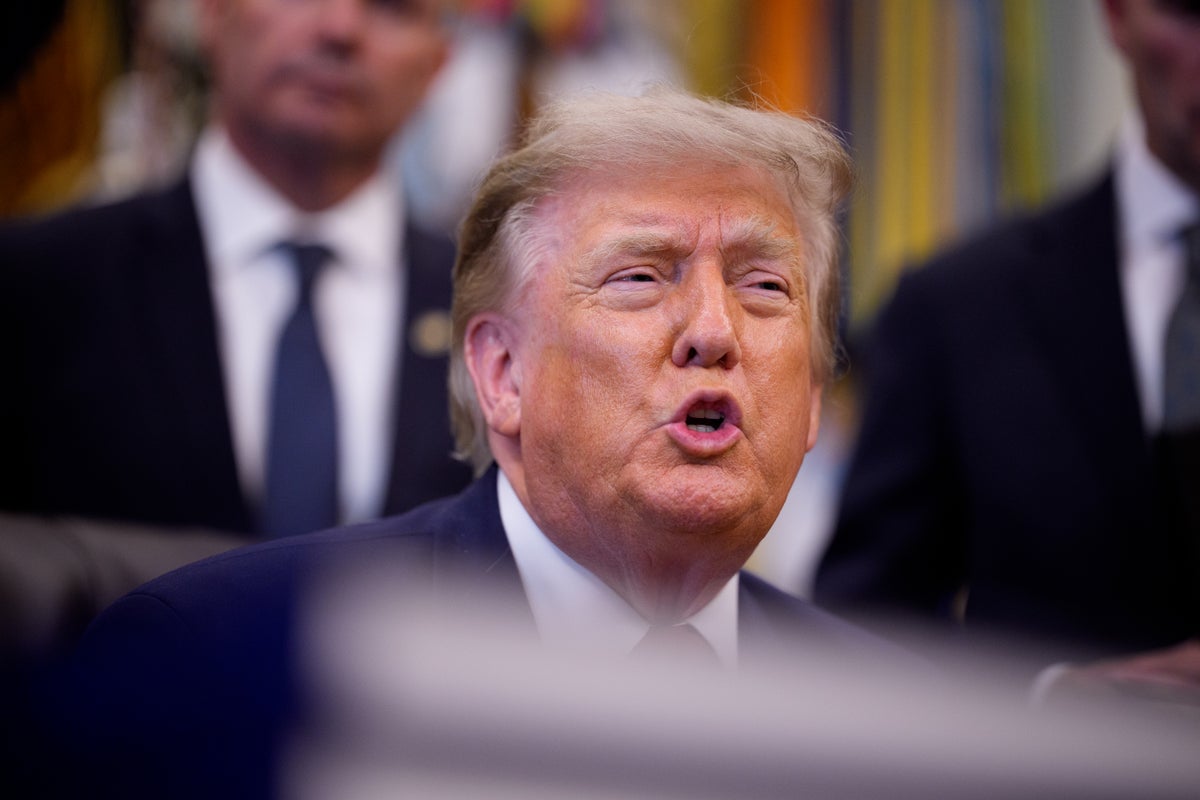
On Monday, July 13, 2026, Donald Trump did what he does best: he threw a massive geopolitical hand grenade into the global shipping industry. He declared that the United States would act as the "Guardian of the Hormuz Strait" and slap a flat 20% "reimbursement fee" on the cargo of any commercial vessel passing through. He claimed the US had been protecting these vital waters for decades for "nothing" and that it was time to get paid.
By Tuesday afternoon, the plan was dead. Read more on a related subject: this related article.
In a rapid about-face, Trump posted on social media that after talking to Middle Eastern leaders, he was dropping the toll in exchange for vague, "massive" investment promises in the US.
The media immediately treated this as another standard episode of Trumpian bluster. But if you look closely at what happened during those wild 24 hours, you realize the story is far bigger than a quick tweet and a retreat. The proposed toll was not just a chaotic policy idea; it was an economic, legal, and operational nightmare that threatened to break the literal foundations of global trade. Additional reporting by Reuters delves into comparable perspectives on the subject.
To understand why this idea was doomed from the second it was conceived, we have to look at how global shipping actually works, why our allies panicked, and why the replacement "investment deals" might be just as shaky.
The True Cost of a Twenty Percent Toll
Let's start with the math because the sheer scale of the numbers involved is hard to wrap your head around.
The Strait of Hormuz is the ultimate choke point. A fifth of the world's traded crude oil and natural gas goes through this narrow strip of water separating Iran and Oman. When Trump announced a 20% toll on all cargo, he was not talking about a couple thousand dollars in port fees. He was talking about millions of dollars per ship.
Let's break down the economics for a standard transit:
- The Supertankers: A typical Very Large Crude Carrier (VLCC) can carry roughly 2 million barrels of oil. With crude prices hovering around $80 a barrel, a single full shipment is worth about $160 million.
- The Trump Fee: Under the 20% proposal, a single ship would owe the US government $32 million just to sail through the strait.
- Even in a Downturn: If oil prices slumped to $60 a barrel, the fee would still be a staggering $24 million per transit.
- Natural Gas Carriers: Large liquid natural gas (LNG) carriers would face a bill of around $17 million per trip based on industry estimates from Lloyd's List.
Think about those numbers for a second. Shipping companies operate on incredibly tight margins. Forcing them to pay $30 million per transit is basically telling them to go out of business or stop using the strait entirely.
When Iran started threatening and attacking ships earlier in the conflict, they reportedly tried to extract unofficial tolls of about $2 million. Those Iranian demands were widely condemned as piracy and extortion. Yet, Trump’s proposed US toll was fifteen times higher.
Iran’s foreign minister, Abbas Araghchi, even mocked the US on social media, writing that 20% was "too much" but agreeing with the logic that whoever guards the strait should get paid. He jokingly added that Iran would be much more "fair" with its own future tolls. When your geopolitical rival is mocking your trade policy for being too greedy, you know you have entered uncharted territory.
The Legal Pandora's Box
Aside from the economic madness, the legal reality of the situation is what kept shipping executives and international lawyers awake all Monday night.
The United Nations International Maritime Organization (IMO) made its stance clear almost instantly: there is absolutely no legal basis for charging mandatory tolls for transiting an international strait.
Under customary international law, specifically the principles reflected in the United Nations Convention on the Law of the Sea (UNCLOS), ships have the right of "transit passage" through straits used for international navigation. This means ships can pass through quickly and without obstruction, as long as they do not threaten the security of the coastal states.
Crucially, transit passage is supposed to be free of charge.
The US Navy has spent more than two centuries defending this exact principle. From the Barbary Wars in the early 19th century to the War of 1812, the US built its global military reputation on the idea that no country owns the high seas or the vital straits. Just weeks before Trump's announcement, Secretary of State Marco Rubio had traveled to the Middle East promising that the US would guarantee free, toll-free passage through the strait.
By demanding a 20% cut, the White House was throwing two hundred years of American naval tradition into the garbage.
If the US could unilaterally decide to charge a 20% fee because its navy is nearby, what stops other countries from doing the exact same thing?
Egypt could decide to charge a massive premium for the Suez Canal. Indonesia, Malaysia, and Singapore could slap a protection fee on the Strait of Malacca. Spain and Morocco could tax the Strait of Gibraltar.
This is the dangerous "Pandora’s box" that experts warned about. It would completely destroy the rules-based international order and replace it with a chaotic, protection-racket model of global trade.
Our closest allies did not hide their anger. In the United Kingdom, politicians called the proposal "state-backed highway robbery" and "economic extortion". For a country like the UK, which is highly dependent on international trade and global energy markets, the prospect of a US-imposed shipping tax on the other side of the world was terrifying.
The Logistics of Extortion
Even if you ignore the legal and diplomatic fallout, the physical mechanics of enforcing a 20% toll are practically impossible.
How, exactly, was the US military supposed to collect this money?
Imagine a Greek-owned supertanker carrying Saudi oil to a refinery in Japan. If the ship owner refuses to pay the $32 million toll, does the US Navy board the vessel? Do we seize the cargo? Do we block them from entering the Indian Ocean?
And what happens if a ship simply decides to take the risk and ignore the US demands? If the US Navy refuses to protect a non-paying ship, and that ship gets attacked by Iranian forces, the entire purpose of the "guardian" mission falls apart.
The US military's presence in the region is designed to keep the peace and prevent a catastrophic spike in oil prices. If the US starts blockading or threatening friendly commercial ships over unpaid bills, it actively contributes to the very chaos it is supposed to be preventing.
The logistical reality is that the US military is not set up to run a toll booth in the middle of a war zone.
Why the Quick Retreat Happened
It took less than 24 hours for the administration to realize they had stepped into a hornets' nest.
The official line from Trump on Tuesday was that he dropped the toll after "highly productive conversations with Middle East leadership". In exchange, he claimed the Gulf States would make "massive" trade and investment deals in the United States.
Let's translate that from political speak to reality.
Gulf nations like Saudi Arabia, the UAE, and Kuwait rely entirely on the Strait of Hormuz to get their energy exports to global markets. They were horrified by the 20% toll proposal. It would have severely damaged their economies and forced their customers in Asia and Europe to look for alternative energy sources.
At the same time, these countries have spent years learning how to handle the Trump administration. They know that Trump views foreign policy through a transactional lens.
Instead of arguing about maritime law, international treaties, or the UNCLOS, the Gulf leaders gave him a deal he couldn't refuse. They basically said: Drop the toll, and we will announce some major investments in US infrastructure and buy some more American military hardware.
It was a classic face-saving pivot. Trump got to claim victory, bragging about bringing billions of dollars back to the US, while the Gulf States got to avoid an economic disaster that would have crippled their shipping pipelines.
But let's be real about these "massive" investment deals. We have seen this movie before. During Trump's first term, he announced hundreds of billions of dollars in promised investments from Saudi Arabia and other Gulf nations. Many of those deals were actually non-binding memorandums of understanding that either took years to materialize or quietly fizzled out entirely.
Trading a concrete, legally disastrous shipping toll for vague, non-binding investment promises is a classic political shell game.
The Real Danger We Still Face
While the 20% toll is off the table for now, the underlying crisis in the Strait of Hormuz is far from over.
The short-lived toll drama happened against a backdrop of serious military escalation. The US had just launched heavy airstrikes against Iranian military targets, and Iran quickly retaliated by attacking tankers and US allies in the region. An interim peace deal that was supposed to pause the fighting and keep the shipping lanes open is now in complete ruins.
The physical reality of the strait has not changed:
- The Interim Deal is Dead: The 60-day pause in hostilities has shattered.
- Active Attacks: Tankers are still being struck, and fires are actively being fought in the engine rooms of commercial ships transiting the region.
- Airspace Alerts: Aviation authorities have warned commercial airlines to avoid flying over the Gulf because of the high risk of stray missiles and drone activity.
The US is still trying to enforce an "Iranian blockade" to stop Tehran's oil exports. This means the threat of a wider war that drags in the global economy is still very high.
Trump's quick flirtation with a shipping toll revealed a deeper, more worrying truth: the current administration views the global security architecture not as a strategic asset, but as an expensive chore that needs to be monetized.
If you are a shipping company, an energy trader, or just someone who relies on stable gas prices, this transactional approach to global security should make you very nervous. It means that the rules of the road can change on a whim, via social media, with almost zero warning.
How to Protect Your Business in this Volatile Environment
For those operating in the maritime, energy, or logistics sectors, the days of assuming the US Navy will quietly guarantee free trade are over. You need to adapt to this new, unpredictable reality.
Audit Your Transit Exposure
Look closely at your supply chains. If you are highly dependent on goods or materials passing through the Strait of Hormuz, you need to actively diversify. Look for alternative routing options, even if they are more expensive in the short term. The cost of routing around Africa, for example, might look better than the risk of having a cargo ship caught in a sudden regional blockade or targeted by regional forces.
Review Your Insurance Policies
Marine war risk insurance is about to get much more complicated and expensive. Talk to your underwriters immediately. Ensure you understand exactly what is covered in the event of a sudden, undeclared naval blockade or unilateral state actions. You do not want to find out your policy has a loophole after a ship is detained or turned back.
Build Transactional Risks into Your Contracts
If you are writing long-term supply or transport agreements, you need to include robust force majeure and regulatory change clauses. These clauses should explicitly address the sudden imposition of "tariffs, tolls, or security fees" by transit states or external guardians. Do not get stuck holding the bill for a sudden multi-million dollar regulatory fee.