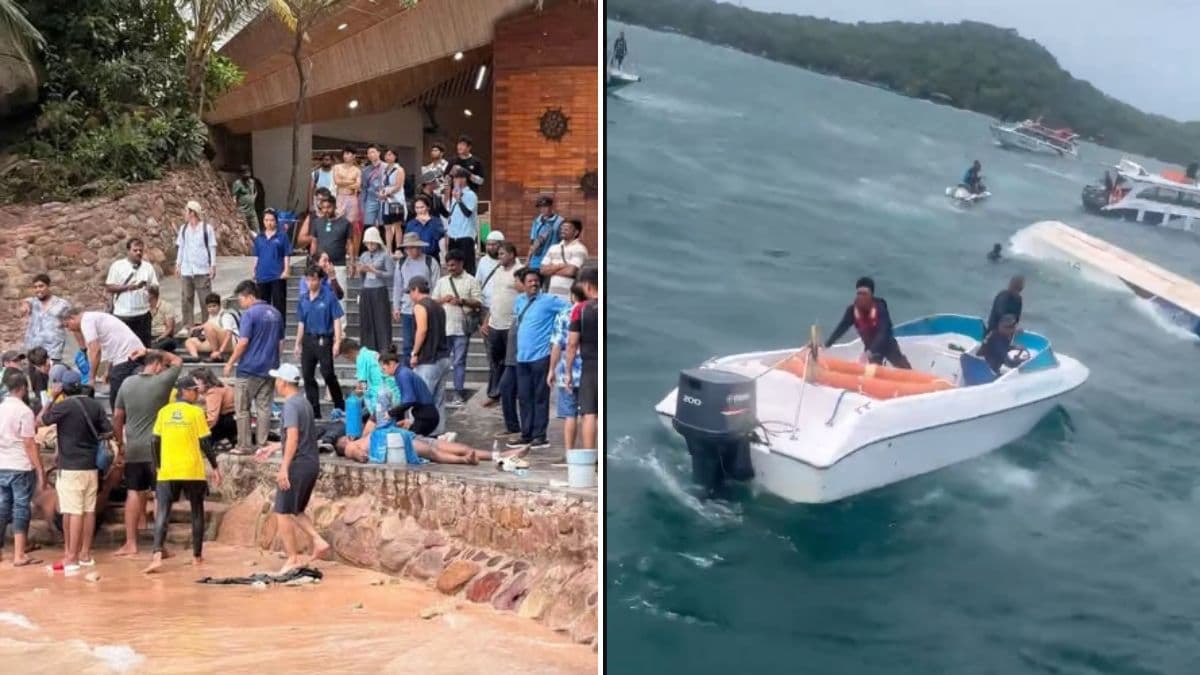
What started as a celebratory corporate reward trip ended in a horrific nightmare off the coast of southern Vietnam. On Saturday, July 11, 2026, a tourist speedboat carrying Indian nationals flipped over in the choppy waters near Phu Quoc Island. Fifteen people died. The victims were all retail partners, distributors, and employees of the Indian smartphone brand Lava International, out on what should have been a dream vacation. Instead, a mix of sudden rough seas, alleged overcrowding, and a catastrophic failure of basic safety protocols turned the short trip into a death trap.
Vietnamese authorities immediately detained the 57-year-old captain, Nguyen Hong Hai, launching a full criminal investigation. While some official state media reports initially tried to label this as an unavoidable incident caused by rapidly shifting extreme weather, the numbers and witness accounts tell a very different story. The vessel, registered under the number AG 26751, was pushing its physical limits. For another look, check out: this related article.
Inside the Sinking of the AG 26751
The disaster struck around 12:40 PM. The group had split into three separate speedboats to move between the tiny islets just south of Phu Quoc. The first boat made it out fine. The second boat, the Ocean Pearl Island speedboat (AG 26751), took off from the white sands of Hon May Rut Ngoai Island, heading toward An Thoi International Port.
It barely traveled 400 meters. Related analysis on the subject has been provided by BBC News.
Huge, three-meter waves pounded the vessel almost immediately after it cleared the sheltered shallows of the island. There was no rain, but the sea was incredibly violent. Within seconds, the boat flipped completely upside down, dumping 32 Indian tourists, three Vietnamese crew members, and one local tour guide into the churning ocean.
Because the capsize happened so close to the shore, people on the beach and in nearby boats saw it unfold in real time. Ashish Kumar, a distributor from Guntur who was waiting on the dock for the third boat, described hearing screams of "Help! Help!" before watching the hull flip over.
Local boat captain Ha Van Loc was navigating nearby when he spotted the overturned vessel. He saw a dozen men desperately clinging to the smooth, slippery hull of the boat. Dozens of others were drifting away, swallowed by the massive waves, waving their hands frantically.
Loc couldn't bring his larger vessel too close because he feared the spinning propeller would slice the swimmers. He and his crew threw out lifebuoys attached to ropes, hauling four survivors out of the water within ten minutes. Realizing the sheer scale of the disaster, he filmed a quick video to alert every jet ski operator and tour boat in the vicinity. Jet skis eventually saved the day, darting into the rough surf to pluck survivors out one by one.
The Fatal Discrepancy in the Numbers
Local politicians and tourism officials quickly pointed out that both the operating company, Minh Huy Phu Quoc Trading and Tourism Co. Ltd., and the vessel itself were fully licensed. They had the right paperwork. They had cleared departure procedures.
Paperwork does not keep a boat afloat when it is overloaded in a storm.
Investigating police units in An Giang province are heavily focusing on the weight and passenger capacity of the AG 26751. The boat's official registration documents show a maximum legal capacity of 34 people. It also had a strict total load limit of 2.89 tonnes.
On the afternoon of July 11, the boat was carrying 36 people.
Going two people over the limit might seem minor to a casual observer, but in maritime safety, those margins are razor-thin. When you add the weight of 32 adults, four crew members, their luggage, and a full tank of fuel, you are right on the edge of structural tolerance. When a boat is riding low in the water and hits a series of ten-foot waves, its ability to self-right vanishes. The center of gravity shifts. The bow dips, takes on water, and the vessel rolls over before anyone can react.
The Life Jacket Deception
The most frustrating aspect of this tragedy is how easily many of these deaths could have been prevented. State media reports citing surviving passengers revealed that Captain Nguyen Hong Hai did tell everyone to put on their life jackets before the boat left the dock.
Many passengers did not wear them. They held them in their hands.
When the boat suddenly flipped, those unbuckled life jackets floated away or became useless pieces of foam drifting out of reach. Surviving witnesses confirmed seeing dozens of victims struggling in the deep water without any flotation devices whatsoever.
Worse still, because the speedboat featured an enclosed or semi-enclosed design to shield tourists from sun and sea spray, several passengers were trapped inside the cabin when it inverted. They had to fight their way through narrow windows or the bow doors while submerged in total darkness. If you are not wearing a life jacket, or if a life jacket pins you against the ceiling of a capsized cabin, your chances of survival drop to zero.
A Complete Collapse of Emergency Response
The horror did not end when the victims were brought back to the beach. The island lacked basic emergency medical infrastructure to handle a mass casualty event.
According to eyewitness accounts, there were no emergency doctors, no ambulances, and no trauma equipment waiting on the shore when the jet skis brought the victims in. Tourists, tour guides, and local boat captains had to take turns giving mouth-to-mouth resuscitation and performing chest compressions on the sand.
By the time emergency doctors and a nurse from Phu Quoc Sun Hospital reached the scene, fifteen people were already dead. The dead included ten individuals from Tamil Nadu, three from Andhra Pradesh, and two from Kerala.
The remaining 17 survivors were rushed to the hospital. Most have since been discharged and are flying back to India, while one remains in critical care on the island. The Indian Embassy in Hanoi has spent the days following the crash coordinating with local authorities to move the bodies to Ho Chi Minh City for repatriation.
What You Must Check Before Boarding an Island Speedboat
Island hopping in Southeast Asia is an incredible experience, but this incident shows that you cannot blindly trust tour operators to keep you safe. Regulatory enforcement is often loose, and captains frequently take risks to keep schedules. You have to be your own safety inspector.
- Look at the capacity plate: Every modern speedboat has a small metal plate near the helm listing the maximum passenger count. If the boat looks packed, or if the number of bodies exceeds that plate, do not get on.
- Buckle the jacket properly: Never just hold a life jacket or rest it on your lap. Put it on and fasten every single strap tight before the engines start. A loose life jacket will ride up around your face in the water, making it harder to swim.
- Evaluate the cabin exits: If the speedboat has a hardtop or enclosed cabin, scan the exits. If it looks difficult to escape from in an upside-down scenario, sit near the open back of the vessel.
- Check the weather yourself: Tour operators want to make money and will often head out in marginal conditions. If you see whitecaps or waves that look unmanageable from the shore, cancel the trip. No excursion is worth your life.