Walk into any big-box retailer in Atlanta, Nashville, or Charlotte. Look at the shelves. The plastic storage bins, the flat-screen televisions, the flat-packed furniture, and the cheap fast-fashion garments don't just appear by magic. They are the physical residue of a culture obsessed with buying.
For decades, the story of American consumerism was written on the docks of Los Angeles and Long Beach. That's changing. If you want to understand where American shopping habits are heading, you have to look further east. Learn more on a related issue: this related article.
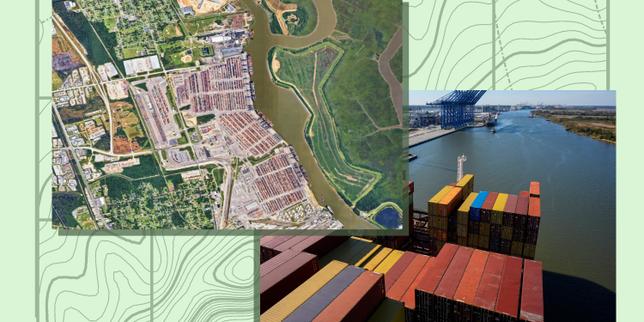
The Port of Savannah in Georgia has quietly turned into the loudest statement on American consumption. It is no longer just a regional harbor. It is a massive, high-speed engine designed to feed an insatiable appetite for goods. The numbers, the investments, and the sheer scale of the operation tell a story that goes far beyond simple shipping logistics. It is a story of a nation that refuses to stop buying, no matter what the economic forecast says.
The Relentless Shift to the East
Why Savannah? The answer is partly about geography and partly about a massive demographic shift. Further journalism by Reuters Business highlights related views on this issue.
For years, West Coast ports held a virtual monopoly on Asian imports. But a combination of labor disputes, high costs, and catastrophic bottlenecks during the pandemic forced retail giants to rethink their supply chains. They realized they couldn't put all their eggs in one California basket.
At the same time, the American population was moving. People have been flocking to the Southeast for years, drawn by cheaper housing, lower taxes, and warmer weather. Industry followed. Logistics managers realized it made no sense to ship a container from Shanghai to Los Angeles, put it on a train to Georgia, and then truck it to a warehouse. It is faster and cheaper to send it straight through the Panama Canal to the East Coast.
Savannah positioned itself perfectly to catch this wave. Unlike fragmented ports where different terminals are run by different private operators, the Georgia Ports Authority owns and operates the main facilities. This central control allows for massive, coordinated expansions that would take decades to approve elsewhere.
The results are staggering. The port is now the third-busiest container gateway in the United States. It is a sprawling, humming machine that never sleeps.
Inside the One Point Six Billion Dollar Bet
To understand the scale of what is happening here, you have to look at the money. In June 2026, Georgia Ports Authority officials announced that the renovation of the Ocean Terminal had passed the 55% completion mark. This is not a minor facelift. It is a $1.6 billion modernization project aimed at turning a 200-acre facility into a container powerhouse.
Consider the leap in capacity. Before this project, the Ocean Terminal handled about 200,000 twenty-foot equivalent units—or TEUs—per year. Once the work wraps up, it will be able to handle 1.75 million TEUs annually.
Think about that. That is an almost nine-fold increase in capacity on a single footprint.
Ocean Terminal Container Capacity Expansion:
Before Renovation:   200,000 TEUs/year
Post-Renovation:     1,750,000 TEUs/year
This is part of a larger $5 billion master plan to push Savannah’s total annual capacity to 9 million TEUs by 2029. They are building for a future of endless consumption. They are betting billions that Americans will not, or cannot, curb their shopping habits.
Why Our Craving for Goods is Redefining Infrastructure
The physical reality of our consumption habit is hard to comprehend until you see it in motion. A modern container ship is a mountain of steel. When one of these massive vessels glides up the Savannah River, it dwarfs the historic city skyline.
Unloading these ships is a high-stakes race against the clock. Every hour a ship sits idle at a berth costs tens of thousands of dollars.
To keep things moving, the Port of Savannah has constructed the Mason Mega Rail. It is the largest on-terminal rail facility in North America. This infrastructure allows the port to build and coordinate massive trains right at the dock, sending cargo directly to inland hubs like Chicago, Memphis, and Dallas.
But this efficiency creates its own set of problems. You can speed up the docks and build giant rail yards, but the goods still have to get to the final warehouse. That means trucks. Thousands of them.
The truck traffic generated by this consumer frenzy has historically choked local roads and frustrated residents. To solve this, the port funded a $29 million overpass designed to route departing trucks directly onto U.S. Highway 17 and Interstate 16. It bypasses residential neighborhoods entirely. It is a prime example of how our urge to buy cheap goods online forces local communities to completely rebuild their physical geography.
The Illusion of the Economic Slowdown
For the past couple of years, financial commentators have warned us about inflation, high interest rates, and a cooling economy. They tell us consumers are tapped out. They point to credit card debt and argue that the post-pandemic shopping spree is finally over.
The activity at the Port of Savannah tells a very different story.
If the American consumer were truly retreating, we wouldn't see a $1.6 billion scramble to expand capacity. We wouldn't see global shipping lines committing to new, massive vessel services to the East Coast.
The truth is, our spending habits have changed permanently. The rise of e-commerce has turned instant gratification into a basic expectation. We expect things to arrive at our doorsteps in two days, sometimes two hours. To make that happen, retailers must keep vast amounts of inventory close to major population centers.
This means the warehouses surrounding Savannah—sprawling millions of square feet across rural Georgia—must remain packed. The port is the mouth that feeds this massive distribution system.
What Most People Get Wrong About Supply Chains
People often talk about supply chains as if they are abstract, delicate spiderwebs. They assume that a single disruption can break the whole system forever.
The reality is different. Supply chains are highly adaptive, brutal, and entirely driven by cost.
When West Coast ports became congested and unreliable, shippers didn't just sit and cry. They moved their business. They found new routes. Savannah's rise is proof of that adaptability.
But this shift has revealed a new set of vulnerabilities. As more cargo moves to the East Coast, the pressure on local labor, highways, and energy grids increases. We are simply moving the bottlenecks from one coast to the other. During peak seasons, the wait times for ships to get a berth in Savannah can still climb, proving that no system is immune to the sheer volume of American demand.
What This Means for Your Business
If you run a business that relies on physical goods, you can't afford to ignore what is happening in Georgia. The concentration of logistics infrastructure in the Southeast is creating a new gravitational pull.
Here are the practical realities you need to plan for:
- Diversify your entry points. If you are still importing 100% of your goods through Los Angeles or Seattle, you are exposing yourself to massive risk. Savannah's ongoing expansions, including the newly upgraded berths at the Ocean Terminal, offer a highly viable alternative.
- Look inland. The real value in modern logistics is no longer just at the coast. It is about how fast you can get goods from the dock to an inland rail hub. Savannah's rail connectivity means you should look at warehousing options in secondary markets like Greer, South Carolina, or Cordele, Georgia, rather than paying premium prices right next to the water.
- Prepare for higher freight costs. The massive infrastructure investments being made in Savannah and other ports aren't free. They are funded by port fees and state taxes, which eventually get passed down to shippers and consumers. Cheap shipping is a relic of the past.
The High Cost of Convenience
There is a strange disconnect in how we live today. We want clean air, quiet neighborhoods, and less traffic. At the same time, we want our packages delivered instantly, our store shelves fully stocked, and our consumer goods cheap.
The Port of Savannah is where these conflicting desires collide.
To keep the consumption engine running, we are paving over wetlands, building massive concrete overpasses, and running diesel trucks through historic regions. We are spending billions of dollars to ensure that a container filled with plastic toys can make it from a factory in Vietnam to a living room in Atlanta without a single delay.
It is a monument to our collective priorities. We have built one of the most efficient logistics networks in human history, not to conquer space or cure diseases, but to make sure we never have to wait for our shopping orders.
Your Next Strategic Moves
If you are managing a supply chain or making retail investment decisions, do not wait for the next major global disruption to adjust your strategy.
First, conduct a transit-time audit. Compare the total landed cost of routing a portion of your imports through Savannah versus your current ports of entry. Factor in the rising efficiency of the Ocean Terminal's new gate system, which is scheduled to feature 12 inbound and six outbound lanes by late 2026 to speed up truck processing.
Second, evaluate your warehouse footprint. The Southeast is no longer just a destination for cheap storage. It is the heart of American consumer growth. If your distribution centers are still clustered entirely in the Midwest or Northeast, you are paying too much to transport goods to where the people actually live.
The concrete is drying in Savannah. The cranes are moving. The only question is whether your business is positioned to ride the wave, or if you will get left behind on the docks of yesterday.