The skies over southern Iran erupted in flames overnight. It was not a standard military exchange. This was a targeted demolition of the country's infrastructure.
The latest wave of US airstrikes did not just target isolated missile batteries or radar installations. Instead, American jets and precision munitions tore into civilian and commercial lifelines: a commercial airport, a major railway hub, and critical highway bridges near the Strait of Hormuz.
The strategy is clear. Washington wants to isolate Iran's most important trade hubs. They want to choke the regime's logistics. The fallout from this offensive will echo far beyond the Middle East. It directly threatens global energy supplies and shatters any hope of keeping global shipping lanes open.
What Actually Happened Last Night
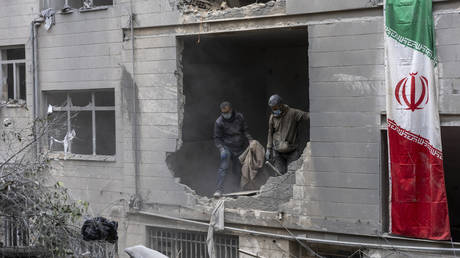
The overnight bombardment was aggressive and fast. Iranian state media, including the state broadcaster IRIB, confirmed that three massive explosions rocked the area around Iranshahr Airport in the southeastern region of the country. At least one American projectile scored a direct hit on the runway and airport facilities.
Further west, the strikes hit closer to Iran's economic heart.
The Bandar Abbas Railway Junction Station was hit in the middle of the night. This station is a critical node for moving heavy goods from Iran's largest seaport into the interior of the country. Early reports from the semi-official Mehr news agency indicate that at least two railway workers were injured in the attack.
Simultaneously, US aircraft targeted two vital highway bridges in the Hormozgan Province. Local sources identify these as the Kahurestan and Gariveh bridges. These two structures serve as the primary road links connecting the port city of Bandar Abbas with the major urban center of Shiraz. According to the official news agency IRNA, the bridge strikes left two people dead and four others wounded.
If that wasn't enough, explosions also shook the coastal city of Bushehr. Bushehr houses Iran's only active civilian nuclear power plant. While the nuclear facilities themselves do not appear to have been hit directly, the proximity of the strikes signals that the US is willing to operate right on the edge of a catastrophe.
The Strategic Focus on Bandar Abbas
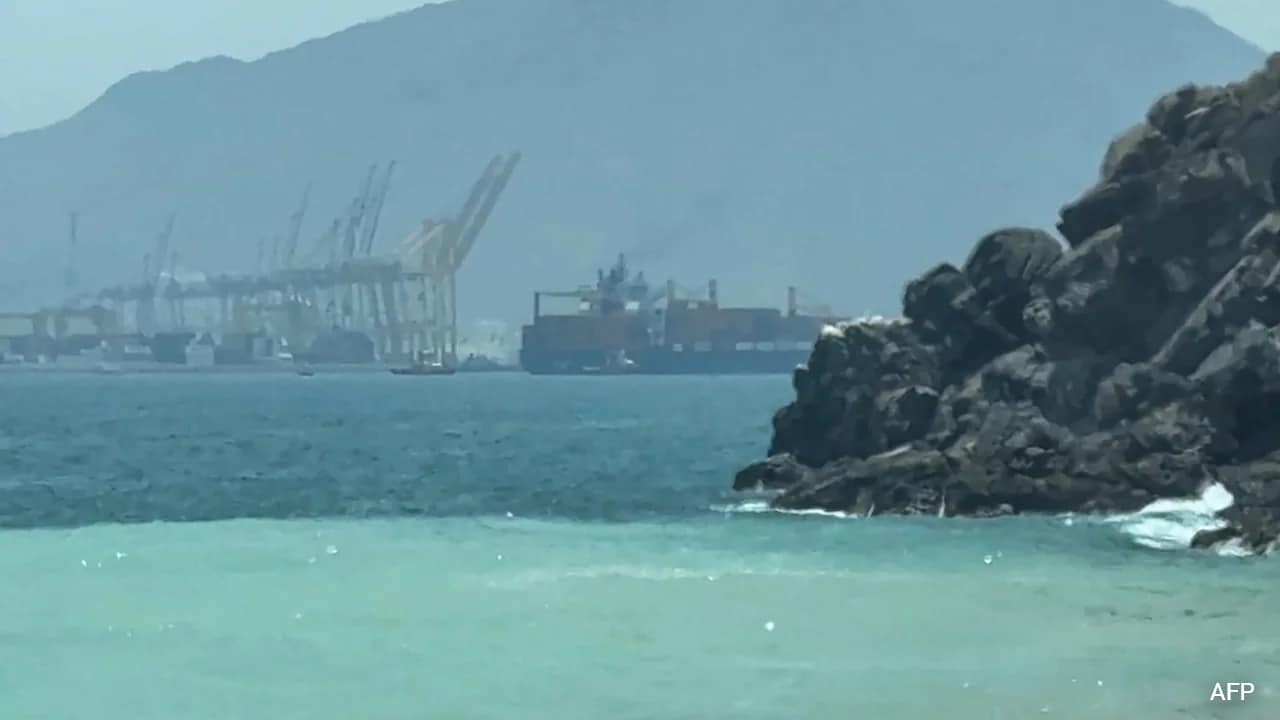
You have to look at a map to understand why these targets were selected. Bandar Abbas isn't just another coastal city. It is the crown jewel of Iran's maritime trade and the home base for its naval forces. It is also the main deployment zone for the Islamic Revolutionary Guard Corps (IRGC) Navy.
By taking out the railway junction and the primary highway bridges, the US military has effectively cut off Bandar Abbas from the rest of the country.
- The Railway Disruption: Disabling the train tracks stops the rapid movement of container cargo and military hardware from the deep-water port to Tehran and Mashhad.
- The Bridge Destructions: Severing the Kahurestan and Gariveh bridges stops civilian trucking and military convoys from moving easily along the southern coast.
- The Logistical Bottleneck: Iran is left with heavily bottle-necked alternative routes that are slow, winding, and incredibly easy for US surveillance to monitor.
It is a textbook siege tactic. You do not have to invade the port if you can simply freeze everything trying to leave it.
The Death of Diplomacy and the New Reality
This week's massive offensive marks the official end of the fragile truce that briefly held earlier this summer. That deal is now in ashes.
The escalation has forced both sides into extreme positions. US President Donald Trump has adopted a fiercely aggressive policy, declaring the United States as the self-appointed "Guardian of the Hormuz Strait". In a characteristic move, Trump has demanded a 20% fee on all commercial cargo transiting through the strait to cover the costs of American military protection.
Tehran's response was swift and expected. They immediately reinstated their blockade of the Strait of Hormuz.
This back-and-forth has triggered panic in the energy markets. Crude oil prices are climbing rapidly. Fatih Birol, the head of the International Energy Agency (IEA), issued a grim warning stating that global oil and gas security is under immediate threat if this crisis continues for more than a few weeks.
We are looking at a scenario where a fifth of the world's oil supply is locked behind a wall of warships and anti-ship missiles.
A Chaotic Succession Crisis in Tehran
The timing of these strikes could not be worse for the Iranian regime.
Tehran is currently reeling from internal political chaos. The country just finished burying its long-serving Supreme Leader, Ayatollah Ali Khamenei. A funeral of that magnitude always creates a power vacuum, but this transition has turned messy.
Trump recently asserted that Mojtaba Khamenei, the former leader's son and widely expected successor, has vanished from public view and is "90% gone". While US intelligence claims are often exaggerated for psychological warfare, local reports of confusion within the IRGC command structure suggest that the transition is anything but smooth.
By launching highly destructive strikes during a period of leadership transition, the US is betting that the regime is too disorganized to mount a coordinated defense.
But that is a highly dangerous gamble. History shows that when authoritarian regimes face internal division and external threats, they often lash out to unite the population.
The Retaliation Loop
Iran is not taking this lying down.
Even as US bombs fell on Hormozgan, Iranian forces launched dozens of retaliatory missiles and suicide drones. Their targets are US military installations spread across neighboring Gulf countries.
- Kuwait and Bahrain: US bases in these states faced intense pre-dawn missile barrages.
- Jordan: Blasts were reported near an expanded US air base. Iran claims this specific base was used to launch a previous US strike that allegedly damaged a children's cancer hospital.
- The Red Sea Threat: Tehran has threatened to instruct the Houthi rebels in Yemen to shut down the Bab al-Mandeb strait.
If the Houthis successfully block the Red Sea while the US and Iran fight over the Strait of Hormuz, global maritime trade will face an unprecedented double-choke. Ships would have no choice but to bypass the Middle East entirely, traveling thousands of miles around the southern tip of Africa. The cost of everyday goods would skyrocket.
Surviving the Economic Aftershocks
This is no longer a local border dispute. It is a direct threat to your wallet. If you are running a business, managing logistics, or trying to protect your investment portfolio, you need to react now.
First, expect energy prices to remain highly volatile. Relying on stable fuel or transport costs over the next quarter is a mistake.
Second, diversify your supply chains. If your business depends on components or materials that transit through the Suez Canal or the Persian Gulf, you need to find alternative routing or local suppliers immediately.
The era of cheap, reliable global shipping is on pause. The bombs that destroyed those two quiet bridges in Hormozgan just rewrote the rules of global trade.