NATO thought a fifty-billion-dollar shopping spree would finally satisfy Donald Trump. They were wrong.
As alliance leaders gathered in Ankara for their July 2026 summit, European officials eagerly put on a high-tech show. They announced massive defense contracts, rolled out electronic techno music, and plastered charts showing historic spikes in continental military spending. It was supposed to be a moment of celebration, proof that Europe was finally carrying its own weight.
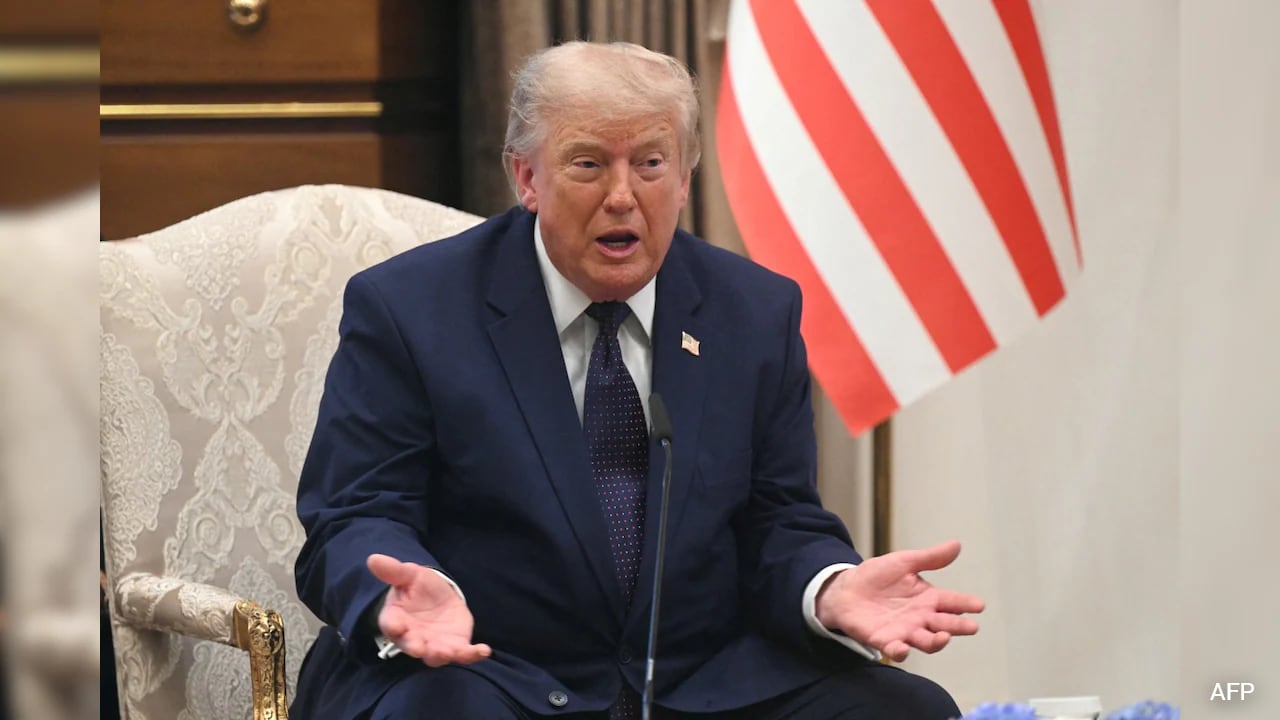
Then Trump walked up to the microphone.
Instead of praising his allies for buying American-made gear and stepping up their budgets, the US president instantly reignited a bitter geopolitical feud. He declared that the United States, not Denmark, should have full control over Greenland. He blasted European leaders for abandoning the US during the recent war with Iran. Within minutes, the alliance's carefully choreographed display of unity evaporated, replaced by the familiar anxiety of a transatlantic fracture.
You have to look at the underlying friction to understand why this keeps happening. Europe is playing by the old rules of defense spending percentages. Trump is playing a completely different game of territorial and strategic dominance.
The Fifty Billion Dollar Peace Offering That Failed to Impress
NATO Secretary-General Mark Rutte spent weeks building up to this summit, promising a massive reveal of new military projects. The alliance wanted to show Trump that his relentless badgering over defense budgets had worked.
The scope of the newly announced deals is genuinely massive, totaling roughly $50 billion. Because NATO doesn't own weapons directly, these purchases are being made through multinational coalitions of member states.
- Surveillance Overhaul: A ten-nation consortium selected Swedish manufacturer Saab to supply up to ten new GlobalEye surveillance aircraft. This is a massive blow to Boeing, which had been competing heavily for the contract to replace NATO’s ancient, fifty-year-old AWACS radar planes.
- Maritime Drones: A four-country group finalized a deal to purchase five new Triton surveillance drones to keep tabs on underwater and surface threats.
- Airborne Refueling: Fifteen nations banded together to buy a fresh fleet of air-to-air refueling and transport aircraft from Airbus.
To pay for all this, European nations are tapping into a specialized system of cheap defense loans backed by the European Union, which has raised up to $170 billion on capital markets.
On paper, it looks like exactly what Washington has been demanding for a decade. Western Europe is finally spending real money to secure its own backyard. Rutte called it money well spent. Swedish Prime Minister Ulf Kristersson called it a moment of great pride.
Trump didn't care.
To him, these late-game spending sprees don't erase what he views as years of betrayal. He was still furious that major European allies, particularly the UK under its previous leadership, refused to jump into the military conflict against Iran. He told reporters flatly that the US didn't need their help anyway, but the fact that they said no proved they weren't loyal partners.
Why the Arctic Island is Driving US Foreign Policy
If you think Trump’s obsession with Greenland is just a lingering joke from his first term, you're missing the bigger picture. This has evolved into a centerpiece of his administration's security strategy.
During his joint appearance with Turkish President Recep Tayyip Erdogan, Trump made his stance clear. He claims Greenland is effectively surrounded by Russian and Chinese vessels. He argues that Denmark is too small and poorly funded to defend a massive, strategically vital Arctic landmass from foreign encroachment.
"That should be controlled by the United States, not by Denmark," Trump said.
The rhetoric isn't empty. Over the last year, the White House has threatened aggressive 10% to 25% tariffs against Denmark and other European nations to force a negotiation over the island’s status. There have even been quiet, tense legal preparations behind the scenes, with Denmark reportedly flying medical supplies and blood bags to the island out of fear of a sudden US staging action. Allies like France and Canada have gone so far as to open new consulates in Greenland just to plant their flags and signal support for Danish sovereignty.
The fundamental clash here is ideological. NATO was built on the absolute rule that members defend each other’s borders; they don't try to redraw them. By openly treating a fellow member's territory as a real estate target, Trump is shaking the very foundation of the treaty.
Erdogan Gets a Win While Europe Gets the Cold Shoulder
While European leaders like Britain's Keir Starmer faced cold shoulders and lectures about defense targets, Turkish President Erdogan received the royal treatment from Washington.
Erdogan pulled out all the stops for Trump’s arrival in Ankara, staging an elaborate welcoming ceremony with military units on horseback and fighter jets painting the sky in red, white, and blue smoke. The flattery paid off handsomely.
Trump announced that he is actively working to lift the long-standing CAATSA sanctions placed on Turkey. These sanctions were slapped on Ankara back in 2020 after Erdogan bought an S-400 missile defense system from Russia—a move that got Turkey kicked out of the F-35 stealth fighter jet program.
Trump shrugged off the Russian hardware issue, praising Turkey as a loyal ally that stayed out of wider Middle Eastern escalations. He noted that his administration is openly considering letting Turkey back into the F-35 program.
"Sometimes you get along with the toughest people," Trump remarked, praising his personal chemistry with Erdogan.
This creates a glaring double standard that infuriates Brussels. European democracies are spending billions on new jets, radars, and drones to prove their loyalty. Yet Turkey, which bought Russian anti-air systems and frequently blocks alliance consensus, gets rewarded with sanctions relief and a direct path to America's most advanced fighter jets simply because Erdogan knows how to manage Trump.
What Happens Next for Transatlantic Security
The days of relying blindly on the American defense umbrella are over, no matter how many arms deals Europe signs. European states are beginning to realize that budget increases alone won't buy Washington's permanent loyalty.
If you're tracking the future of global defense, watch these concrete developments over the coming months:
The Rise of Trump-Proof Defense Financing
Keep an eye on how Europe funds its military. Since traditional national budgets are stretched thin, countries are looking at off-balance-sheet financing. Expect to see the EU's cheap defense loan framework merge with initiatives like Canada’s Defence, Security and Resilience Bank to raise billions directly from capital markets without triggering domestic political fights over austerity.Independent European Strike Power
Watch the newly formed alliance between the UK, France, Germany, and the Baltic states. They are quietly moving forward with a massive £37 billion project to build an independent, long-range deep-precision missile system. The goal is a weapon capable of striking targets up to 1,200 miles away without relying on US targeting infrastructure or components. This is a direct hedge against a US withdrawal from NATO.The Arctic Sovereignty Standoff
Do not expect the Greenland issue to fade away. Denmark’s newly formed coalition government is digging in, refusing to entertain territorial sales or joint "control" frameworks. As the US continues to threaten economic leverage and tariffs, look for Nordic nations to increase their own joint naval patrols in the Arctic to counter both Russian ships and American pressure.
The Ankara summit proved that throwing money at the defense problem isn't a magic fix. Europe can buy all the Saab planes and Airbus tankers it wants, but as long as Washington views geopolitical loyalty through the lens of transactional territory and absolute compliance, the transatlantic alliance remains on incredibly shaky ground.